
赭石、石绿、青蓝与柔和米白构成平面的矿彩色层,细线沿轮廓流动。
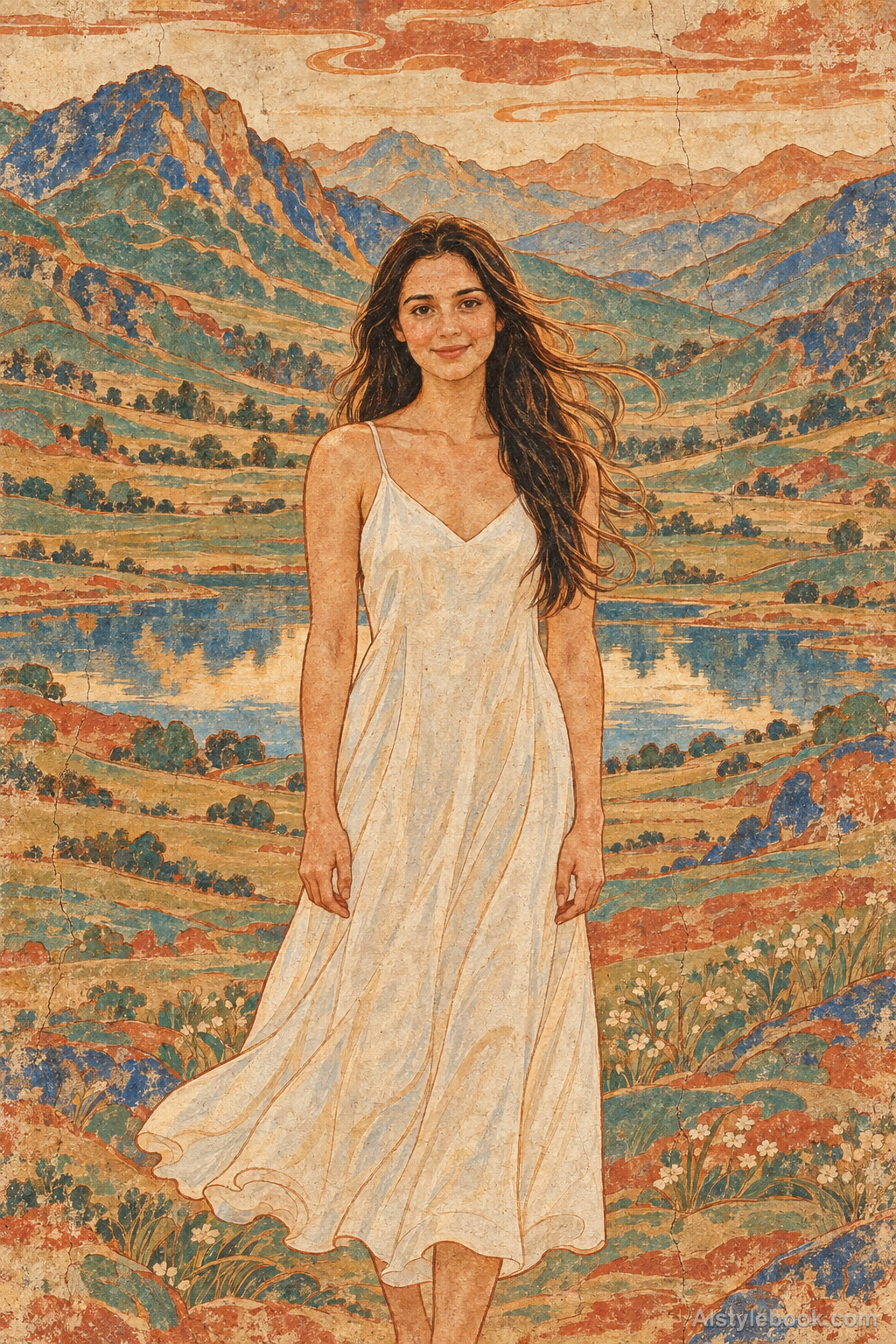
人物风格效果
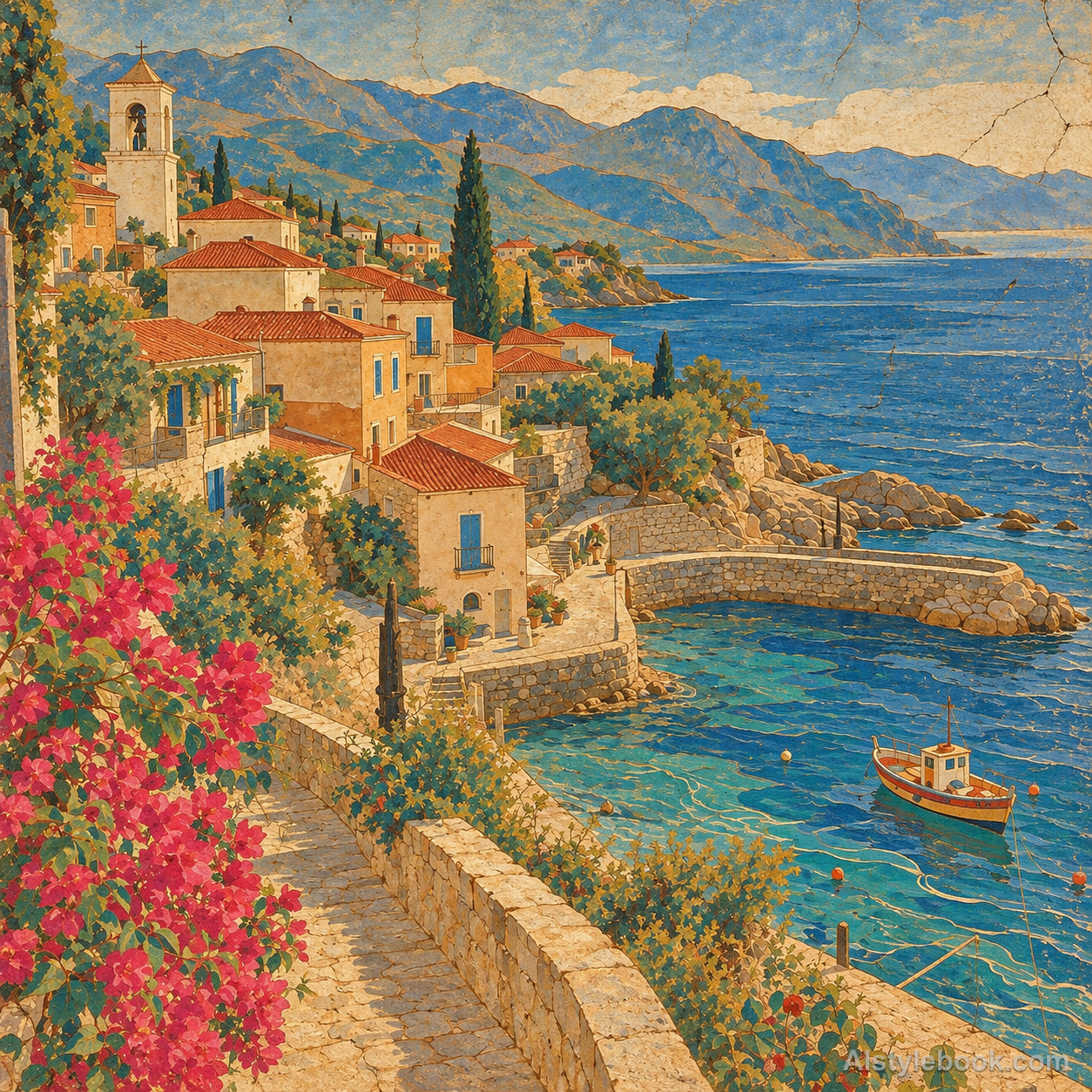
风景风格效果
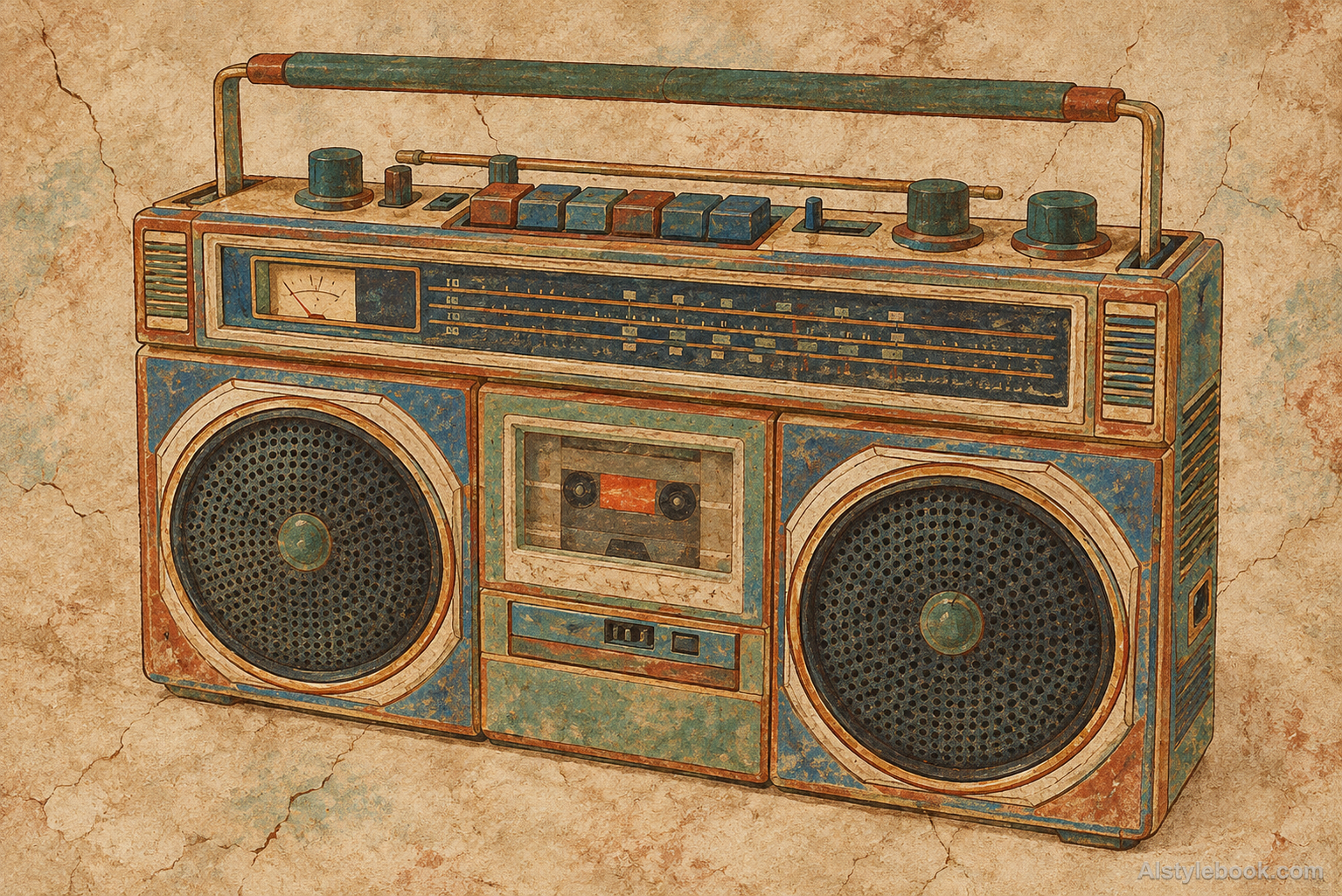
物品风格效果
认识风格
敦煌矿彩壁画是什么
赭石、石绿、青蓝与柔和米白构成平面的矿彩色层,细线沿轮廓流动。干燥壁面的斑驳与细裂纹克制出现,色面仍保持完整可读。
敦煌壁画有丰富时期与题材,这里提取矿彩、流动轮廓与壁面质感,不将斑驳本身当成全部风格。
例如衣带长弧连接石绿与赭红色面,旧墙裂纹只少量穿过,形象仍鲜明,才能同时读到绘画与时间。
不同主体的表现
- 人物
- 人物以较稳定的轮廓和沉静色区呈现,皮肤与衣饰统一为墙面般的矿物质感。
- 风景
- 建筑、山石和天空更平面化,颗粒与褪色把不同景物连成连续壁面。
- 物品
- 器物反光变得哑光,表面有粉质颗粒和局部斑驳,装饰轮廓更显眼。
- 建议主体
- 优先选衣饰轮廓清楚的人物、岩石建筑、花卉或仪式感器物,简单分区能衬托矿物色层。
把风格带入你的照片
敦煌矿彩壁画的可复用风格提示词
Preserve the original people, clothes, architecture, objects and composition. Repaint as a Dunhuang-inspired mineral-pigment mural interpretation, using fine flowing umber contour lines and quiet flat layers of ochre, azurite blue, malachite green, pale vermilion and ivory. Let existing fabric, water and terrain suggest curved linear rhythms. Show a dry plaster surface with restrained pigment mottling and a few extremely fine aged cracks, without obscuring forms. Simplify shading into layered color regions. Do not add Buddha figures, flying deities, halos, robes, caves, religious emblems, gold leaf, inscriptions, destroyed faces or heavy damage.人物、风景与物品共用这份风格提示词。
用这个风格创作继续探索


