
细墨线与朱红、草绿的简明设色共同组织轮廓,原有叶片、水纹和衣褶被转成平面的重复曲线。
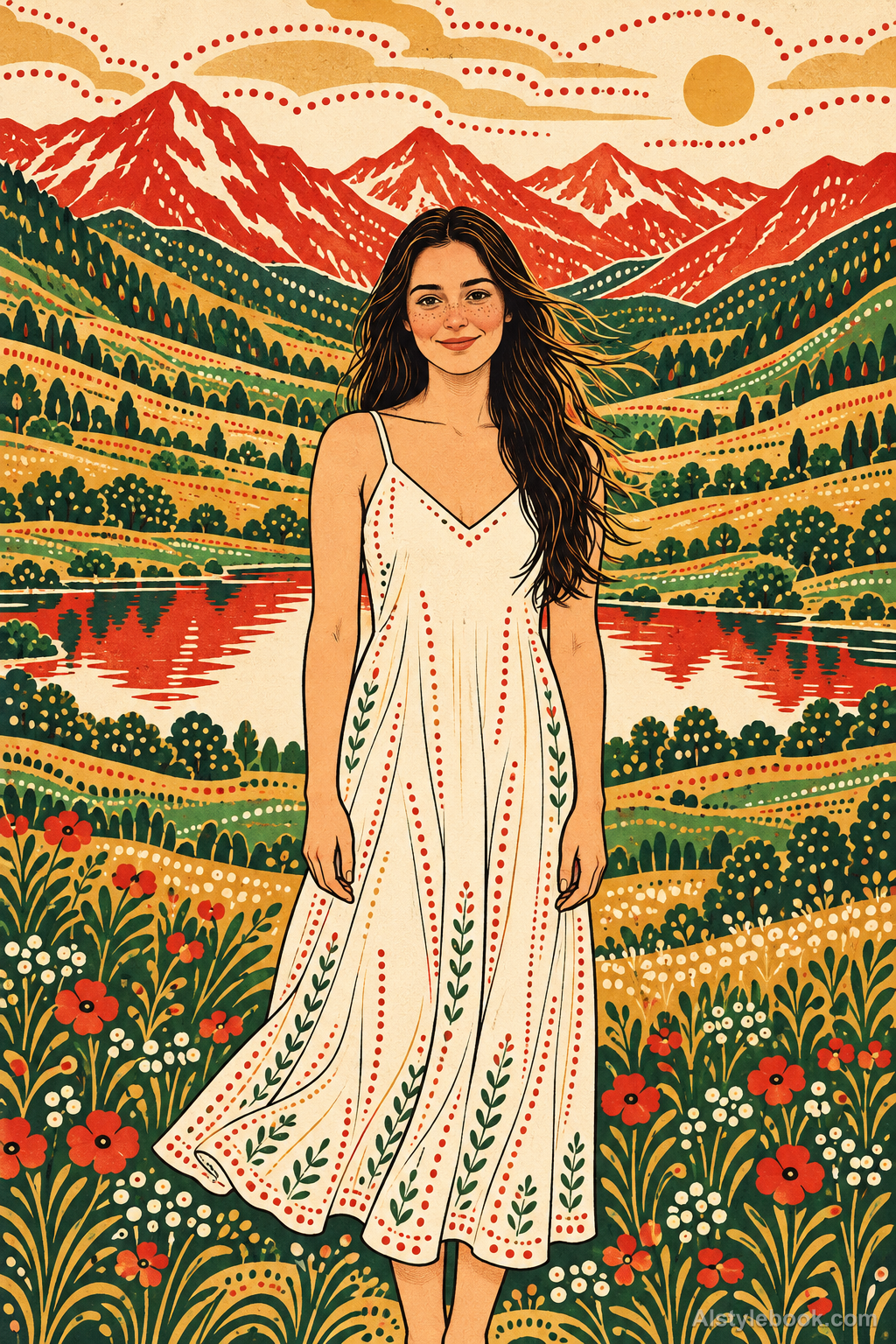
人物风格效果
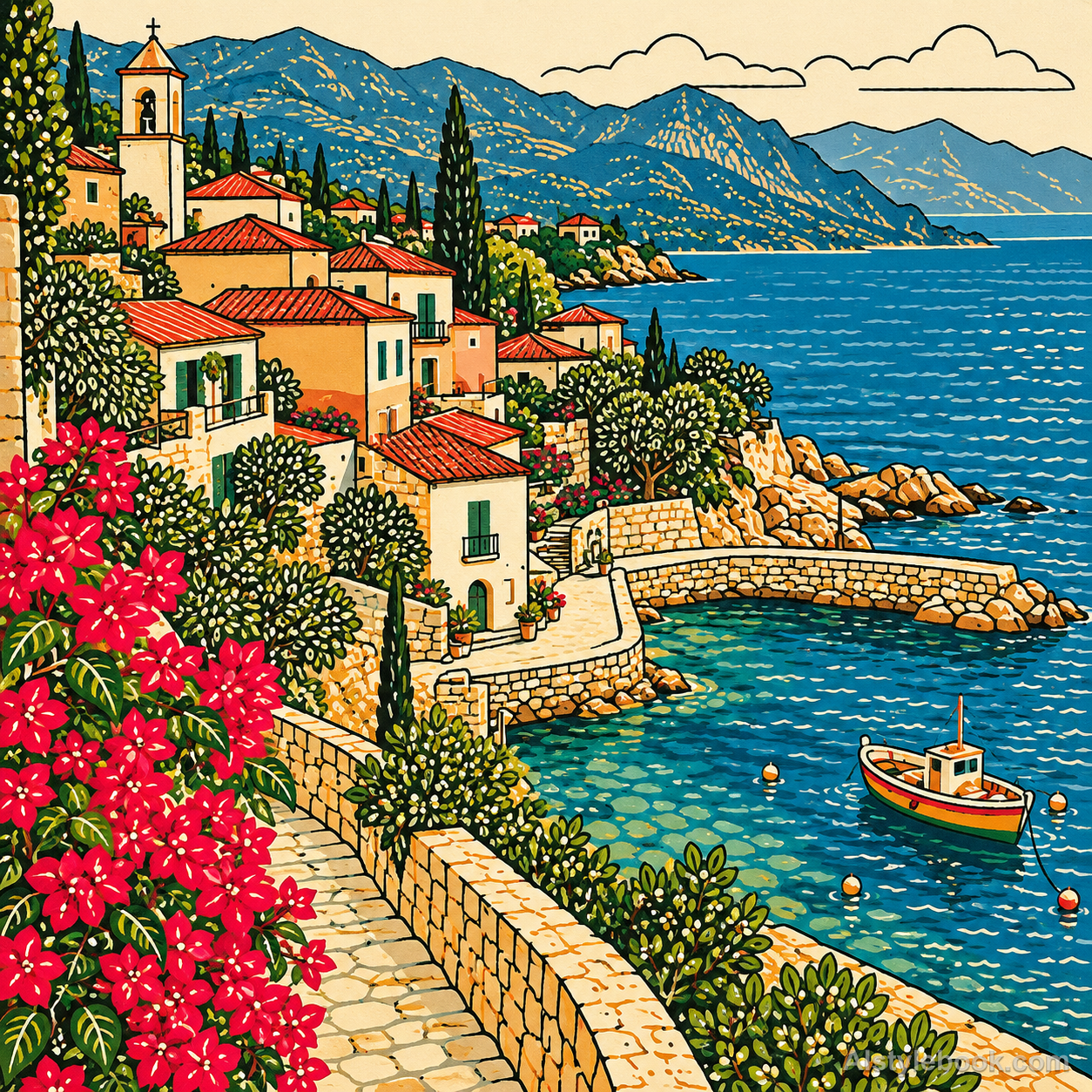
风景风格效果

物品风格效果
认识风格
民俗线色装饰是什么
细墨线与朱红、草绿的简明设色共同组织轮廓,原有叶片、水纹和衣褶被转成平面的重复曲线。局部装饰强化节奏,主体结构保持清楚。
民俗线色装饰让重复纹样贴着原有形体发展,线、色与空白一起安排节奏,不能只给对象套上花纹。
例如衣褶转成几组平行红绿弧线,叶片在袖口呼应,主体仍清楚,装饰像从结构里自然长出。
不同主体的表现
- 人物
- 衣物与发型变成有节奏的装饰纹样,人物更平面,姿态仍保持可读。
- 风景
- 树木、花叶与建筑形成重复图形,空间更像连续装饰画面。
- 物品
- 器物轮廓内部填入植物、线条或几何纹样,材质让位于图案节奏。
- 建议主体
- 优先选花鸟、枝叶、服饰人物或简洁器皿,主体轮廓清楚时纹样不容易压过形象。
把风格带入你的照片
民俗线色装饰的可复用风格提示词
Keep the source identifying forms, pose and arrangement. Translate it into a decorative folk line-and-color illustration using clear fine black ink contours, flat vermilion, leaf green, cream and a little ochre. Repeat small dots, curved arcs and simplified leaf marks within existing foliage, folds and component panels. Let the ornament follow structure rather than hiding it; keep faces and key features uncluttered. Flatten light and shade into a few color regions. Do not invent a specific ethnic costume, religious emblem, dragons, paper-cut holes, gold foil, calligraphy or unrelated folk props.人物、风景与物品共用这份风格提示词。
用这个风格创作继续探索


