
原图被取样为规整方框与局部细节,统一边距和纸白把颜色与纹理整理成标本页。

人物风格效果

风景风格效果
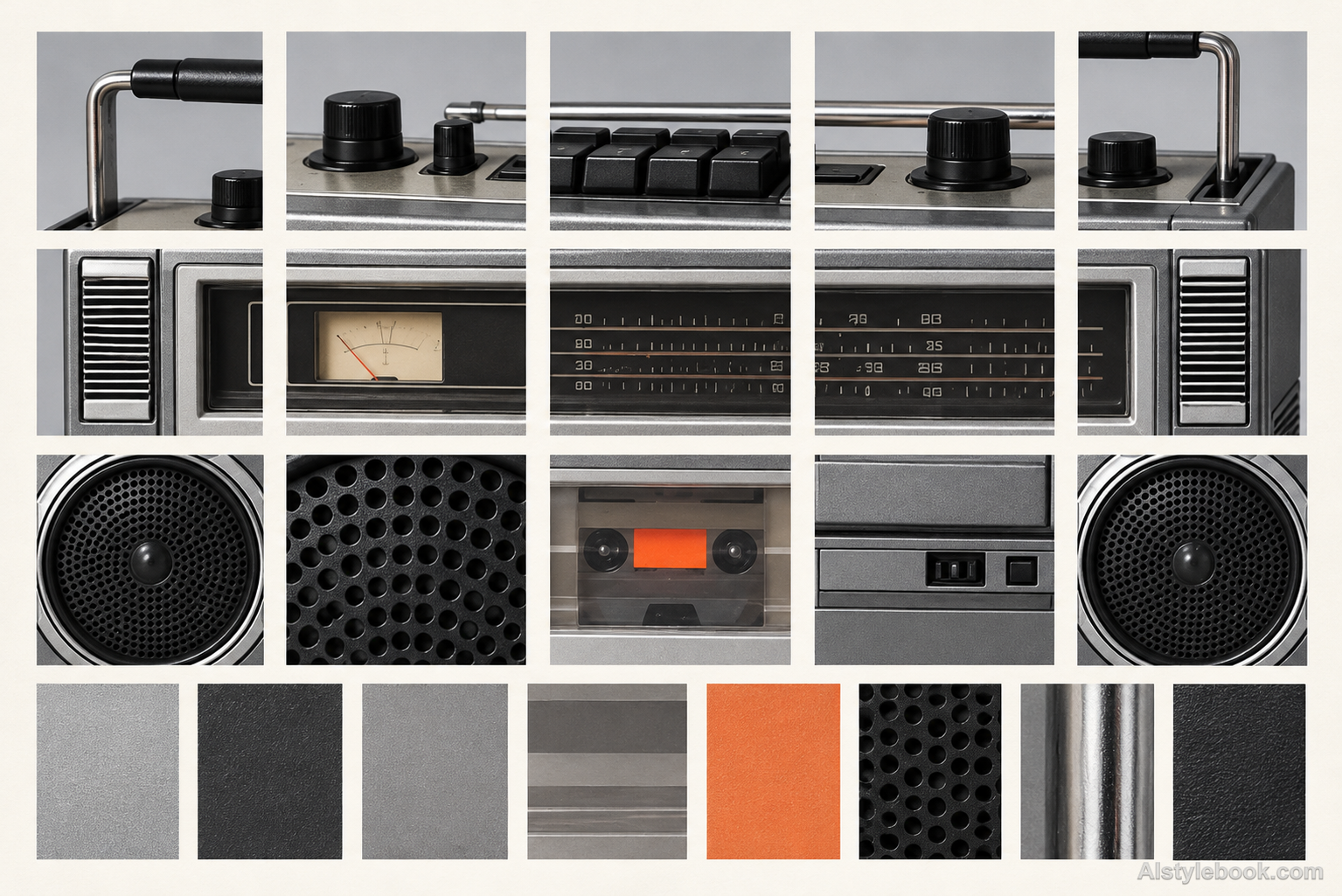
物品风格效果
认识风格
影像色样标本是什么
影像色样标本把一张图拆成颜色样本与局部细节,再按相同框格排列。宽窄一致的间隔让观看重点从完整场景转向色彩、纹理和局部之间的关系;原图通过被抽取的样本继续存在,而不依赖标签说明。
色样标本把完整图像变成可并置比较的局部,框格与间隔保持一致,读者才能专注材料与配色差异。
例如一张海边照片被抽成沙色、蓝水、礁石纹理几块样本,原景便像被拆开观察的一份视觉档案。
不同主体的表现
- 人物
- 肤色、发色和衣料被抽取为局部样本,完整神态退后,配色与纹理更突出。
- 风景
- 风景拆成天空、建筑和植物的色样片段,地点整体变成视觉素材关系。
- 物品
- 器物的颜色、材质与细部被分格展示,重心转向局部特征。
- 建议主体
- 优先选配色丰富的服饰、建筑、花卉或产品,适合想比较颜色与材料的主体。
把风格带入你的照片
影像色样标本的可复用风格提示词
Reorganize the source image into a clean specimen sheet made from a regular grid of evenly spaced rectangular swatches on off-white paper. Each box contains a different color sample or recognizable close detail extracted from the source, retaining enough neighboring fragments for the original subject to remain inferable. Keep box proportions, margins and gutters consistent, balancing flat color chips with image texture samples. Use crisp edges and generous paper white. Add no labels, numbering, new objects, invented specimens or decorative scrapbook elements.人物、风景与物品共用这份风格提示词。
用这个风格创作继续探索


