
原图形体被拆成错位的平面片段,与色纸矩形、局部条纹和大面积留白重新组合。
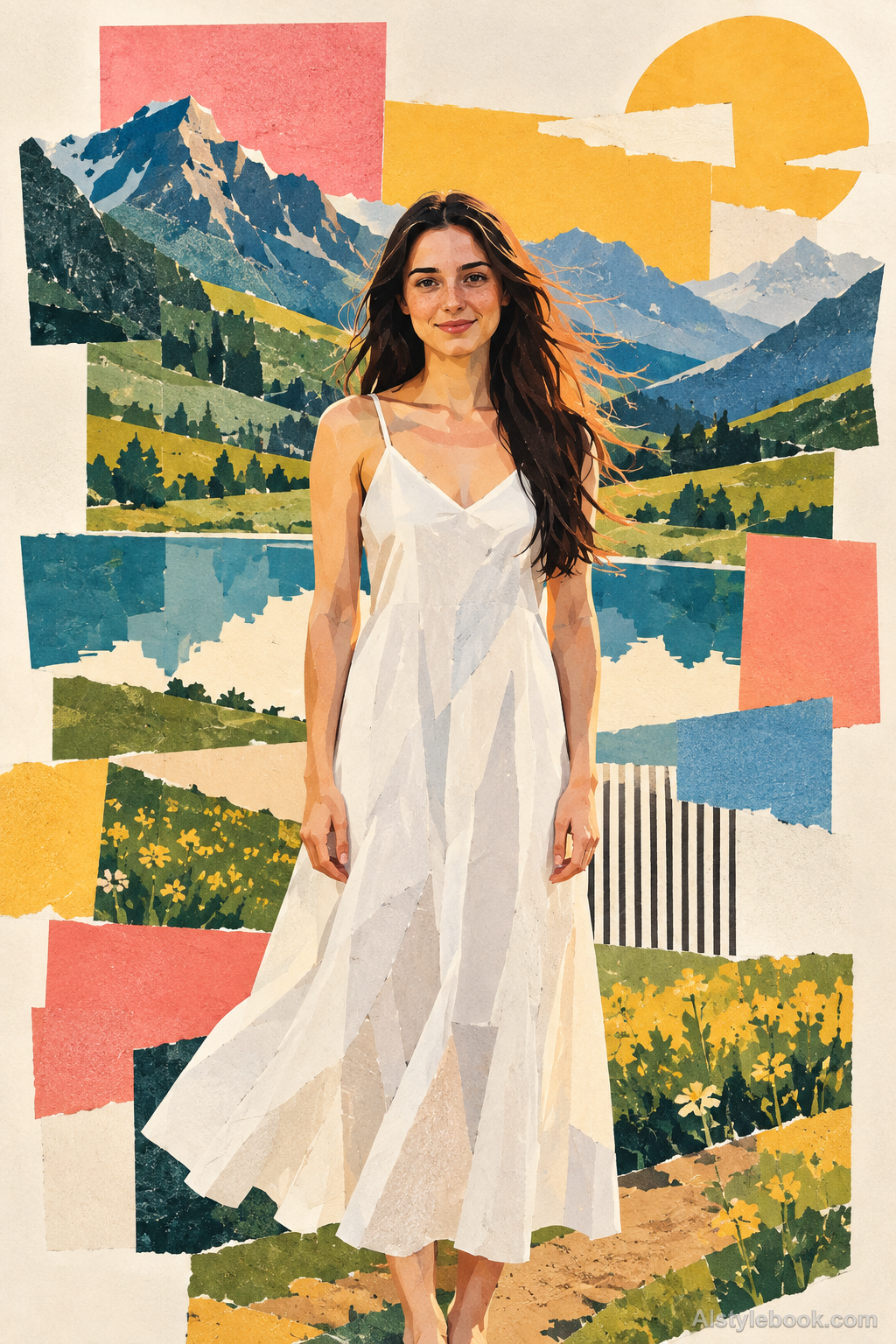
人物风格效果

风景风格效果
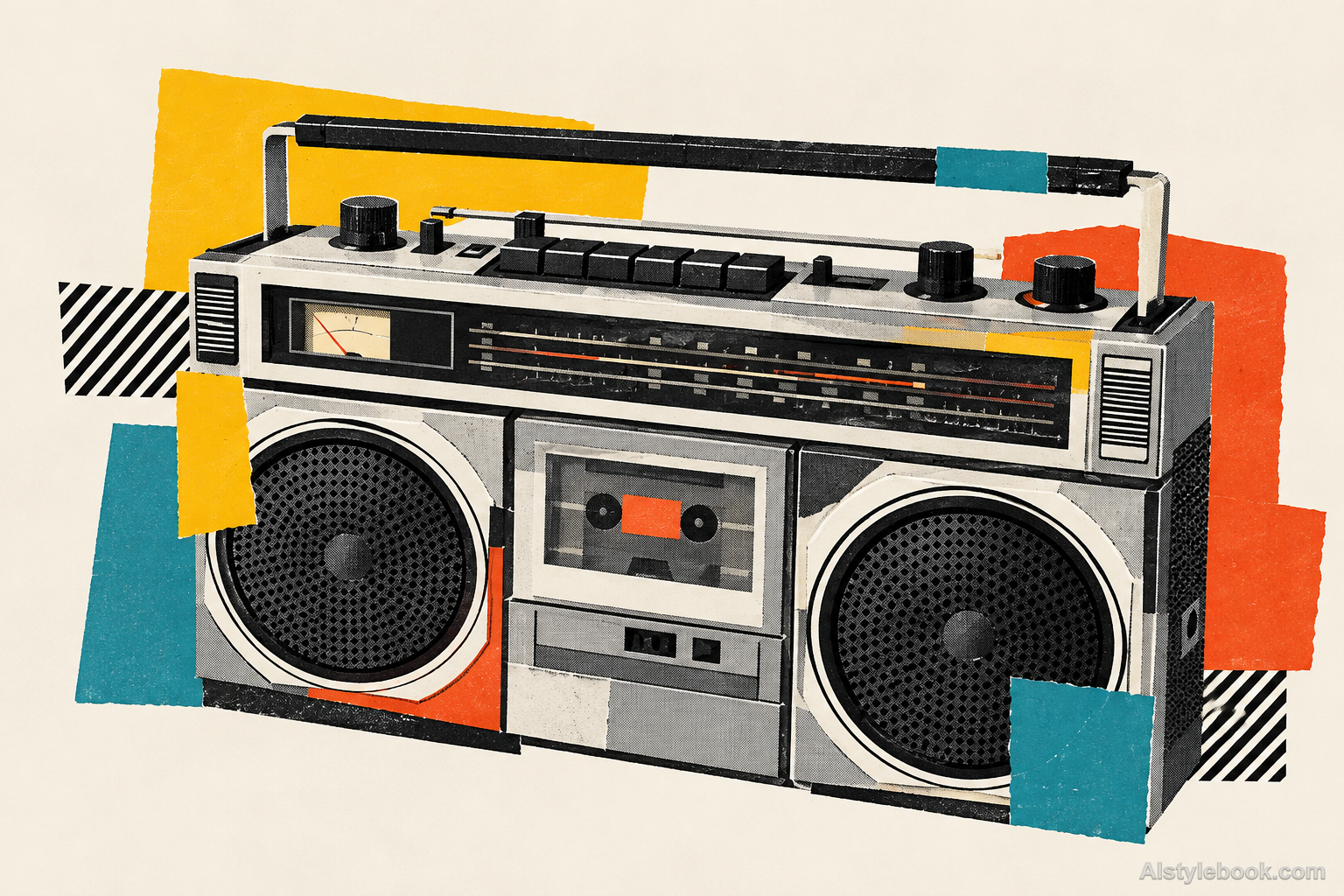
物品风格效果
认识风格
后现代图形拼贴是什么
原图形体被拆成错位的平面片段,与色纸矩形、局部条纹和大面积留白重新组合。画面保持单一场景,却有明显的尺度与对齐冲突。
后现代图形拼贴以错位、尺度冲突与混合语汇挑战整齐秩序,但仍要保留可追踪的观看关系。
例如一段屋顶被放大插入人物侧面,旁边小矩形故意偏离对齐,色彩呼应又把分散片段牵回同一画面。
不同主体的表现
- 人物
- 脸部、身体和衣物被分成叠压几何片,姿态仍可辨认,局部比例更自由。
- 风景
- 建筑与地形变成相互覆盖的平面,空间由遮挡、色差与拼接边缘组织。
- 物品
- 物品被拆成少量形块,曲面和反光转为不同颜色或纹理的片段。
- 建议主体
- 优先选轮廓明确的人像、城市、植物或简洁静物,大形清楚的素材更容易保留拼贴后的识别度。
把风格带入你的照片
后现代图形拼贴的可复用风格提示词
Retain one recognizable source subject and its principal scene arrangement. Reconstruct it as postmodern graphic collage with a few crisp rectangular or irregular flat fragments, deliberate small alignment offsets, contrasting scales and a compact bright palette. Let pieces derived from the original image meet opaque colored-paper fields and one or two contained stripe patches. Keep a readable central silhouette and substantial quiet negative space. The result is one finished artwork, not a board of multiple examples. Avoid random photographic additions, floating new objects, dense Memphis pattern everywhere, torn scrapbook edges, grids of duplicates, captions, labels or a UI frame.人物、风景与物品共用这份风格提示词。
用这个风格创作继续探索


