
大小有别的连续曲板以细密接缝构成薄壳,结构开口与薄边显示仿生受力。
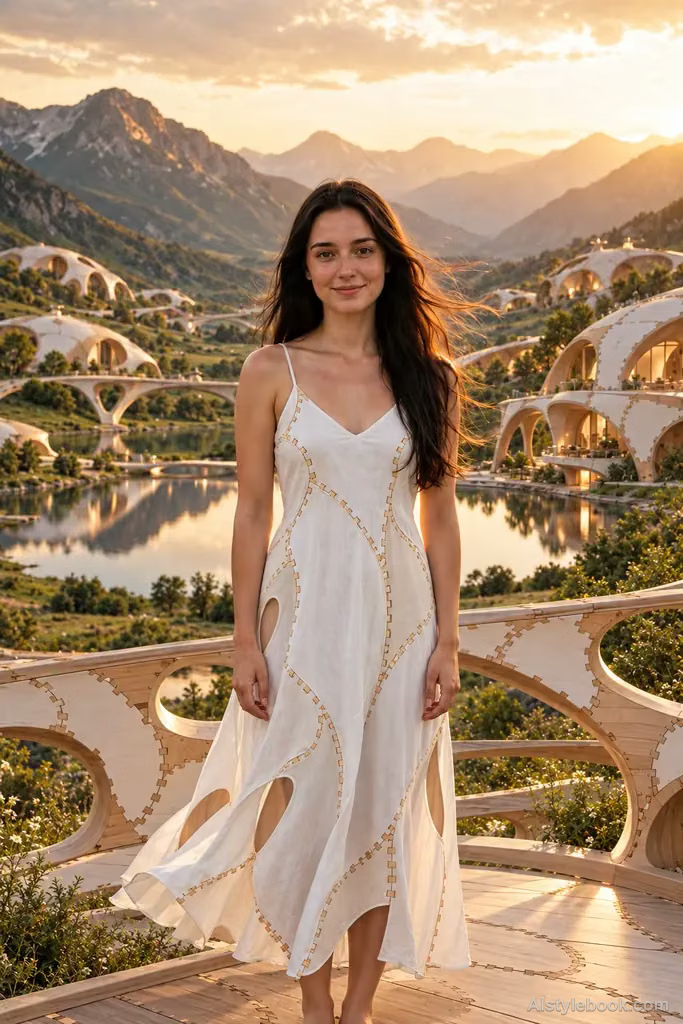
人物风格效果

风景风格效果

物品风格效果
认识风格
仿生薄壳栖居世界是什么
薄壳、分枝骨架与连续开口借用生物外形,曲率变化决定空间节奏。让材料厚度与支撑过渡清楚,可呈现轻薄却有结构依据的有机建筑感。
仿生薄壳借用生物形态中的曲面、分枝与开孔关系,外观类比仍需要清楚的厚度与支撑过渡。
例如屋面像贝壳展开,边缘薄、支点稍厚,开口顺着曲率排列,就会比随意弯曲的白色表皮更可信。
不同主体的表现
- 人物
- 人物外形被网格或曲面薄壳包围,五官简化,支撑结构和开口更醒目。
- 风景
- 空间由连续穹顶、骨架与壳面构成,透光和面片重复带出尺度。
- 物品
- 器物转为轻质壳体,孔洞、曲率和支撑节点比原有纹理更重要。
- 建议主体
- 优先选圆顶建筑、体育馆、贝壳、灯具或圆润主体,让曲面和骨架相互对应。
把风格带入你的照片
仿生薄壳栖居世界的可复用风格提示词
Reorganize the forms through biomimetic thin-shell construction. Continuous curved plates enclose the existing volumes; plate sizes vary with local curvature and structural demand, and fine finger-jointed seams connect the differentiated surfaces. Coordinate structural openings with segmented vault-like curves. Emphasize thin edges, gentle reflections and interior shadows so every joint supports the original contours and spatial relationships.人物、风景与物品共用这份风格提示词。
用这个风格创作继续探索


