
Fantasy & Architecture
Biomimetic Shell World
Style guide
Continuous thin shells, branching ribs and organic openings turn biological geometry into architecture.
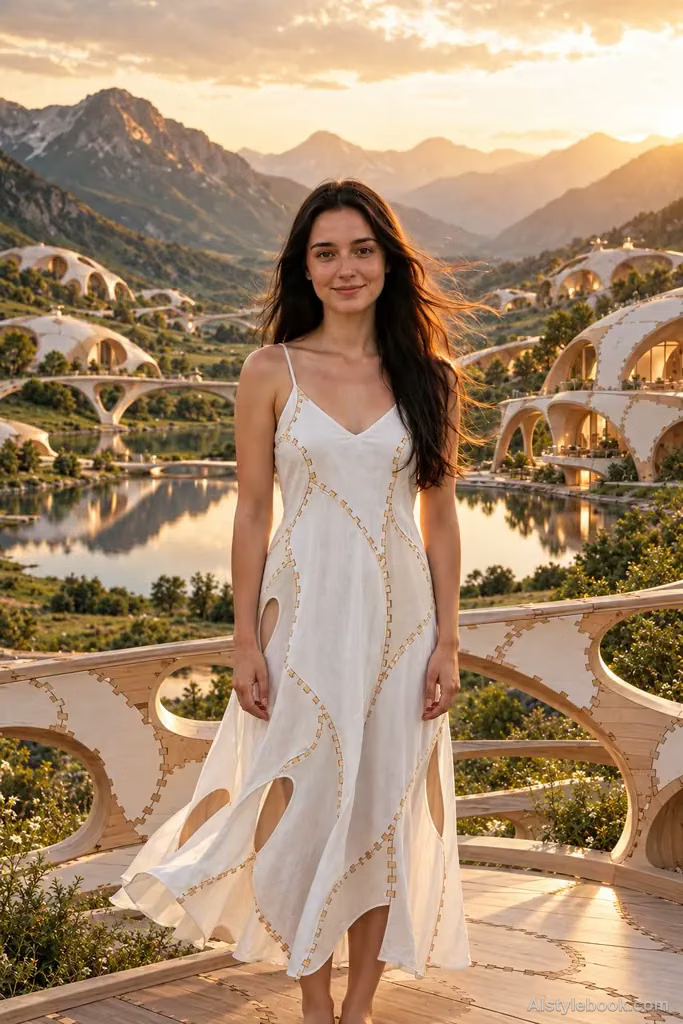
PortraitStyle effect
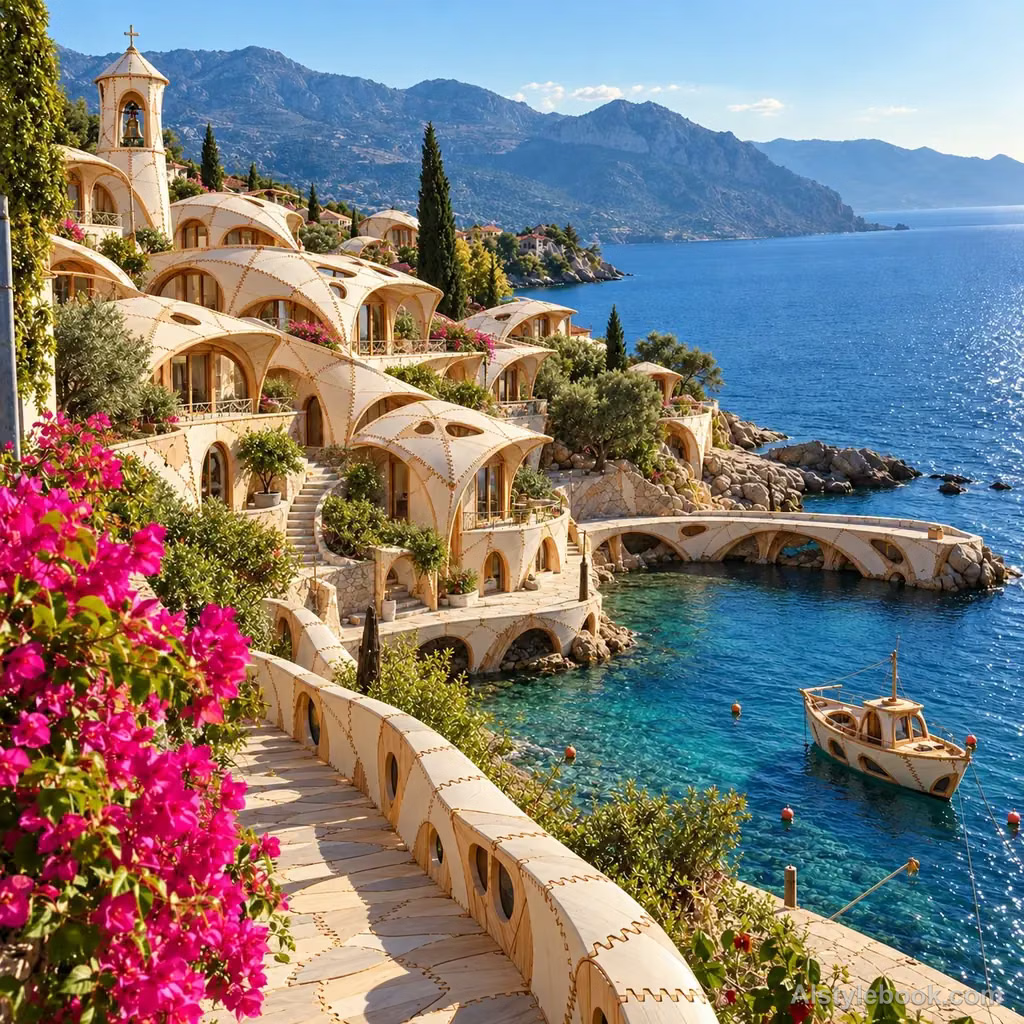
LandscapeStyle effect

ObjectsStyle effect
The visual language
What is Biomimetic Shell World?
Thin shells, branching ribs and continuous openings translate biological geometry into architecture. Changes in curvature, material thickness and support transitions give the organic forms structural clarity.
Biomimetic shells coordinate curvature, openings and support transitions rather than merely copying an organic outline.
A shell-like roof with thin edges and thicker supports can make its imagined construction readable.
How the style changes different subjects
- Portrait
- Grids or thin shells enclose the figure, simplifying features and emphasizing supports and openings.
- Landscape
- Domes, frameworks and shell surfaces organize space through light and repeated panels.
- Objects
- Light shells replace objects, favoring openings, curvature and support nodes over texture.
- Subjects
- Choose domes, arenas, shells, lamps or rounded subjects with matching surface and framework curves.
Bring the style to your photos
Reusable style prompt for Biomimetic Shell World
Reorganize the forms through biomimetic thin-shell construction. Continuous curved plates enclose the existing volumes; plate sizes vary with local curvature and structural demand, and fine finger-jointed seams connect the differentiated surfaces. Coordinate structural openings with segmented vault-like curves. Emphasize thin edges, gentle reflections and interior shadows so every joint supports the original contours and spatial relationships.Use the same style prompt for portraits, landscapes and objects.
Create with this styleKeep exploring


