
Fantasy & Architecture
Floating Modular World
Style guide
Repeated platforms, connecting bridges and water-level infrastructure form a horizontal modular city.
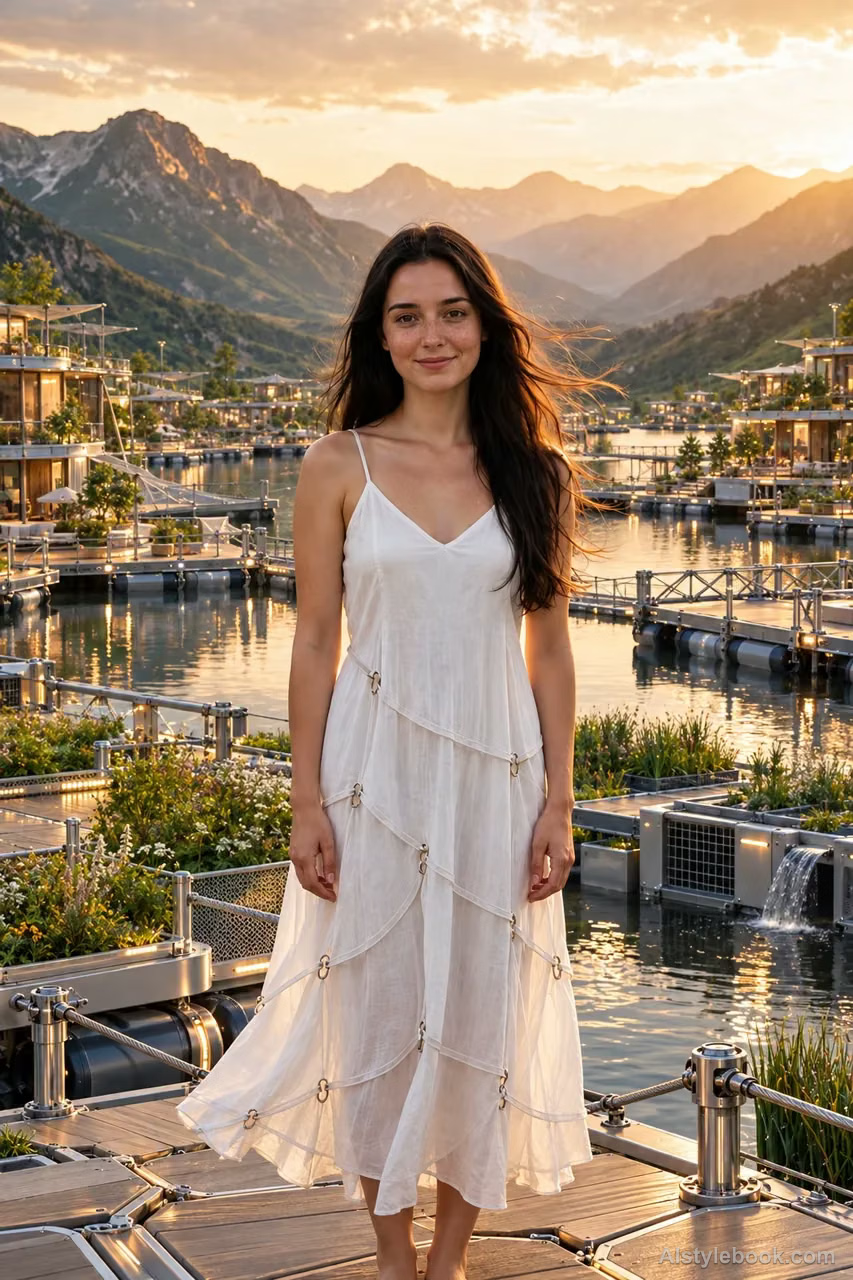
PortraitStyle effect
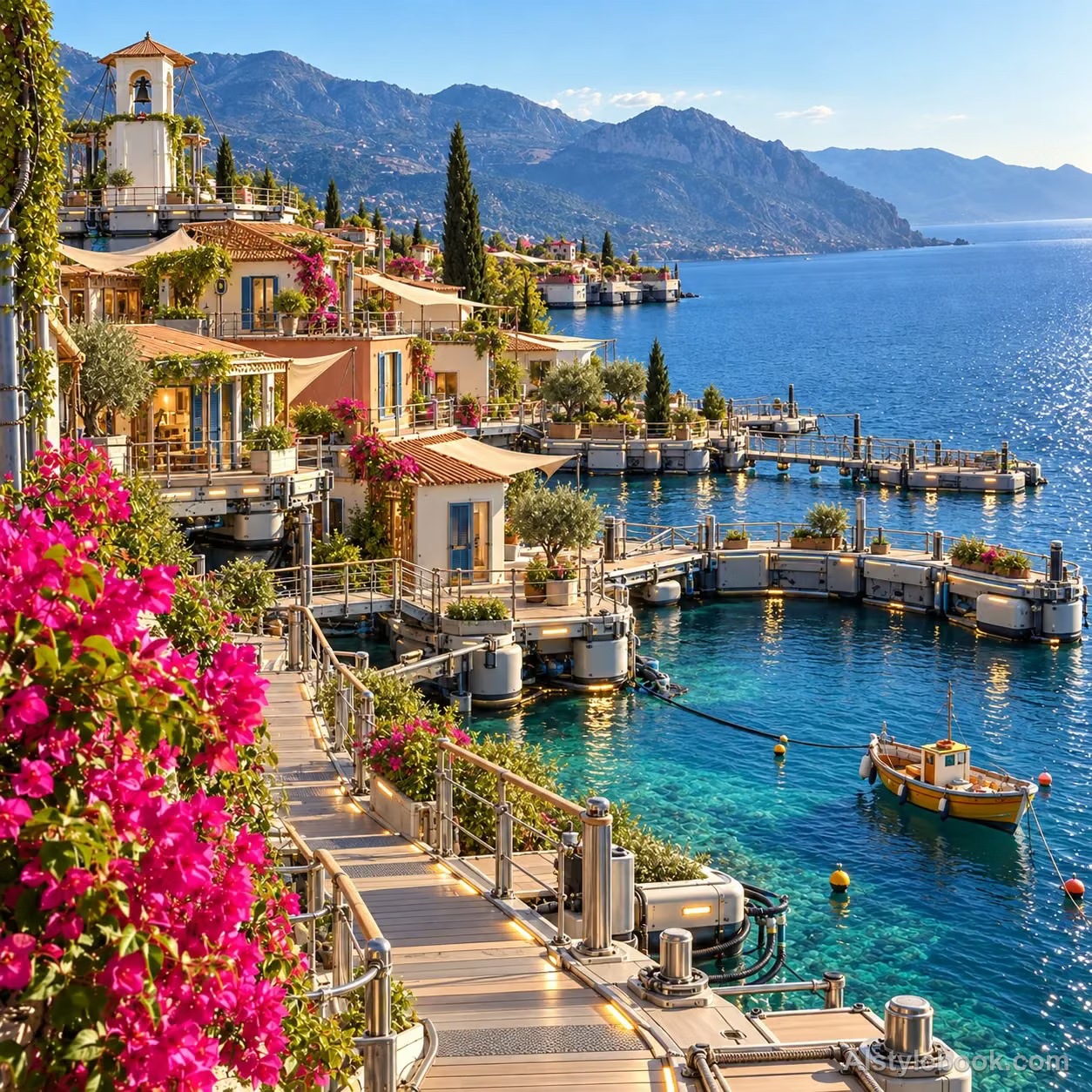
LandscapeStyle effect
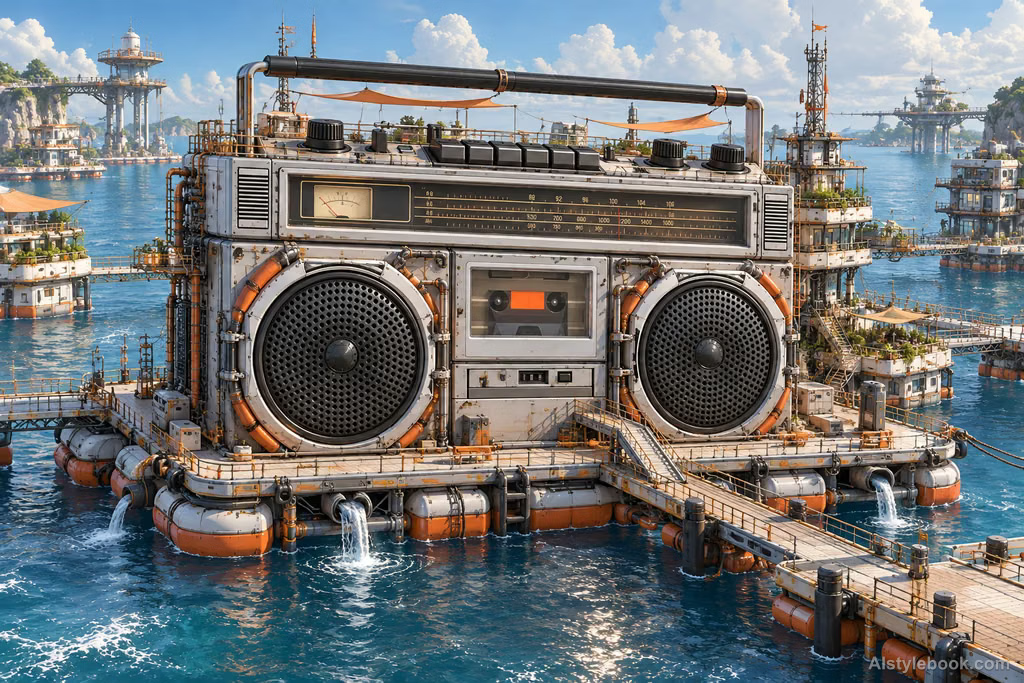
ObjectsStyle effect
The visual language
What is Floating Modular World?
Housing and circulation occupy connected platforms whose edges and bridges establish rhythm. Waterlines, reflections and level changes give the horizontally expanding city a readable scale.
Floating cities depend on platforms, waterlines and circulation connections.
Homes on separate decks joined by bridges, with small boats for scale, can form a coherent settlement across reflected water.
How the style changes different subjects
- Portrait
- Repeated modules divide clothing and silhouette, placing the figure within an expandable system.
- Landscape
- Linked units, bridges, platforms and capsules replace continuous facades.
- Objects
- Objects break into connected modules whose repeated scale establishes construction logic.
- Subjects
- Choose building groups, waterfronts, vehicles, equipment or accessorized figures with readable units and connections.
Bring the style to your photos
Reusable style prompt for Floating Modular World
Translate existing forms into floating-platform modular construction. Divide volumes into thin stacked tiers following the original hierarchy, with rounded buoyancy-shell edges and segmented sealed seams. Join adjacent masses through articulated narrow necks, keeping lower sections thicker and upper ones lighter. Differentiate blue-gray and warm white materials clearly. Soft reflected light reveals joint directions, tier-edge thickness and shallow channels, stabilizing original contours within an interconnected rhythm.Use the same style prompt for portraits, landscapes and objects.
Create with this styleKeep exploring


