
Fantasy & Architecture
Geodesic Habitat World
Style guide
Triangular struts form lightweight domes whose repeated geometry unifies a speculative settlement.
The visual language
What is Geodesic Habitat World?
Triangular struts form domes whose joints, panels and interconnections define the settlement. Alternating clear and opaque faces reveal habitation without losing the structural pattern.
Geodesic habitats approximate curved enclosures with connected triangles.
Linked domes mixing transparent and opaque panels can retain one visible structural system across their different lighting conditions.
How the style changes different subjects
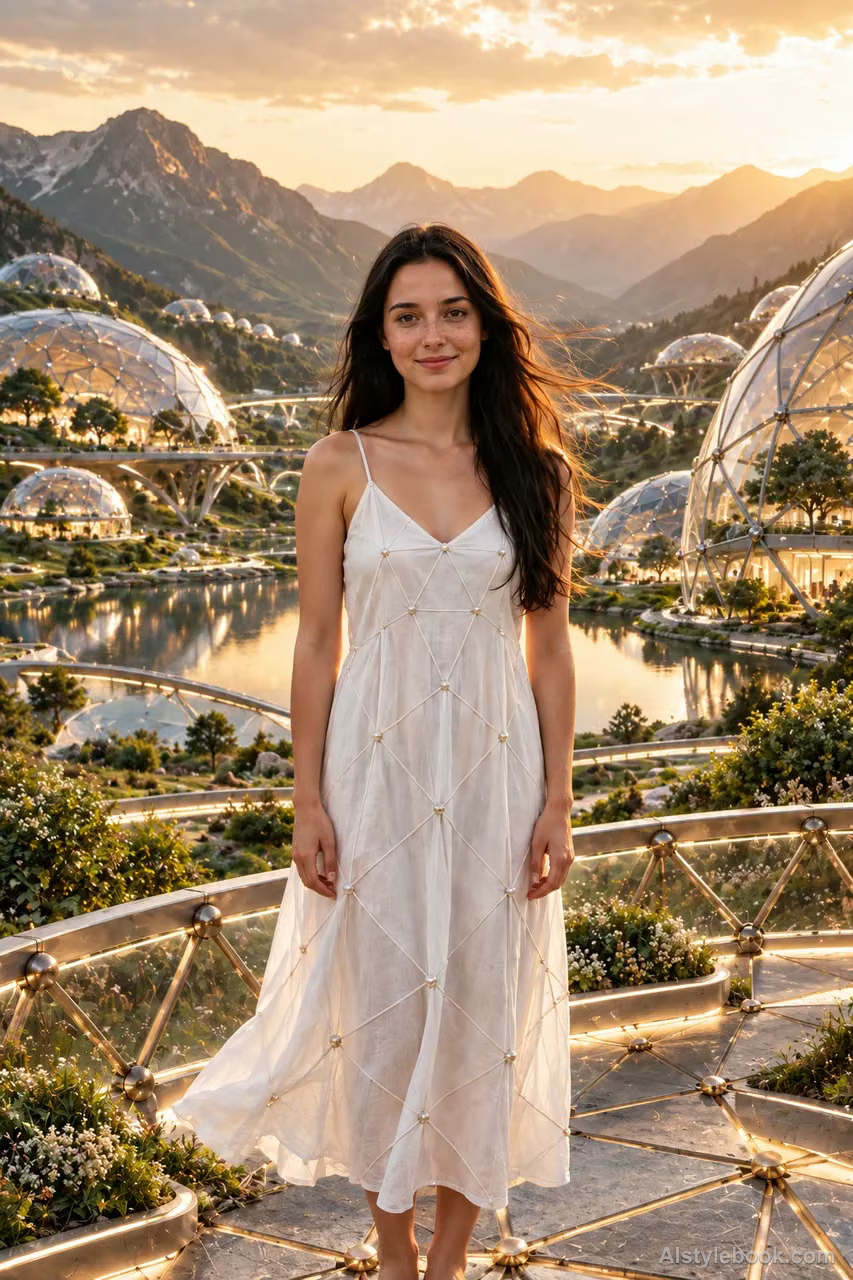
- Portrait
- Grids or thin shells enclose the figure, simplifying features and emphasizing supports and openings.
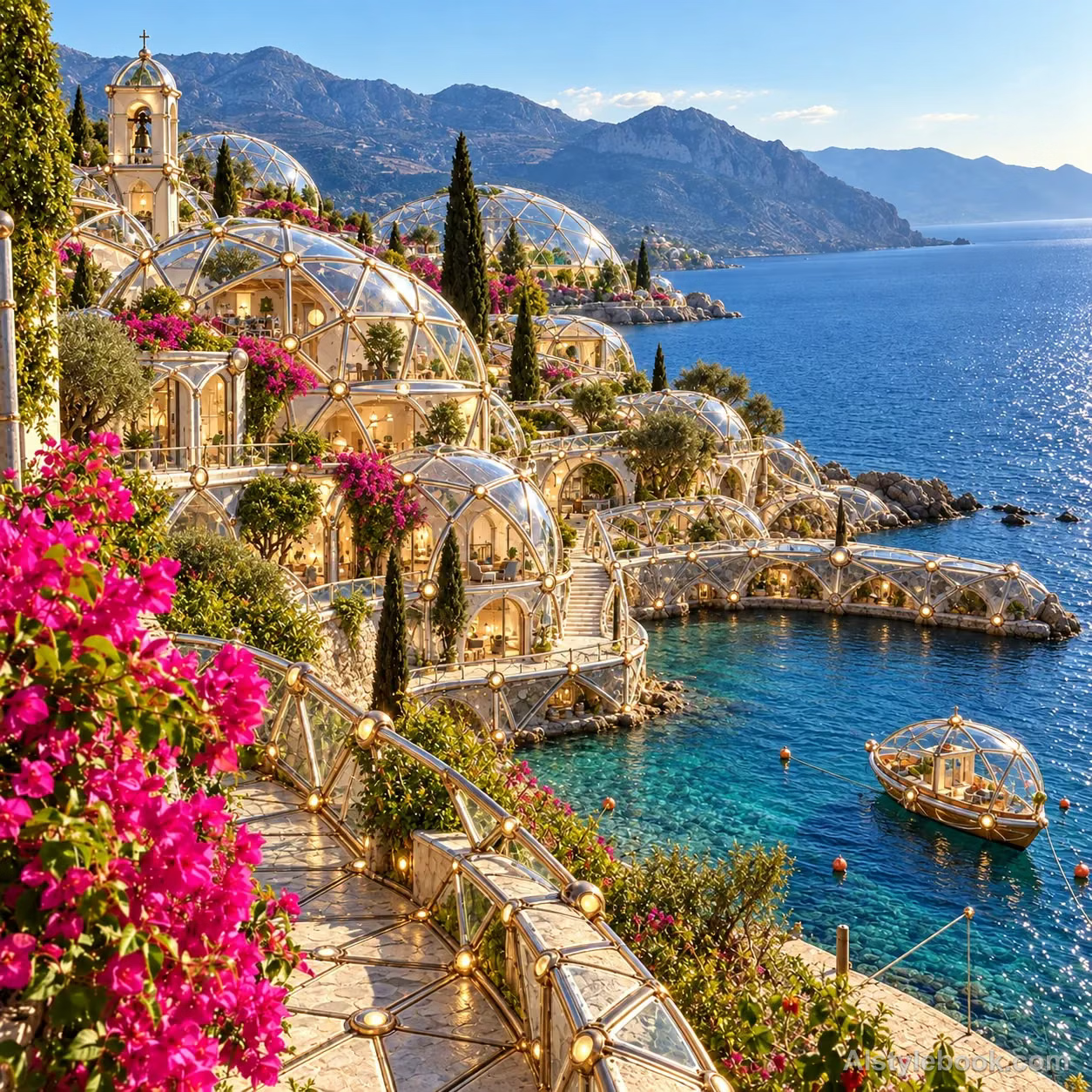
- Landscape
- Domes, frameworks and shell surfaces organize space through light and repeated panels.
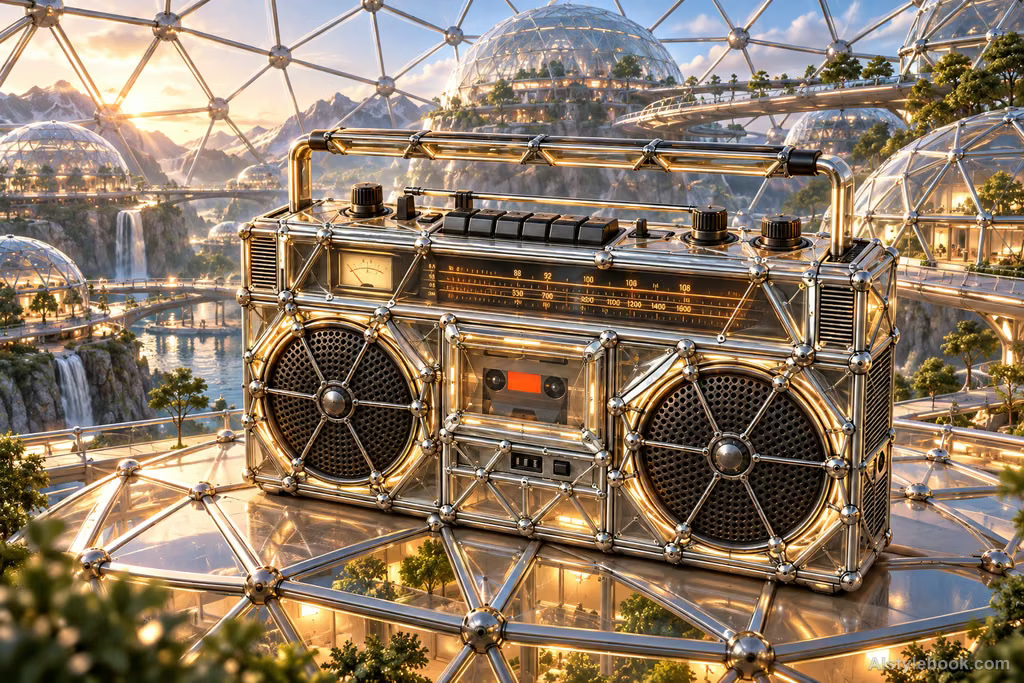
- Objects
- Light shells replace objects, favoring openings, curvature and support nodes over texture.
- Subjects
- Choose domes, arenas, shells, lamps or rounded subjects with matching surface and framework curves.
Geodesic structural studies
MoMA holds Buckminster Fuller’s 1952 Geodesic Dome model, made from metal and elastic cord. Triangulated frames and visible joints extend this structural language into the habitat image.
Artists & practitioners
Related practitioners
R. Buckminster Fuller
His geodesic-dome model provides a concrete study of spherical grids and lightweight structure.
Bring the style to your photos
Reusable style prompt for Geodesic Habitat World
Translate existing forms into geodesic shell construction. Triangular divisions follow original curves as spherical coverings of graded scale, with clearly articulated nodes receiving each fine rib. Adjust lattice density to curvature and preserve source values through solid faces and restrained translucent infill. Local circumferential seams clarify hierarchy. Use pale gray, warm white and muted blue, with soft side lighting and fine rib shadows emphasizing continuous shell curvature and recognizable outlines.Use the same style prompt for portraits, landscapes and objects.
Create with this styleKeep exploring


