
Light & Image Effects
Glass Orb Refraction
Style guide
A clear glass sphere compresses and inverts the scene, with curved highlights separating inner and outer views.

PortraitStyle effect

LandscapeStyle effect
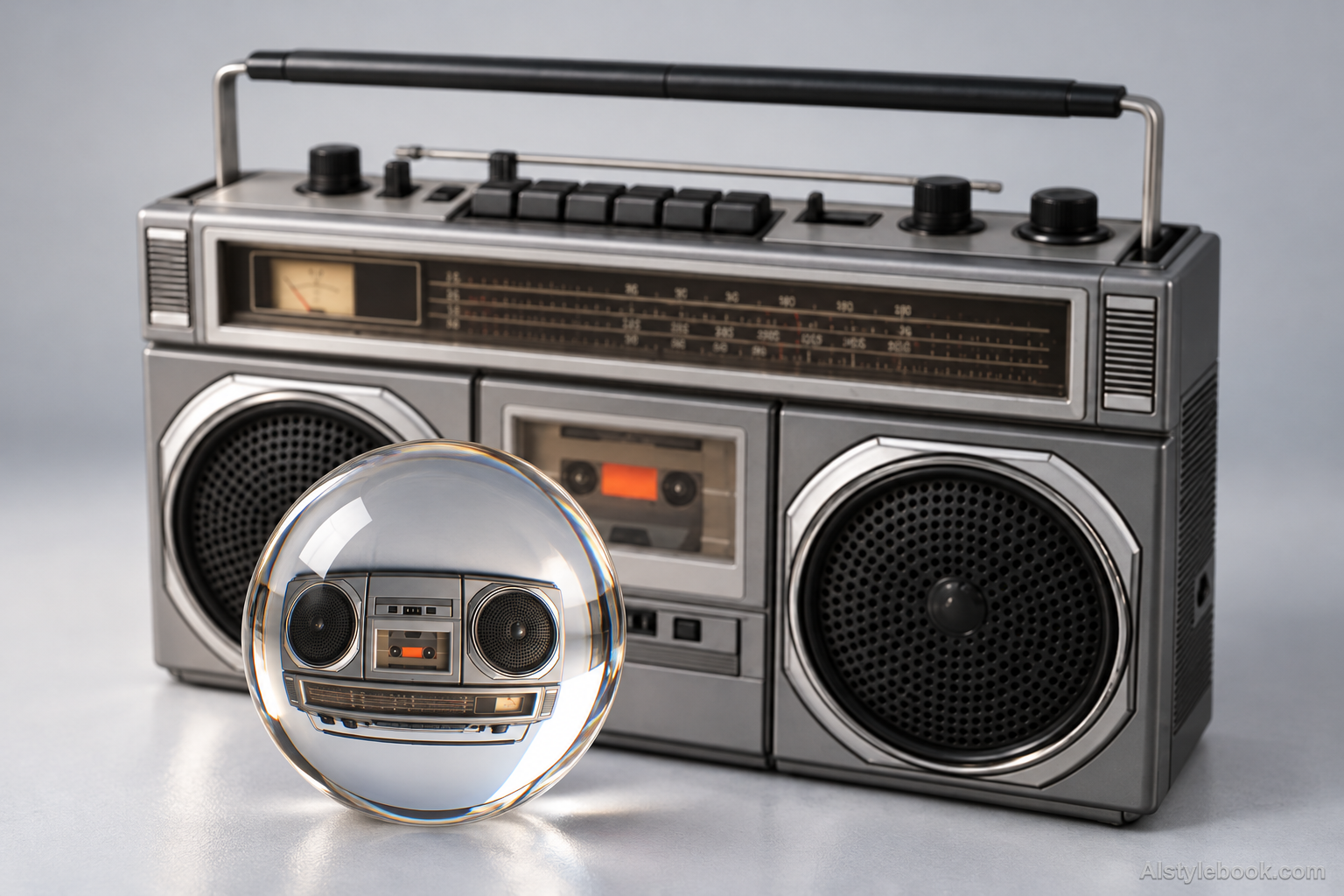
ObjectsStyle effect
The visual language
What is Glass Orb Refraction?
A glass orb places one clear sphere in front of the source scene. The interior view compresses and inverts recognizably while the surrounding scene stays intact. Curved edges, highlights and the difference between inner and outer views establish optical thickness rather than a circular crop.
A glass sphere changes image scale and orientation through curved refraction.
An upright street outside and inverted compressed buildings inside can establish its optical thickness.
How the style changes different subjects
- Portrait
- The intact figure outside contrasts with a compressed or inverted fragment inside the sphere.
- Landscape
- A small refracted scene sits within the ball while its surroundings establish scale and location.
- Objects
- The external object contrasts with its refracted image and the ball's edge highlights.
- Subjects
- Choose landscapes, buildings, flowers or offset figures with recognizable content both inside and outside the sphere.
Bring the style to your photos
Reusable style prompt for Glass Orb Refraction
Place a single optically clear glass sphere as a refractive foreground element over the existing scene. Let the original scene remain visible around it, while a recognizable locally inverted and compressed view appears inside the sphere according to lens-ball optics. Show a crisp curved boundary, subtle thickness, edge reflections and a restrained specular highlight. Preserve the source setting and materials beyond the orb, with no invented pedestal or new environment. Avoid a flat circular crop, uniform fisheye distortion, opaque crystal or multiple decorative balls.Use the same style prompt for portraits, landscapes and objects.
Create with this styleKeep exploring


