
Anime & Comics
Ligne Claire
Style guide
Uniform fine closed black lines describe layered space, with bright flat colors preserving rich, readable narrative detail.
The visual language
What is Ligne Claire?
Uniform thin closed contours describe objects and spatial relationships without being obscured by bright flat color. Detailed backgrounds remain readable because every shape has a clear boundary.
Ligne claire keeps objects readable through consistent contours rather than dense shading.
Clearly outlined windows, cars and figures can make a busy street browsable through placement and flat color.
How the style changes different subjects
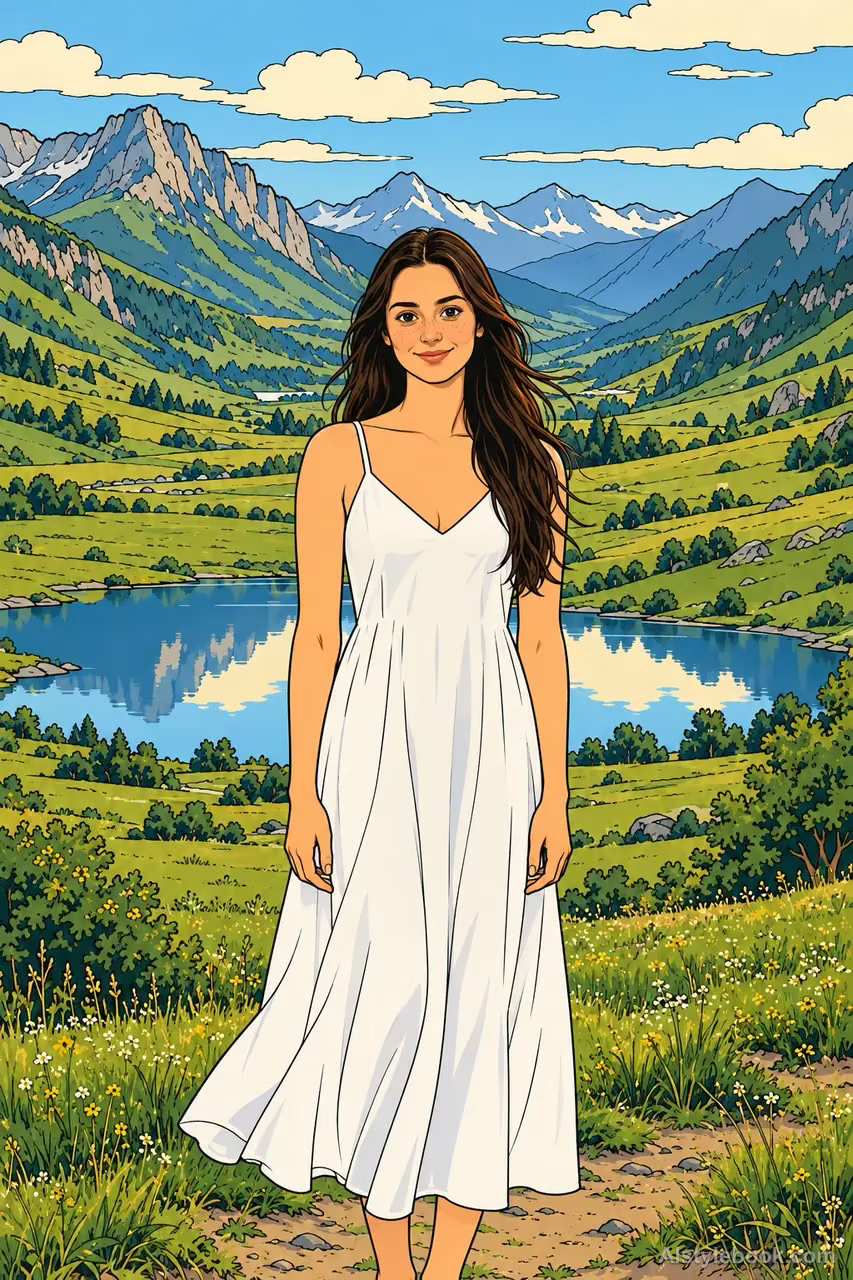
- Portrait
- Even fine outlines enclose features and clothing, keeping expression direct with little realistic shading.
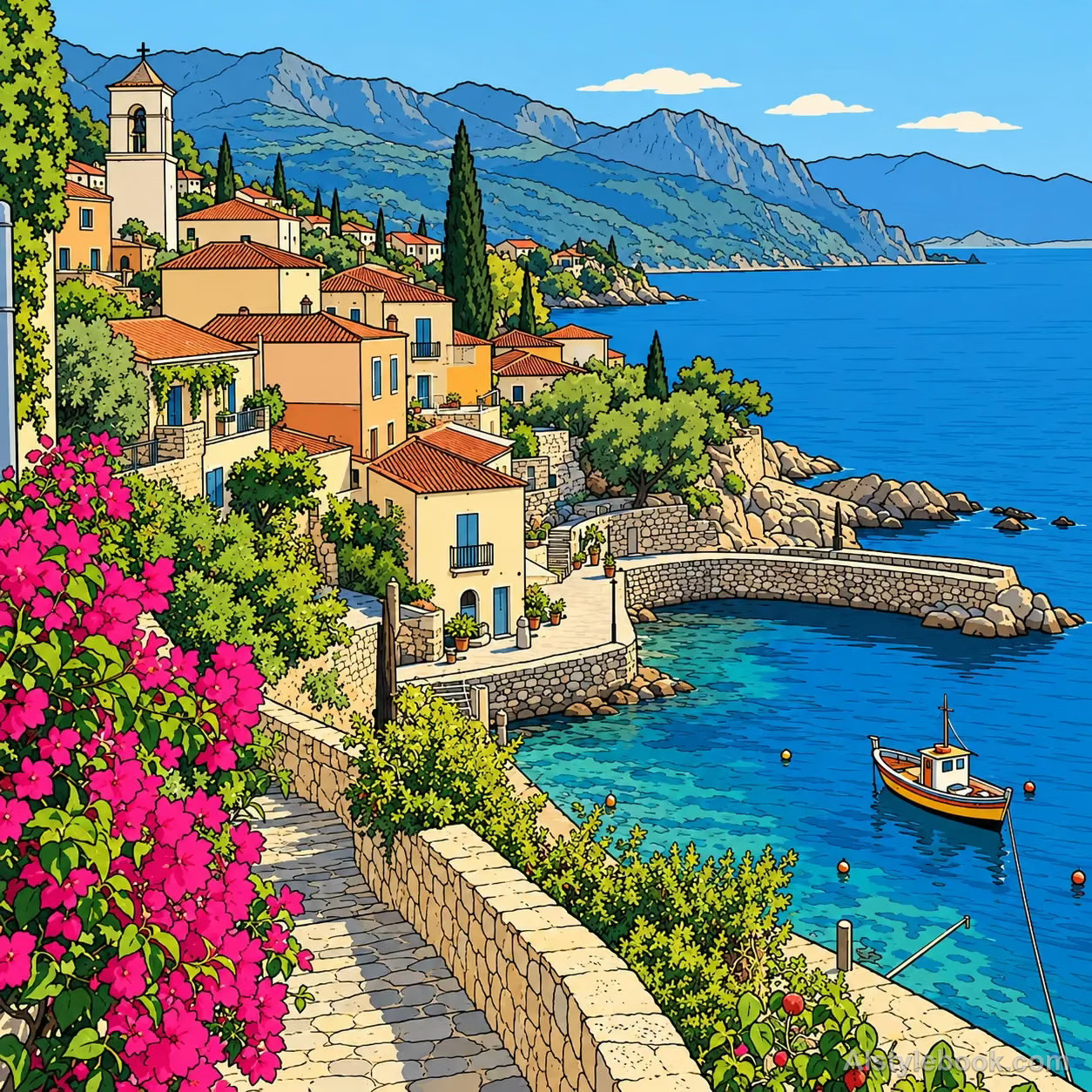
- Landscape
- Detailed streets remain readable because each shape has a distinct boundary.
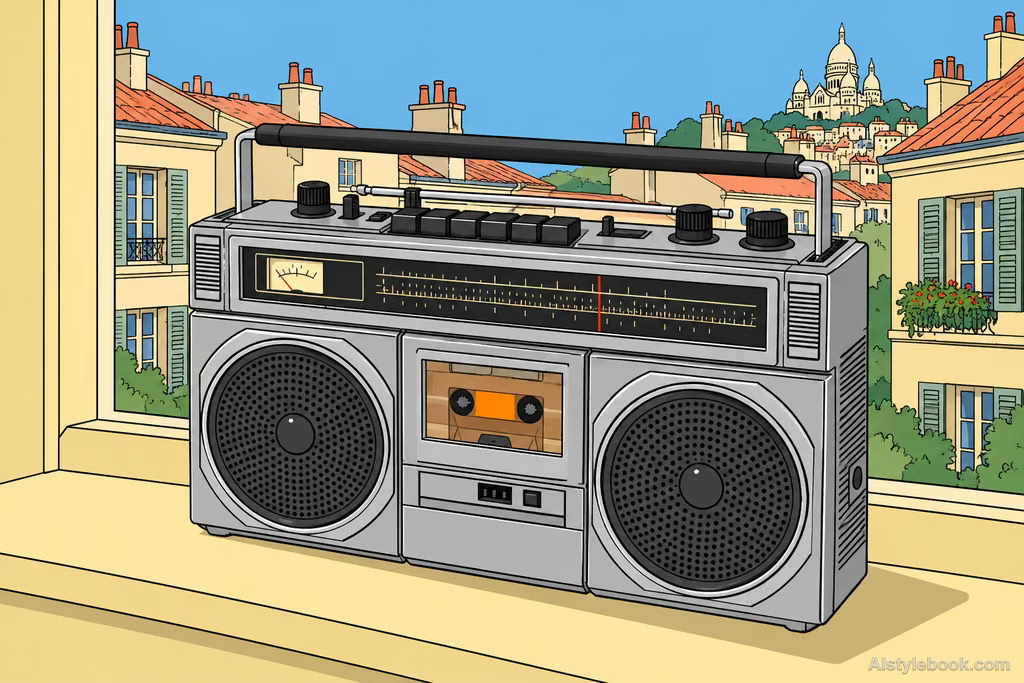
- Objects
- Fine lines separate components while flat color clarifies construction and omits complex reflections.
- Subjects
- Choose travelers, streets, vehicles or clearly constructed objects rather than subjects defined by ambiguous light.
Background
The Hergé Museum associates the clear line with Hergé’s comics and credits Joost Swarte with the term. Relatively uniform black contours, flat colors and clear storytelling are central features.
Bring the style to your photos
Reusable style prompt for Ligne Claire
Use classic European ligne claire drawing. Outline every foreground and background form with uniform fine black closed contours, maintaining equal ink clarity throughout. Fill shapes with muted but luminous flat solid colors, using only a few single-shape shadows and no hatching or gradients. Keep spatial details accurate and complete, with graceful natural forms and rich narrative relationships. Make the image clean and readable rather than reducing it to isolated icons.Use the same style prompt for portraits, landscapes and objects.
Create with this styleKeep exploring


