
Painting & Drawing
Organic Symbol Abstraction
Style guide
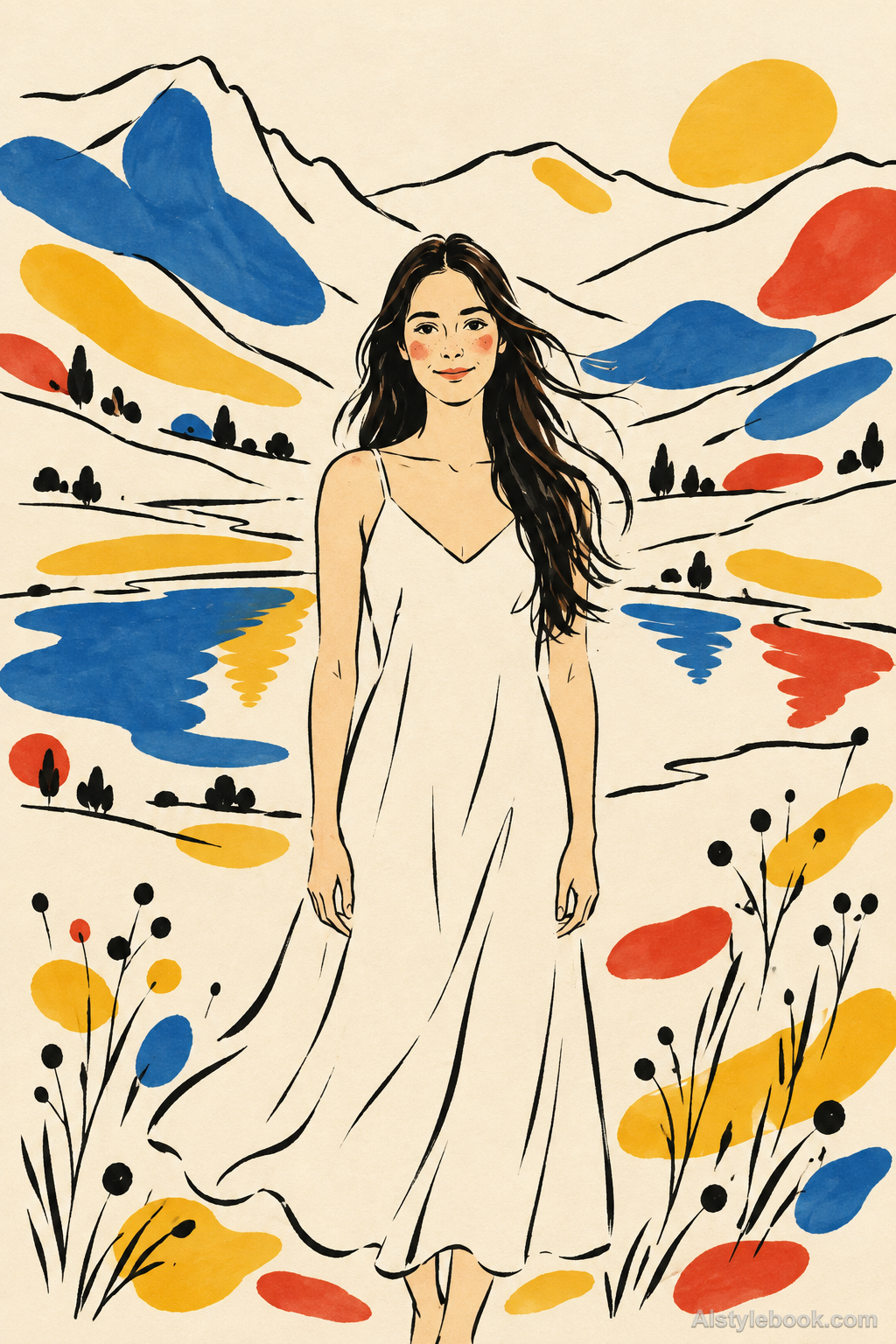
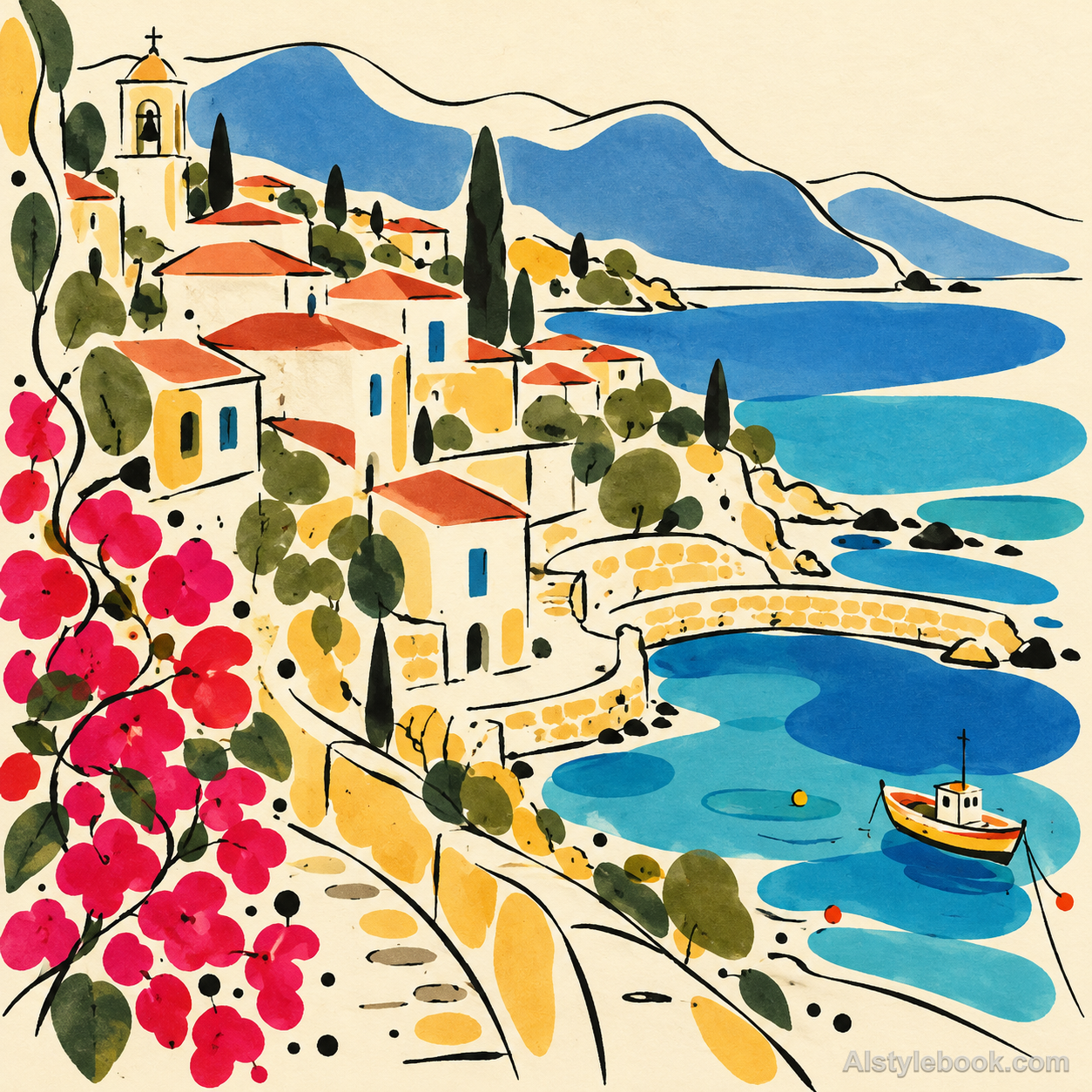
Fine wandering black lines, oval color fields and sparse dots distill the source shapes.

The visual language
What is Organic Symbol Abstraction?
Fine wandering black lines, oval color fields and sparse dots distill the source shapes. Generous paper and loose asymmetry retain the subject through a few recognizable anchors.
Organic symbol abstraction keeps recognition open through reduced curves, ovals and accents.
A bird reduced to a blue oval, curved line and red dot can feel animated through spacing and placement.
How the style changes different subjects
- Portrait
- Rounded shapes and a few symbols replace detailed expression and identity cues.
- Landscape
- Hills, trees and buildings merge into interlocking organic shapes and open space.
- Objects
- Core silhouettes remain while curves and color outweigh components and materials.
- Subjects
- Choose plants, simple profiles, fruit or clear objects that can reduce to a few organic shapes.
Variant relationship
An organic color-symbol variant of automatic drawing. Compare with Automatic Drawing.
Automatic Drawing relies primarily on wandering lines. This variant makes a few red, blue and yellow organic fields structural nodes, connects them with black lines and reduces detail density.
Bring the style to your photos
Reusable style prompt for Organic Symbol Abstraction
Preserve the source identifying silhouette and principal spatial anchors, then simplify decisively into organic symbol abstraction. Use a small vocabulary of thin wandering black lines, asymmetric oval or bean-shaped red, blue and yellow color fields, and a few black dots. Let open cream paper occupy much of the picture. Existing hills, fabric, hair, architecture or object components become readable linked signs, not literal detailed rendering. Keep lines loose and sparse, colors flat and shapes irregularly balanced. Avoid a dense doodle carpet, photorealism, geometric rectangular grids, added stars, eyes on objects, unrelated symbols, typography or decorative borders.Use the same style prompt for portraits, landscapes and objects.
Create with this styleKeep exploring


