
Fantasy & Architecture
Steampunk Art Style
Style guide
Brass machinery, steam pipes and riveted surfaces turn familiar forms into a mechanical alternate world.
The visual language
What is Steampunk Art Style?
Brass, rivets and steam plumbing reshape buildings, clothing and objects into an alternate mechanical world. Visible connections and warm metal against vapor make the setting feel coherent rather than merely covered in gears.
Steampunk combines historical machinery with imagined technology in a coherent material system.
A house lift linked to boiler pipes, echoed by brass clothing details, can suggest one shared technological world.
How the style changes different subjects
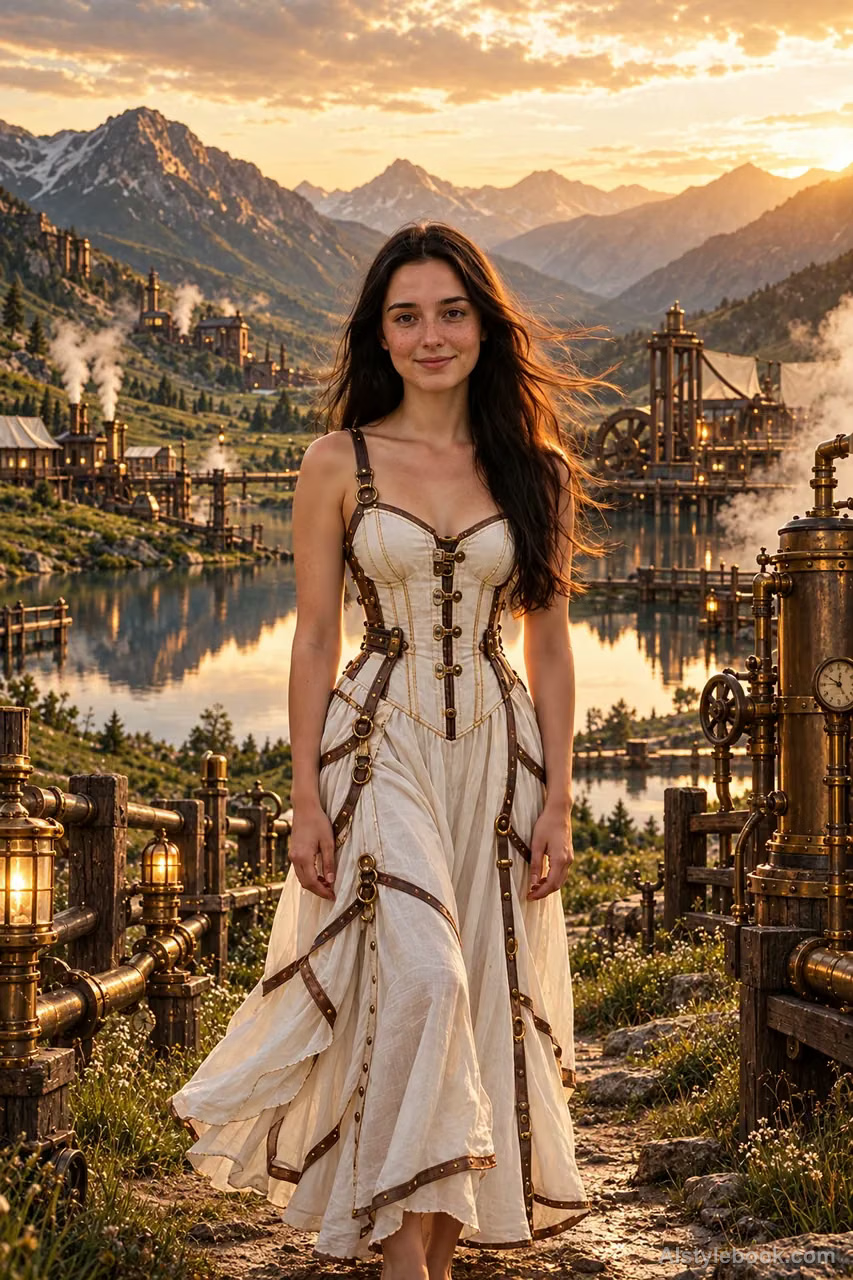
- Portrait
- Rivets, pipes and mechanical joints turn clothing and body contours into retro-industrial designs.
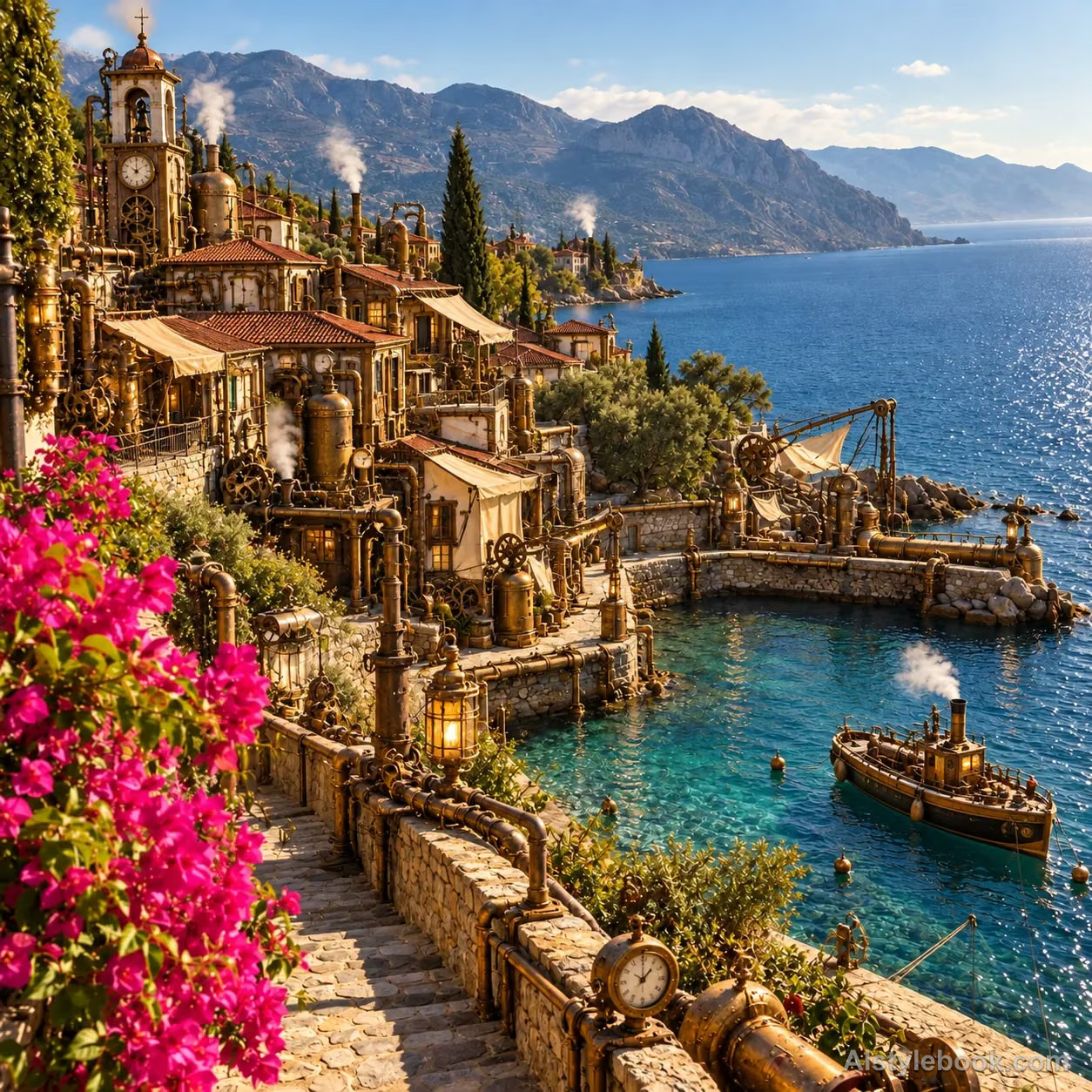
- Landscape
- Boilers, frames and machinery connect buildings and transport into a heavier, denser setting.
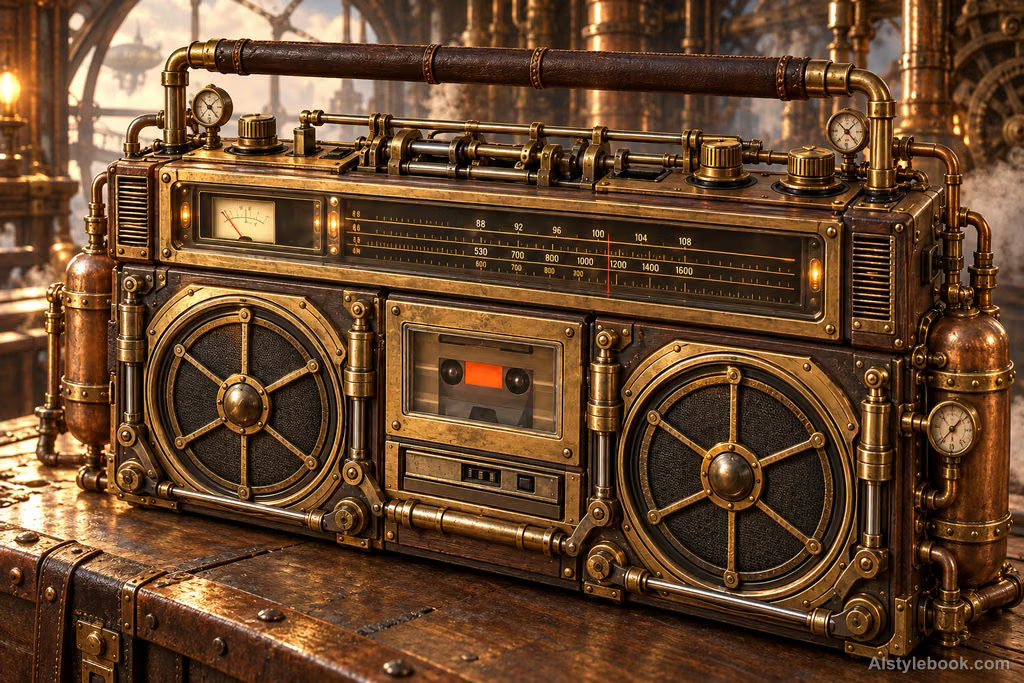
- Objects
- Metal panels and exposed mechanisms replace shells, emphasizing wear and transmission.
- Subjects
- Choose explorers, factories, stations, vehicles or mechanical tools whose structure supports industrial detail.
From alternative history to handmade art
Writer K.W. Jeter proposed the term steampunk in a 1987 letter to Locus, imagining steam-powered technologies through Victorian visual culture. Oxford’s Museum of the History of Science held a steampunk art exhibition in 2009–10, showing its development through machines, objects and handmade work.
Artists & practitioners
Creators to know
K.W. Jeter
The writer proposed the name steampunk in a 1987 letter and provides an important connection to its literary background.
Bring the style to your photos
Reusable style prompt for Steampunk Art Style
Preserve the original contours and spatial hierarchy while translating existing forms into steampunk pressure-bearing construction. Organize bulbous curves, segmented metal seams and reciprocating joints along the original structure. Contrast aged brass, dark wood and matte leather, making fastening and load relationships legible at turns. Local soot tones and worn-edge highlights suggest use. Unify the image through realistically scaled joinery and soft warm side lighting.Use the same style prompt for portraits, landscapes and objects.
Create with this styleKeep exploring


