
Painting & Drawing
Vintage Selective-Color Sketch
Style guide
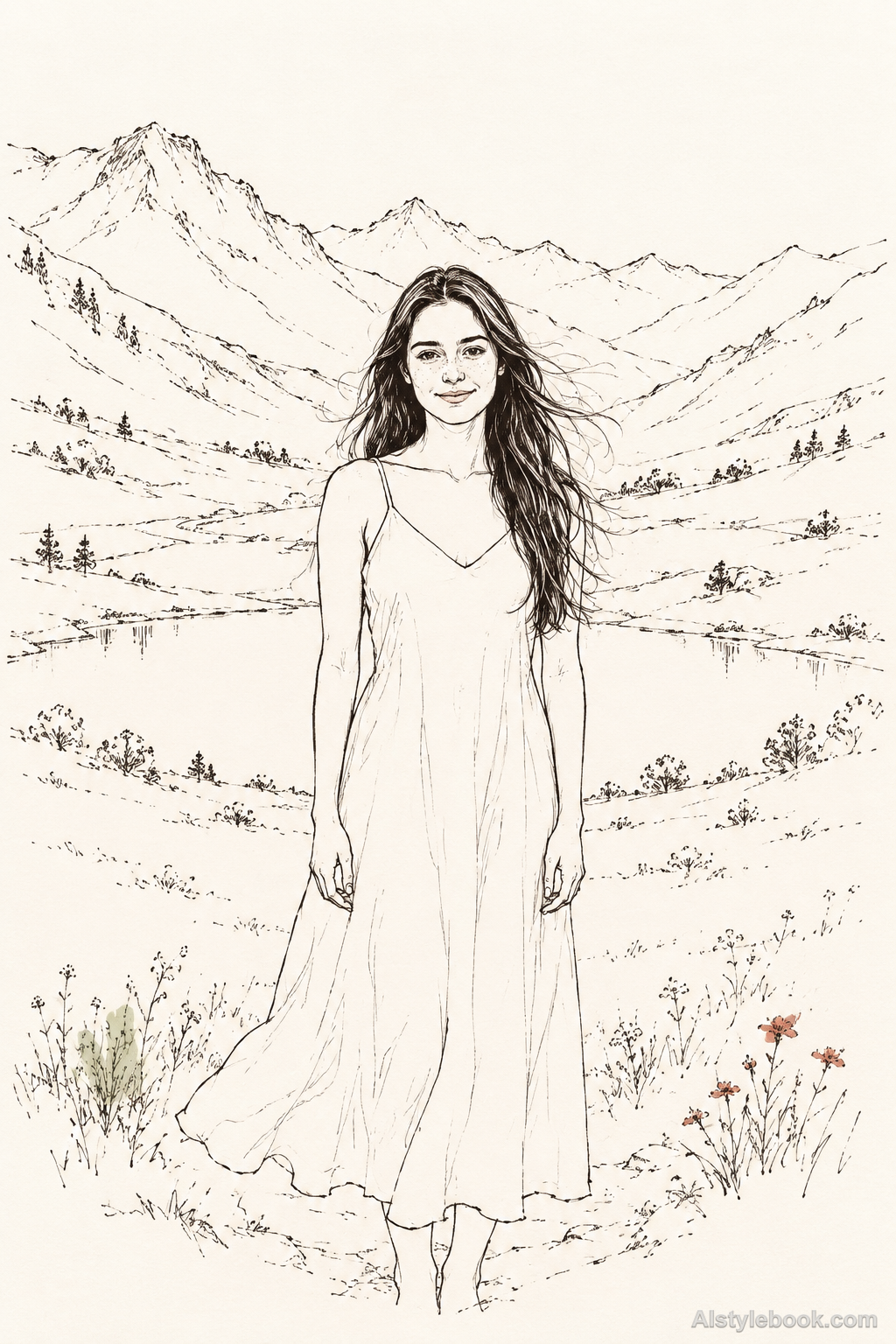
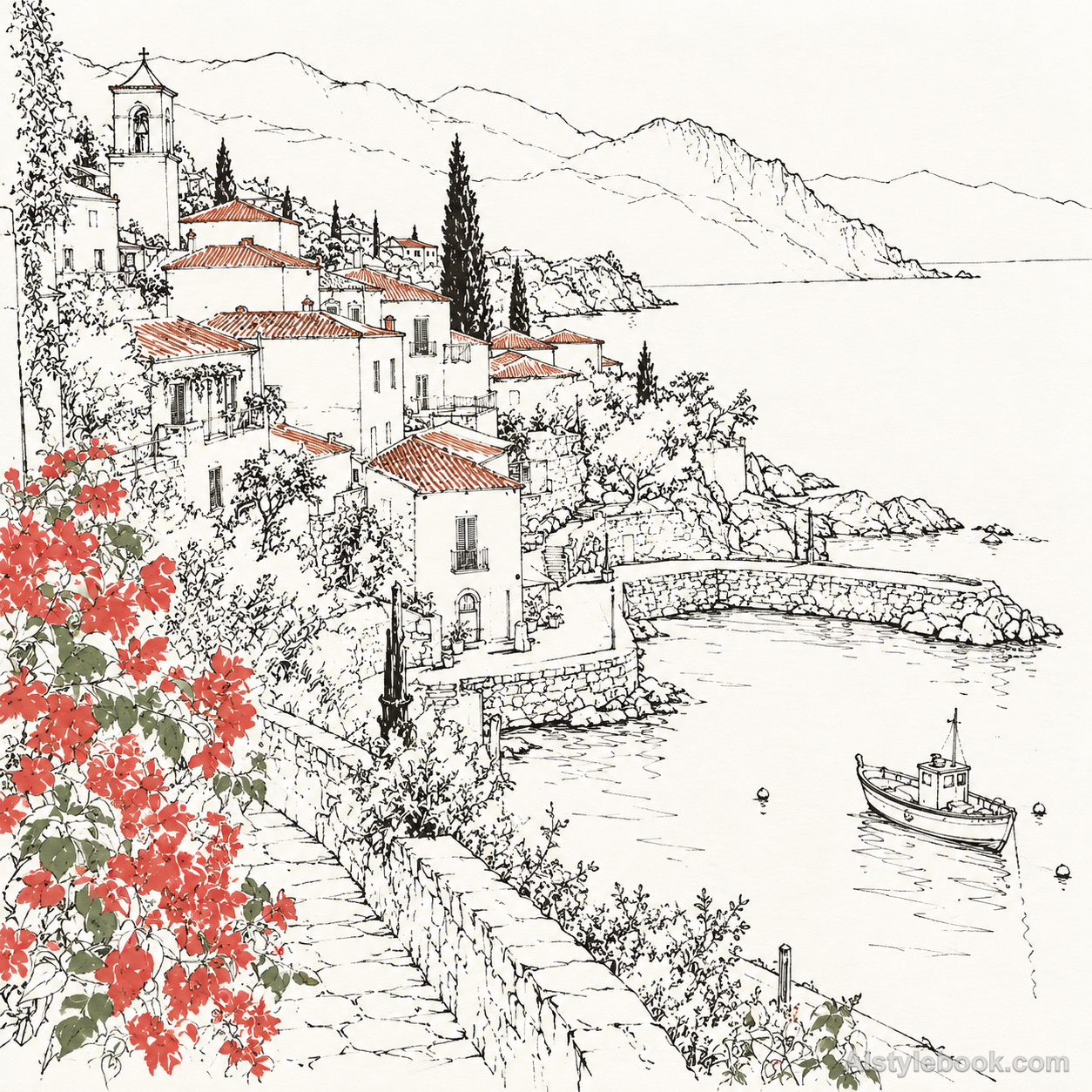
Loose broken ink lines retain a quick observed character, with small ochre-red and sage accents at source focal points.

The visual language
What is Vintage Selective-Color Sketch?
Loose broken ink lines retain a quick observed character, with small ochre-red and sage accents at source focal points. Most paper remains open.
Selective-color sketching uses a small accent to prioritize an observed detail within loose linework.
One red chair on an otherwise monochrome street can guide attention toward what the artist chose to remember.
How the style changes different subjects
- Portrait
- Selective color keeps the main figure prominent against drawn lines and grayscale.
- Landscape
- A landmark or plant retains color while surrounding sketchwork supplies a vintage paper setting.
- Objects
- Selected color highlights one material or part while lines describe structure and shadow.
- Subjects
- Choose figures, landmarks or still lifes clearly separated from their background, with one main colored focal point.
Variant relationship
A vintage selective-color sketch variant of Minimal Line Art. Compare with Line Art.
Minimal Line Art favors a few complete contours. This variant retains broken strokes, light exploratory repeats and sparse muted color, giving the drawing a looser observed quality.
Bring the style to your photos
Reusable style prompt for Vintage Selective-Color Sketch
Preserve source identity and main spatial anchors while reducing detail to a sparse vintage selective-color sketch. Use thin broken black contours and a few lightly repeated exploratory lines on clean warm-white paper. Keep most interior areas unfilled, with no dense hatching or gray shading. Add only two small localized translucent sage and red-ochre accent passages on existing focal details; keep their total coverage minimal. Retain enough economical observed lines for recognition. Avoid all-over beige washes, sepia aging, full-scene coloring, photorealism, new props, inscriptions and borders.Use the same style prompt for portraits, landscapes and objects.
Create with this styleKeep exploring


