
3D & Miniatures
Voronoi Cellular Structure
Style guide
Thick-walled polygonal openings form a continuous perforated shell, with deep cavities and beveled supports expressing cellular geometric volume.
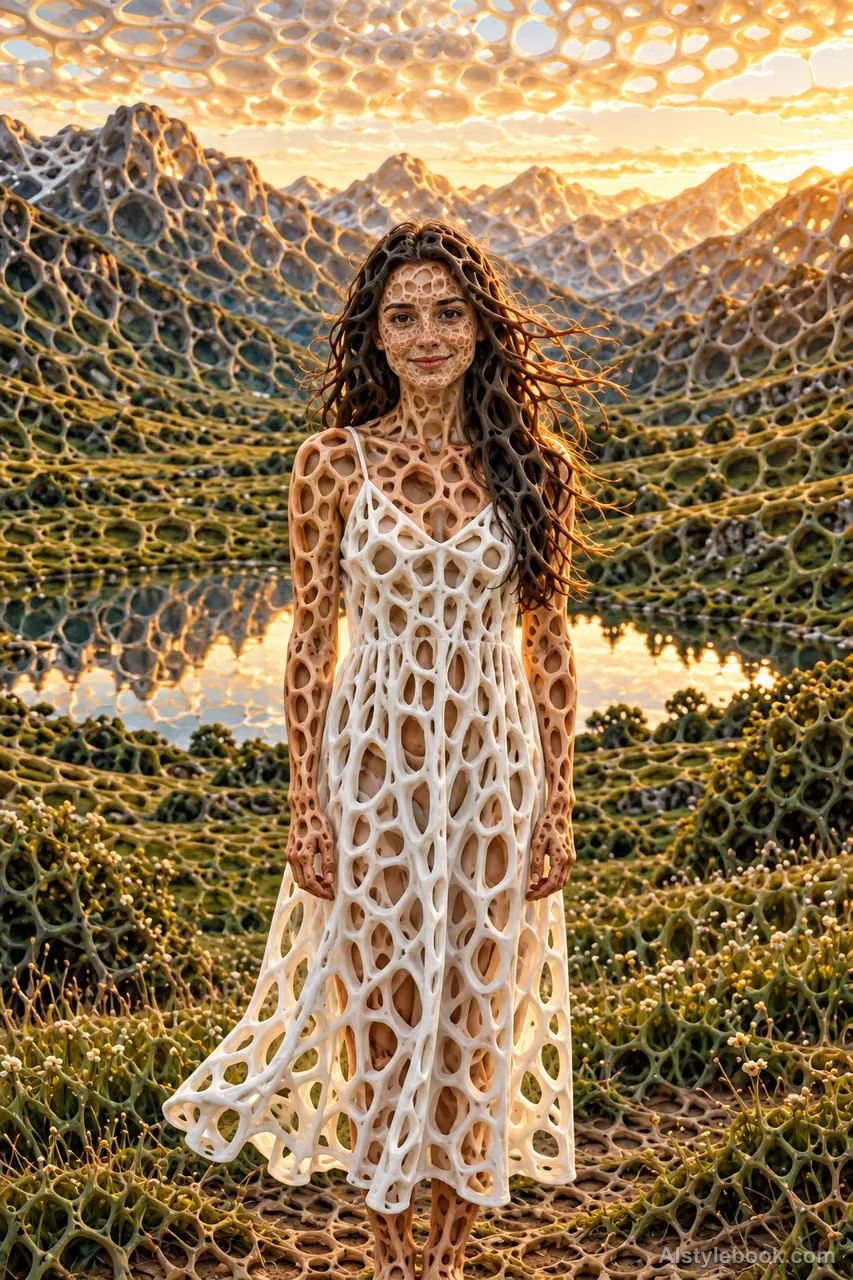
PortraitStyle effect
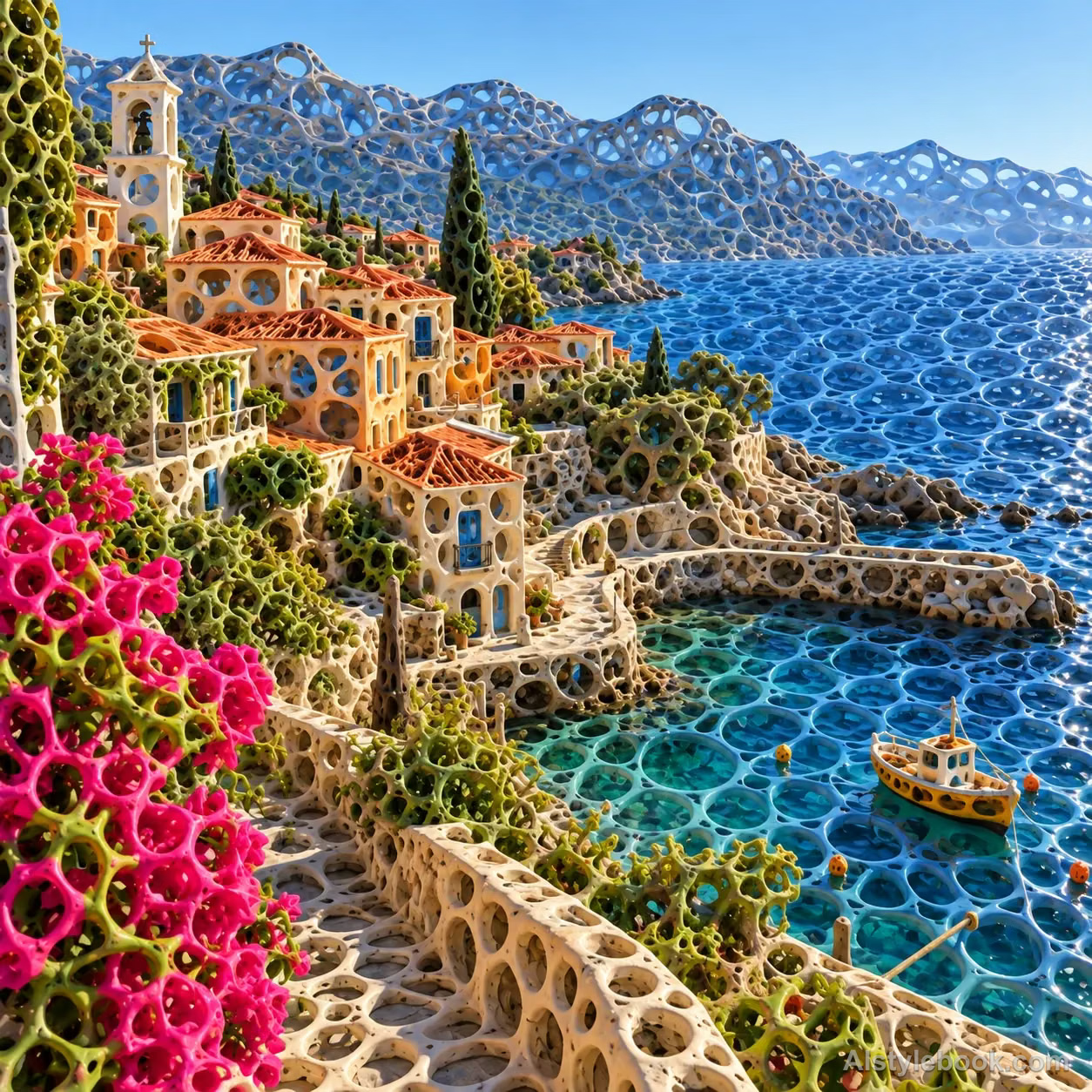
LandscapeStyle effect
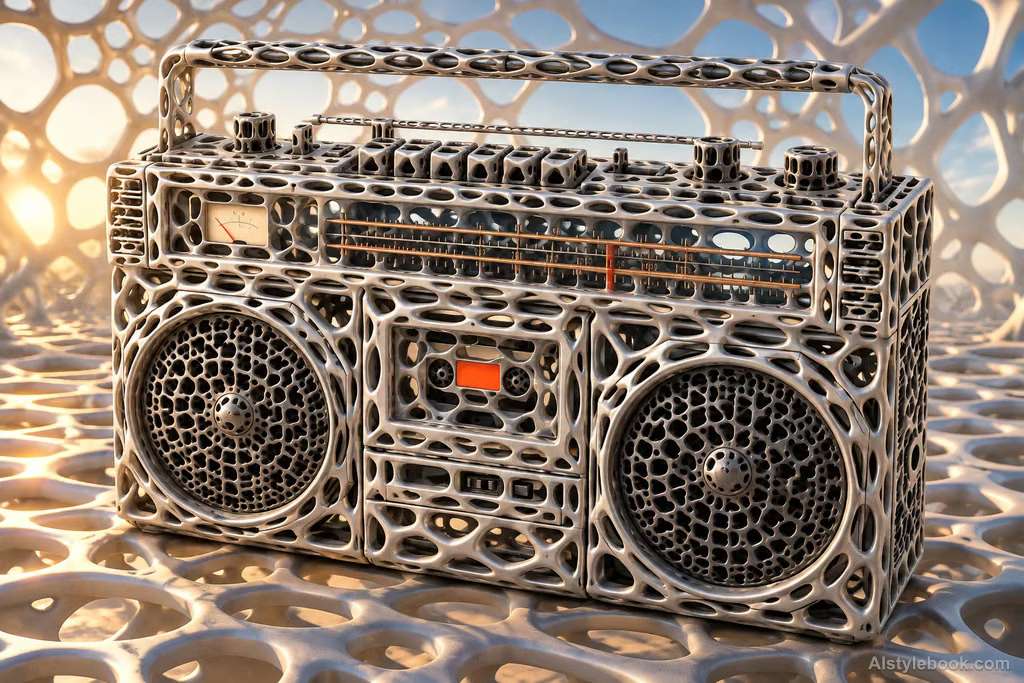
ObjectsStyle effect
The visual language
What is Voronoi Cellular Structure?
Thick-walled polygonal openings connect into a perforated shell, showing both beveled supports and deep cavities. Hole size changes with detail scale, building form through actual shell walls rather than printed pattern.
Voronoi-inspired solids need connected cell walls and thickness beyond a flat polygon pattern.
A lamp shade with beveled openings and visible interior depth can read as a genuinely open shell.
How the style changes different subjects
- Portrait
- Pores or cellular walls interrupt the figure's surface, leaving broad contours to retain recognition.
- Landscape
- Porous structures and dark cavities unify scenery with additional surface depth.
- Objects
- Cell walls and openings replace object shells, emphasizing pore scale and wall thickness.
- Subjects
- Choose sculptures, rounded objects, rocks or buildings whose important features are larger than the openings.
Bring the style to your photos
Reusable style prompt for Voronoi Cellular Structure
Reconstruct every form as a thick-walled open shell of irregular polygonal cells. Smooth beveled walls, deep cavities and continuous supporting edges create clear negative space. Use smaller cells for identifying details and larger irregular cells on broad surfaces. Retain the original color relationships and use shadows inside the openings to model volume, maintaining one coherent cellular geometry across the entire image.Use the same style prompt for portraits, landscapes and objects.
Create with this styleKeep exploring


