
Painting & Drawing
Analytical Cubism
Style guide
Multi-viewpoint broken lines interweave with thin translucent color planes, compressing space in ochre-gray tones.
The visual language
What is Analytical Cubism?
Objects split into overlapping facets, with edges from different viewpoints meeting in one area. Restrained ochre-gray and thin transparent layers flatten space while leaving a traceable structure.
Analytical Cubism suggests several aspects of an object through interconnected planes.
A circular bottle rim above fragmented sides invites viewers to reconstruct the object as its edges merge with the table and background.
How the style changes different subjects
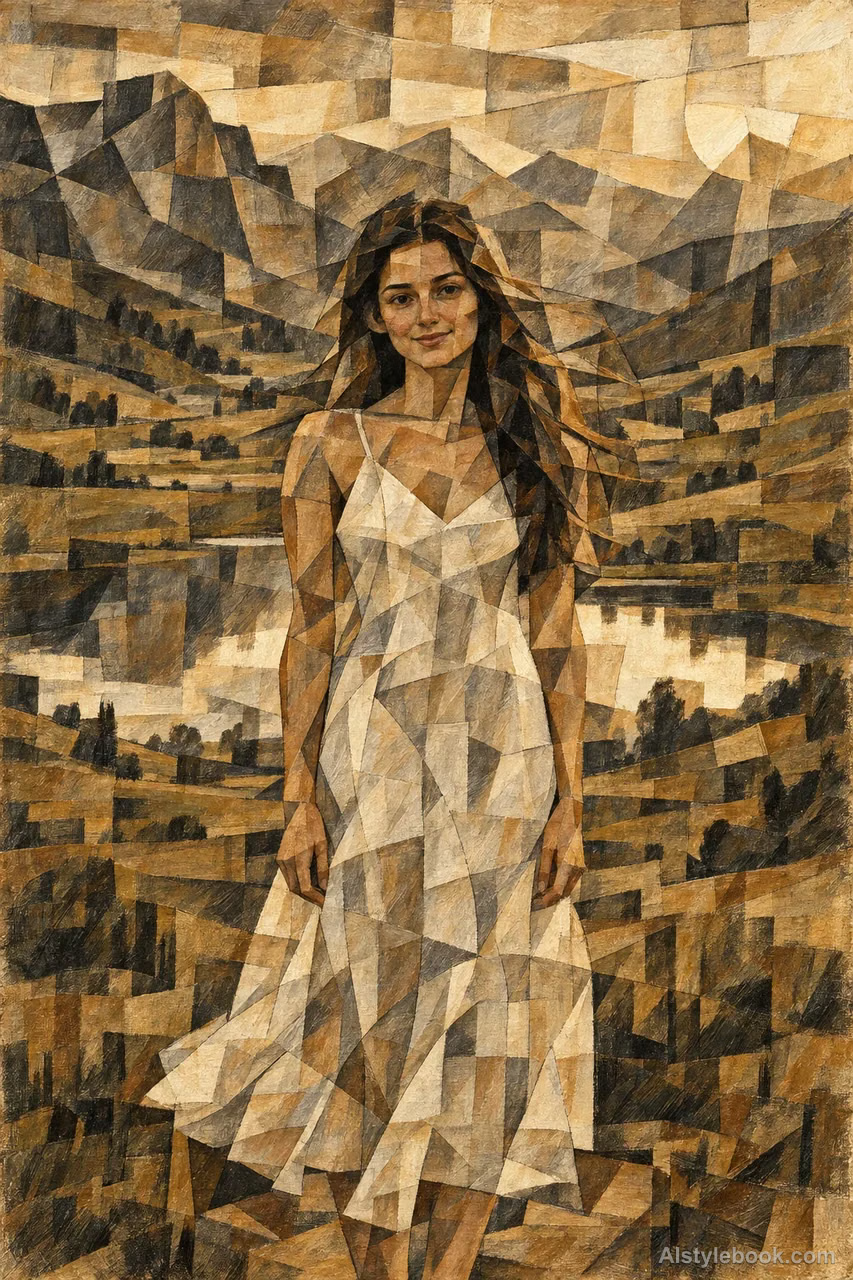
- Portrait
- Overlapping facets fragment face and body, sometimes combining front and side cues into abstract proportions.
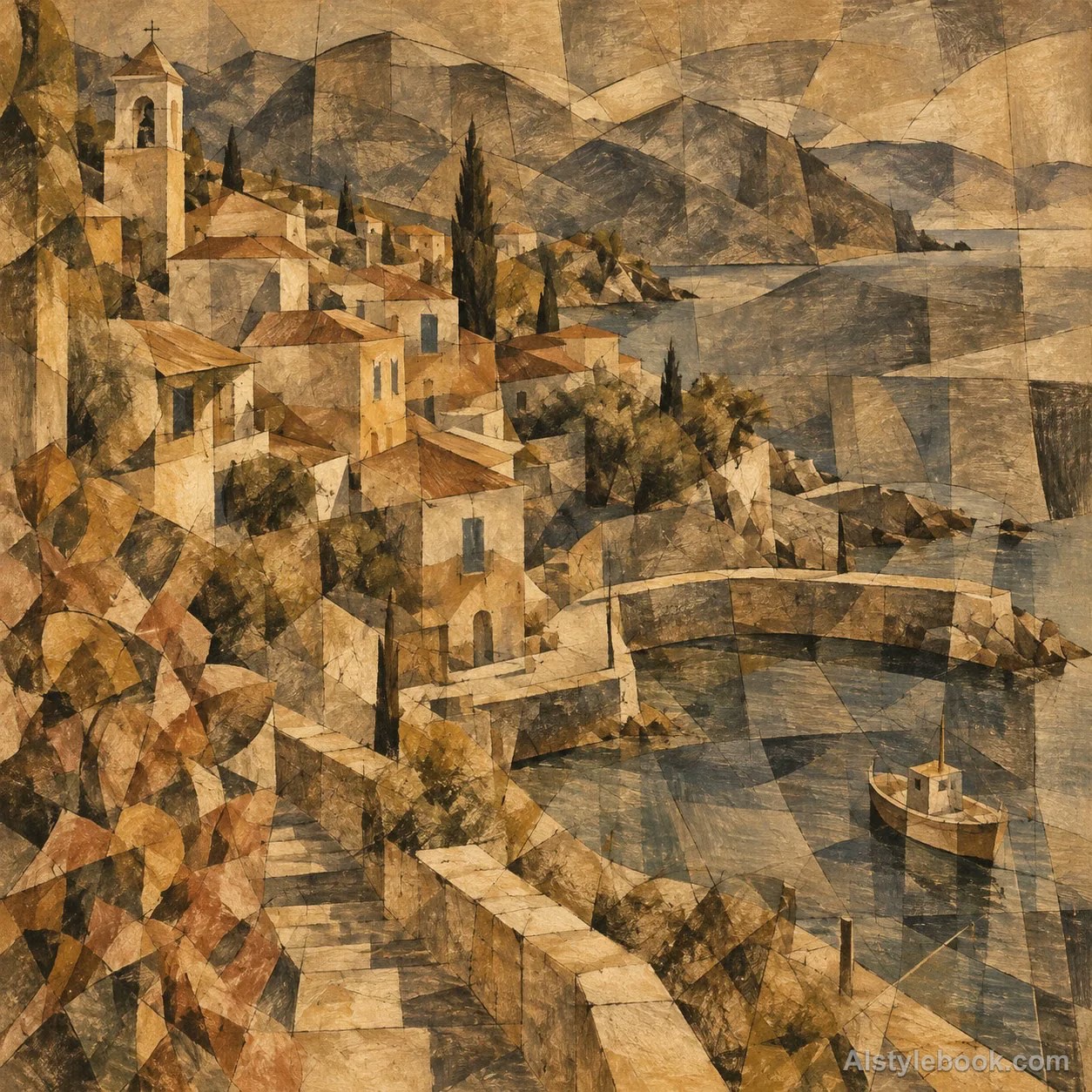
- Landscape
- Conflicting views of buildings and planes compress depth into layered geometry.
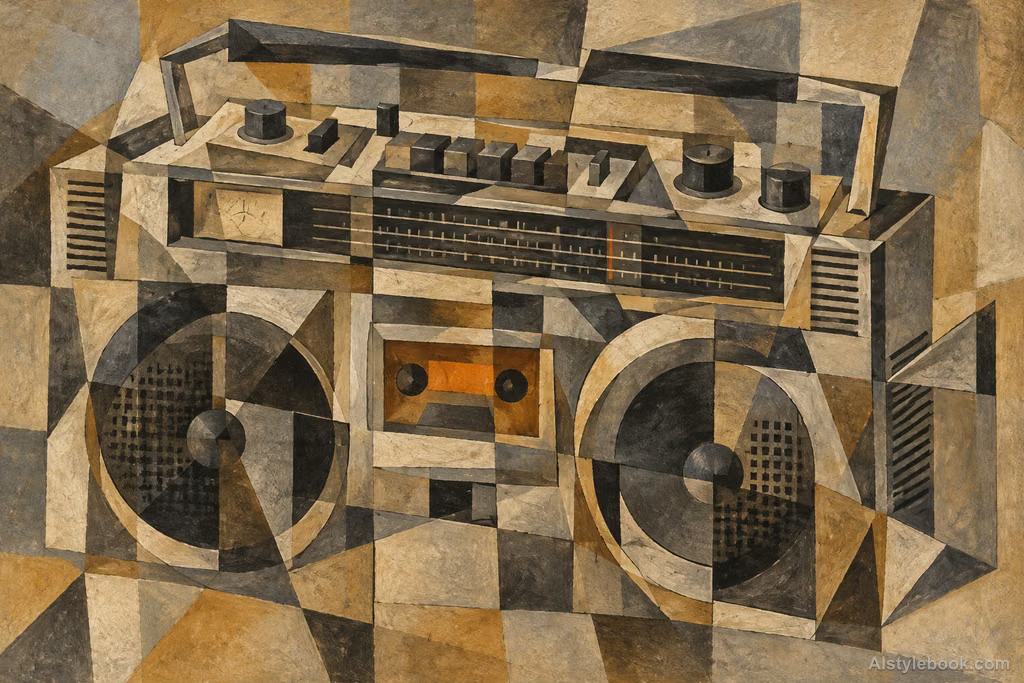
- Objects
- Bottles, cups and instruments break into edges and planes, favoring structure over reflections.
- Subjects
- Choose bottles, instruments, tabletop groups or clear portraits with backgrounds simple enough to keep the facets readable.
Analytical Cubism
In their Analytical Cubist phase, Picasso and Braque broke forms into overlapping facets, often using near-monochromatic browns, grays and blacks.
Bring the style to your photos
Reusable style prompt for Analytical Cubism
Repaint the uploaded image in analytical cubism. Break existing forms into shallow interpenetrating planes and reconstruct volume through fragmented contours seen from multiple viewpoints. Use ochre, charcoal gray, beige-brown and a little cool gray, with translucent thin paint revealing underlying structure. Let subject and background share a planar rhythm, deriving light and shade from overlapping relationships while keeping distinctive features legible.Use the same style prompt for portraits, landscapes and objects.
Create with this styleKeep exploring


