
Painting & Drawing
Cloisonnism
Style guide
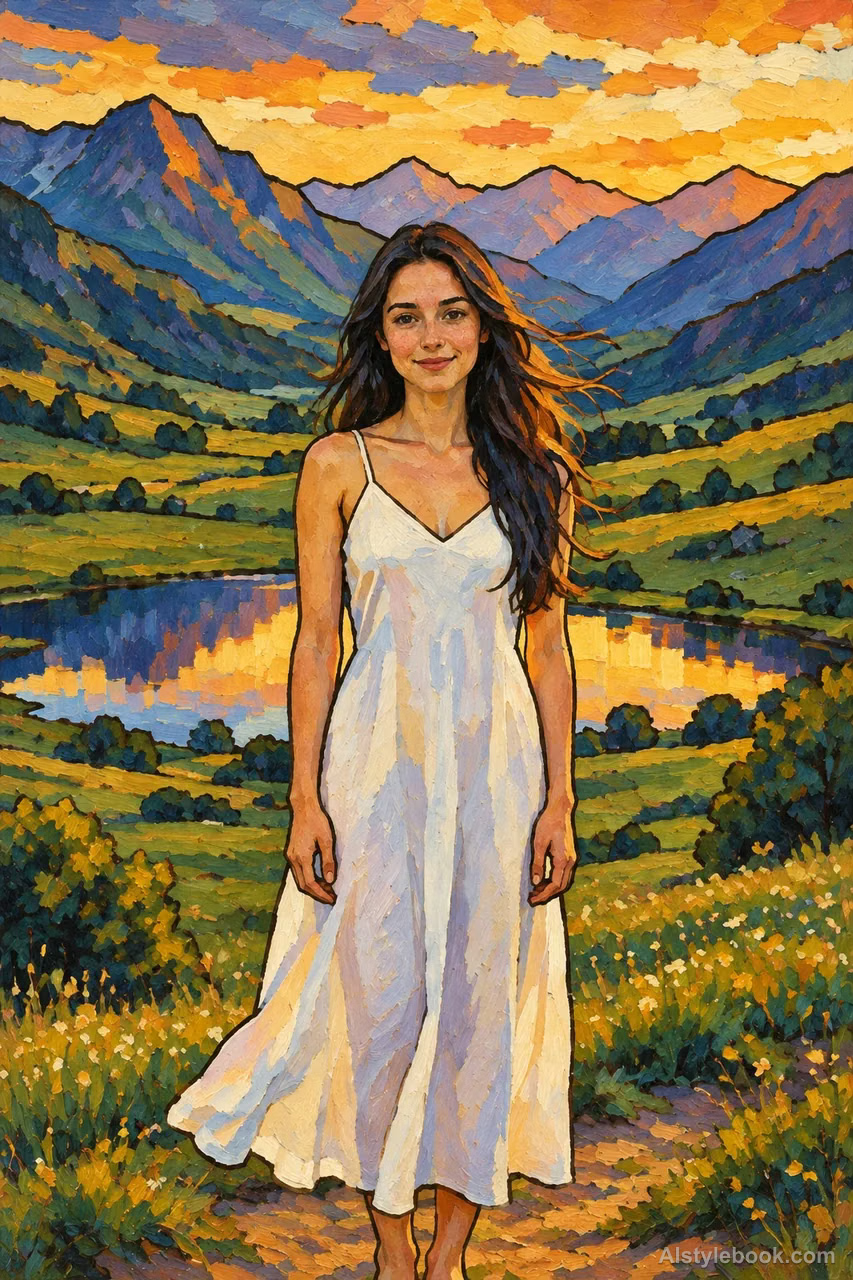
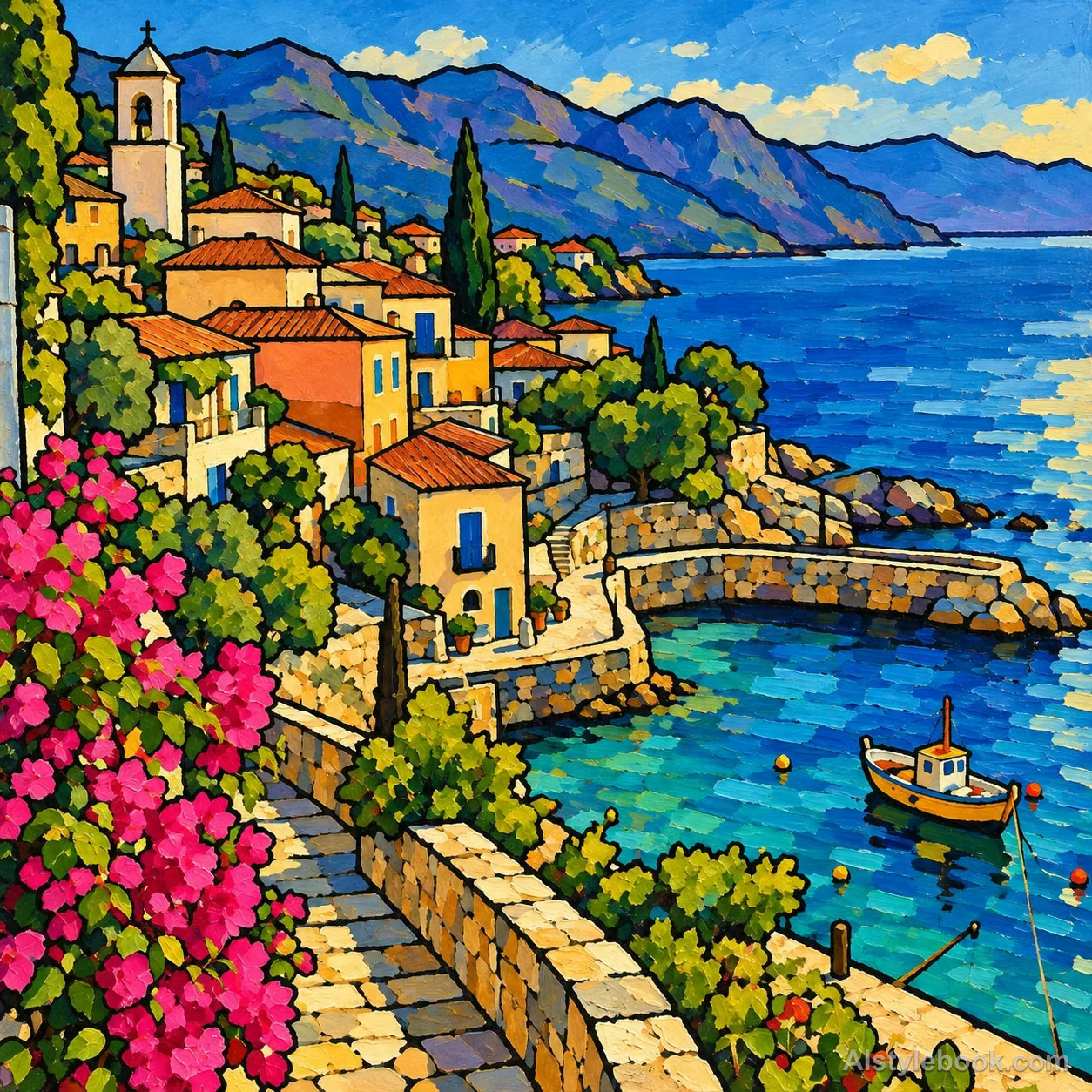
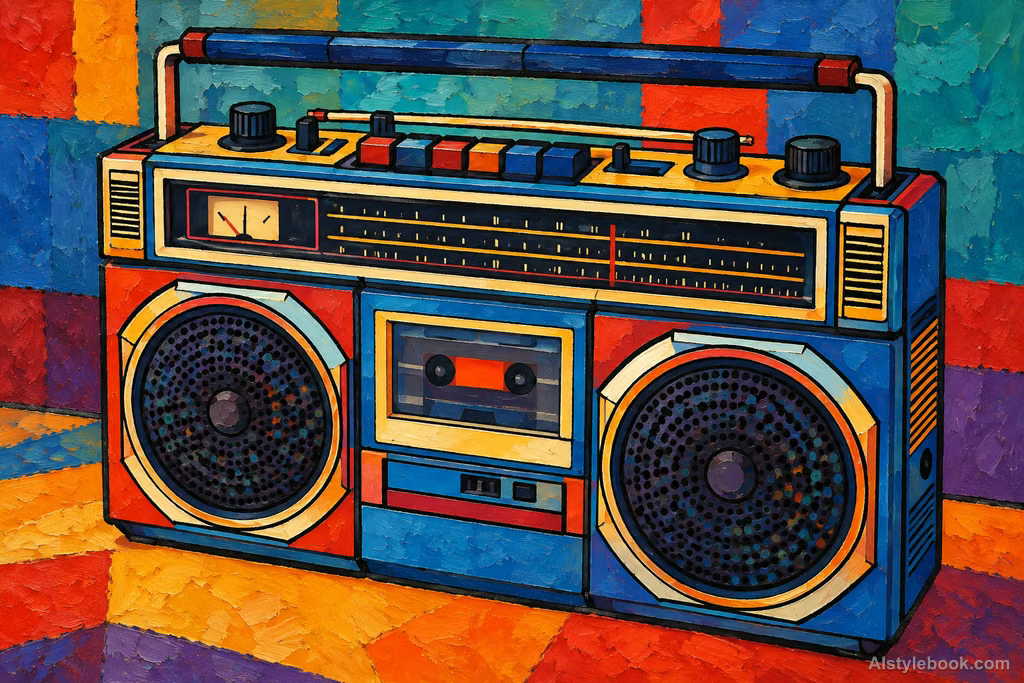
Dark handmade contours separate saturated matte color fields, with simplified planes and irregular painted edges creating tension.
The visual language
What is Cloisonnism?
Dark hand-drawn lines enclose broad matte fields, reducing internal shading to a minimum. Slightly irregular contours pull against saturated planes and give the flat image tension.
Cloisonnism separates simplified colors with dark contours, recalling divided enamel without sharing its materials.
Outlined trees, roofs and sky can interlock like a flat puzzle with very little shading.
How the style changes different subjects
- Portrait
- Dark outlines separate features, skin and clothing, replacing gradients with clear decorative shapes.
- Landscape
- Hills, water and trees become enclosed color areas organized by overlap and scale.
- Objects
- Heavier contours and flat reflections simplify complex object surfaces.
- Subjects
- Choose distinct figures, landscapes, flowers, fruit or pottery with clear color boundaries rather than intricate texture.
Cloisonnist practice
Bernard helped develop the Cloisonnist approach in the late 1880s, influencing the experiments of Gauguin and other painters.
Bring the style to your photos
Reusable style prompt for Cloisonnism
Repaint the image in cloisonnism. Enclose saturated matte color zones with expressive dark hand-painted contours whose thickness responds to structural tension. Reduce volume to a few clear planar turns, retaining slight unevenness in paint coverage and irregular brushed edges. Distinguish light and shade through the temperature and intensity of neighboring color fields. Compress spatial layering and derive the compositional rhythm from existing contours and interacting color regions.Use the same style prompt for portraits, landscapes and objects.
Create with this styleKeep exploring


