
Illustration & Design
Art Deco
Style guide
Stepped transitions and radiating geometry meet a black-and-gold palette, with subtle metallic light creating restrained Art Deco luxury.
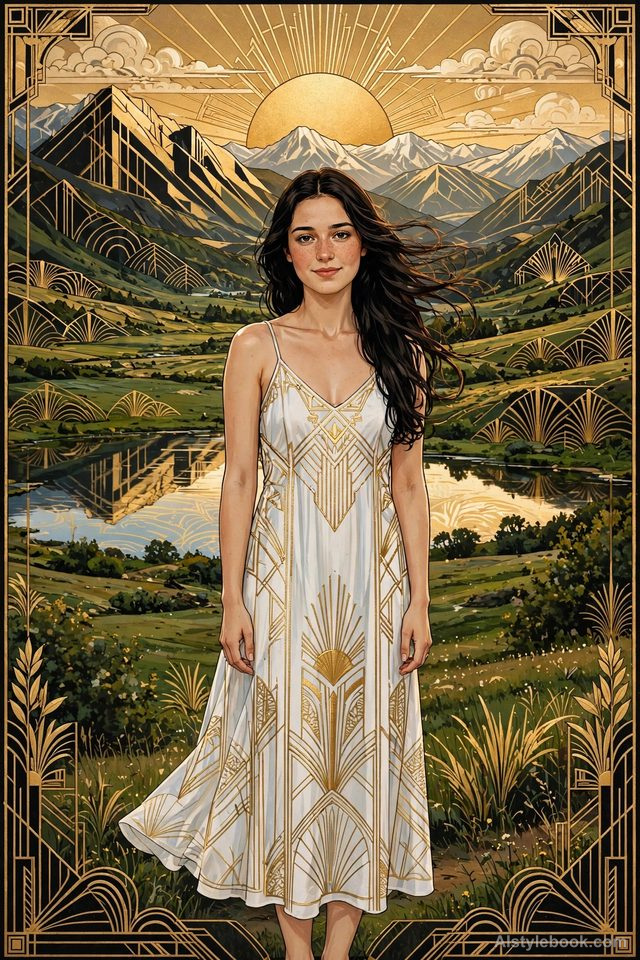
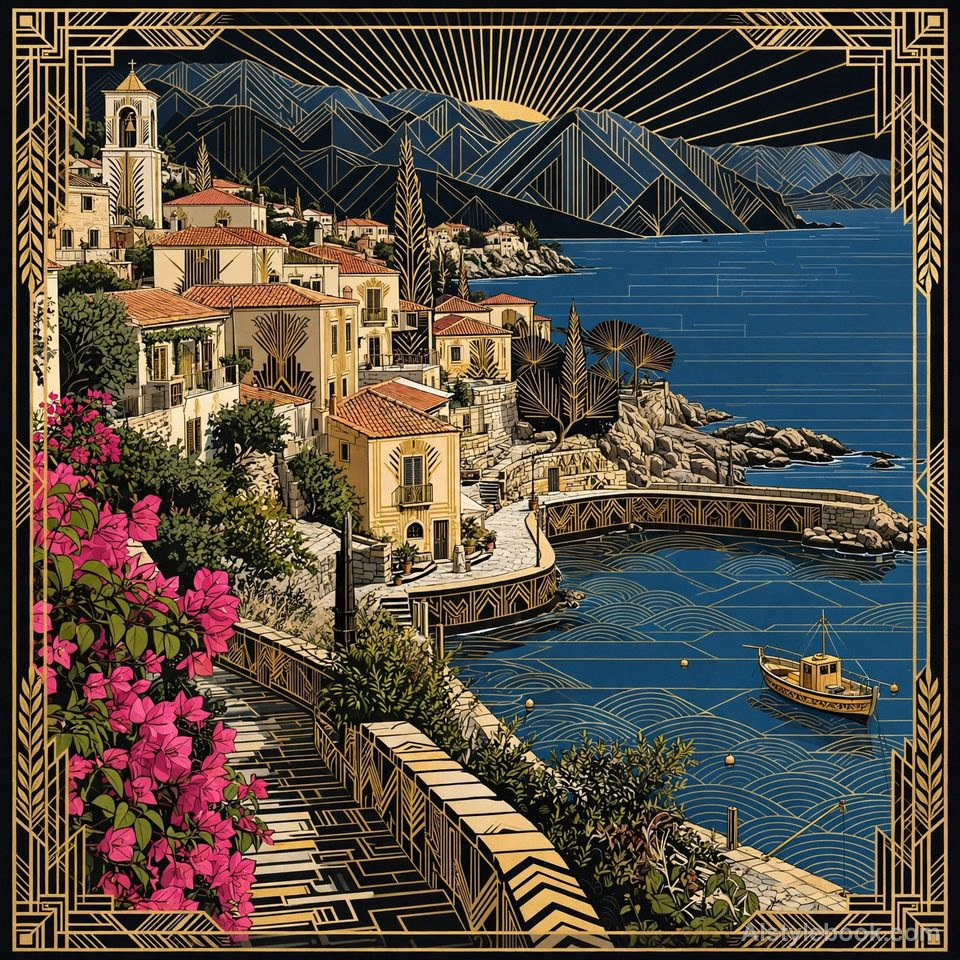
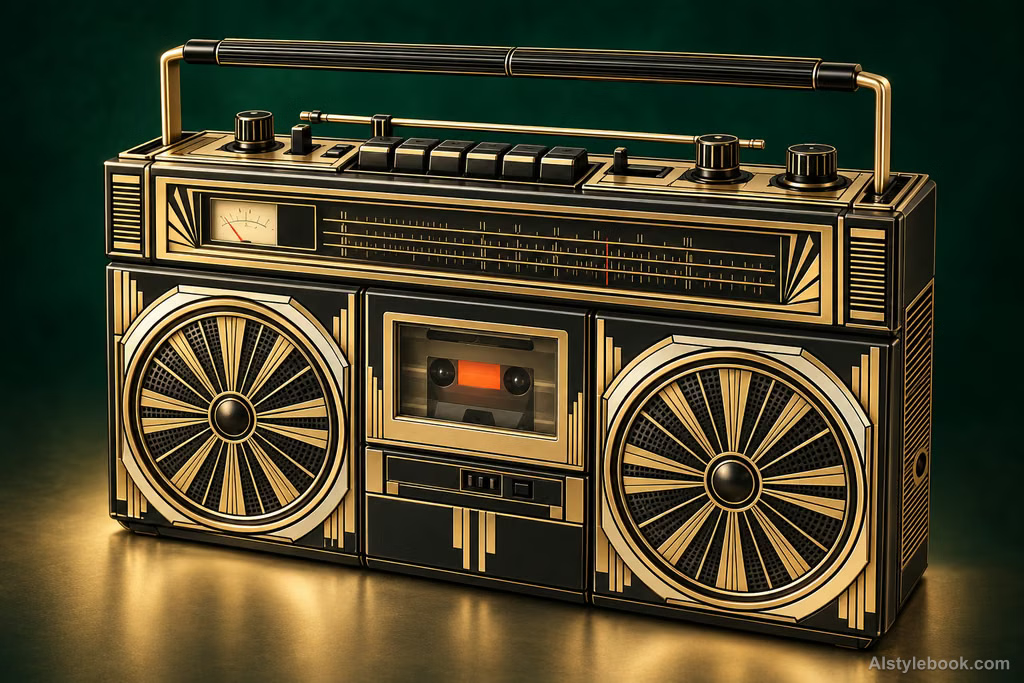
The visual language
What is Art Deco?
Stepped forms, fans and radiating lines follow the object, with local symmetry reinforcing ornament. Deep black, ivory and delicate metallic highlights create an ordered sense of luxury.
Art Deco organizes forms through stepped, radiating and symmetrical ornament.
Repeated lines following a skyscraper's setbacks can establish that rhythm even without covering the whole image in gold.
How the style changes different subjects
- Portrait
- Elongated geometric lines refine pose and dress, with selective ornament adding elegance.
- Landscape
- Buildings and skylines form stepped, radial or symmetrical rhythms with a monumental quality.
- Objects
- Elegant curves and geometric accents emphasize polished metal and dark glossy surfaces.
- Subjects
- Choose sharply styled figures, towers, perfume bottles, lamps or jewelry with clear symmetry and geometric rhythm.
Modern decorative design
Art Deco brought together varied modern and decorative influences. The 1925 International Exhibition of Modern Decorative and Industrial Arts in Paris was a pivotal event in its dissemination.
Bring the style to your photos
Reusable style prompt for Art Deco
Use the refined geometric language of 1920s Art Deco. Keep contours smooth and crisp, integrating stepped transitions, radiating lines, and fan-like rhythms within existing structures. Local patterns may have rigorous symmetry while the subject's overall form and arrangement remain natural. Create luxurious but restrained contrast with deep black, warm gold, and a little ivory. Keep metallic sheen delicate and integrate patterns closely with form.Use the same style prompt for portraits, landscapes and objects.
Create with this styleKeep exploring


