
Fantasy & Architecture
Biomechanical World
Style guide
Organic tissue and mechanical joints fuse into continuous structures with a deliberate anatomical rhythm.

PortraitStyle effect

LandscapeStyle effect
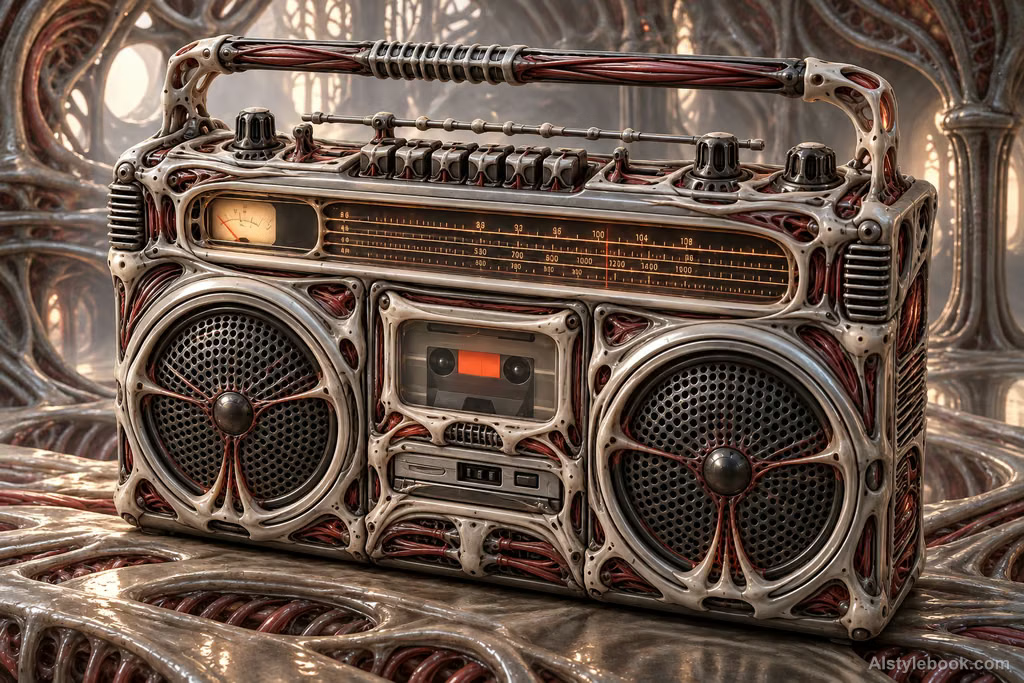
ObjectsStyle effect
The visual language
What is Biomechanical World?
Bone-like ribs and tendon curves connect directly to pipes, joints and shells. Continuous transitions and repeated segmented rhythms make organic and mechanical parts appear inseparable.
Biomechanical imagery connects organic and artificial structures through continuous transitions.
A bone-like shoulder becoming a metal joint and tendonlike tubing can retain one coherent direction of force.
How the style changes different subjects
- Portrait
- Organic texture and mechanical shells merge continuously across body and clothing.
- Landscape
- Ribbed structures and connected conduits make buildings feel grown and engineered together.
- Objects
- Bone-like turns, membranes and interfaces blur material boundaries on objects.
- Subjects
- Choose clear figures, machinery, pipe-filled spaces or segmented animal forms with continuous structure.
Bring the style to your photos
Reusable style prompt for Biomechanical World
Translate existing forms into integrated biomechanical construction. Ribbed shells and tendonlike connections grow continuously along volumes, turning original bends into repeated interlocking joints. Let porous bone-white material, dark metal and flexible translucent membranes merge smoothly at seams. Fine longitudinal striations indicate load paths. Alternating warm and cool side light emphasizes shell thickness and recesses, naturally fusing organic curvature with mechanical precision within one coherent structure.Use the same style prompt for portraits, landscapes and objects.
Create with this styleKeep exploring


