
Materials & Craft
Byzantine Mosaic
Style guide
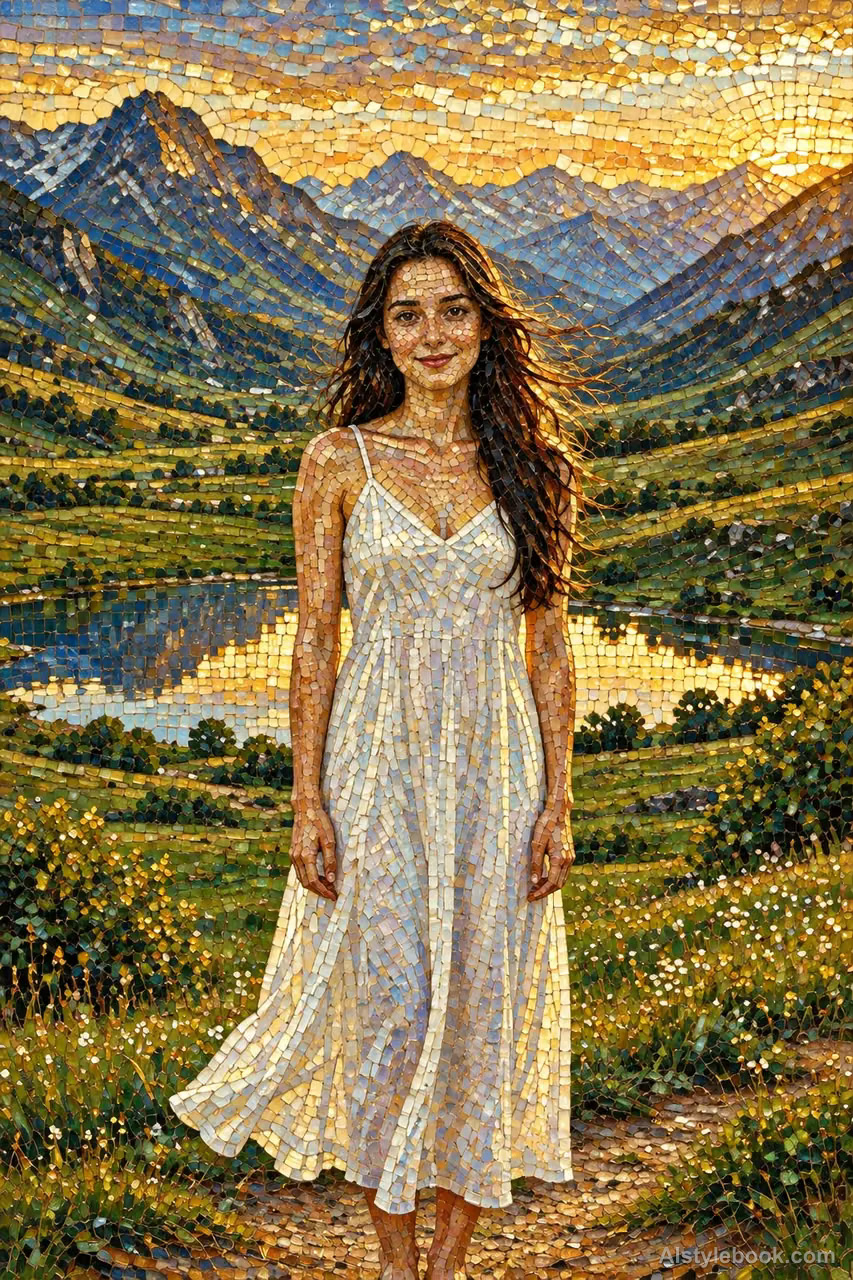
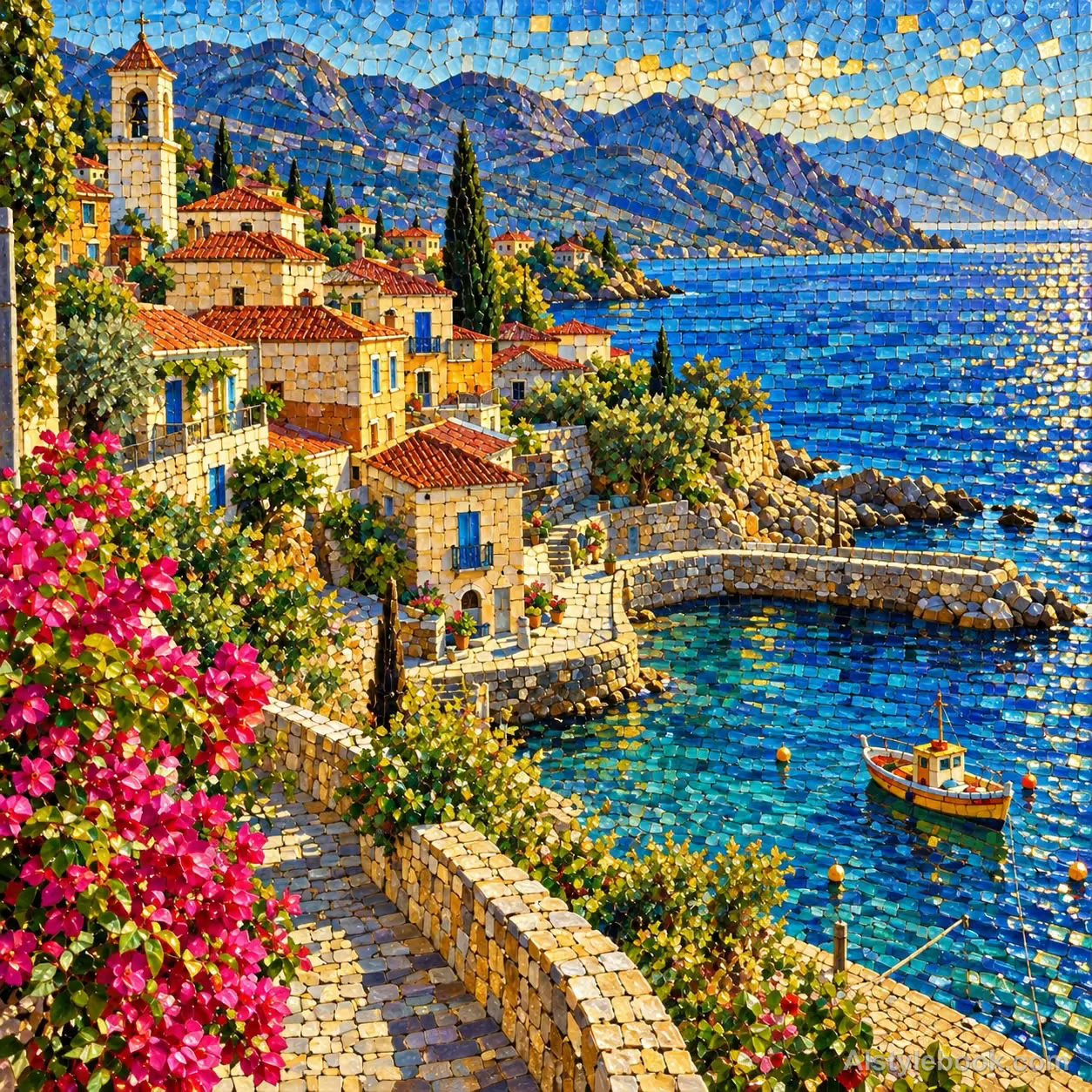
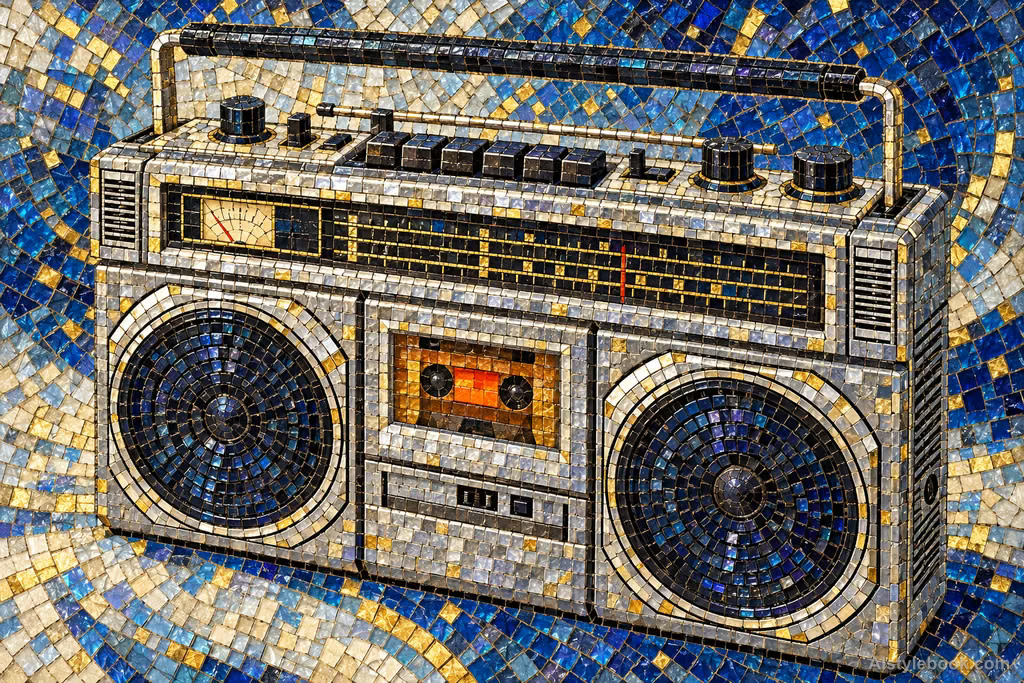
Jewel-colored glass and gold tesserae follow the forms, with fine mortar seams and tilted reflections adding depth.
The visual language
What is Byzantine Mosaic?
Irregular glass tesserae turn with the contours, separated by fine mortar joints. Different tilts of gold and jewel-colored faces scatter directional glints, giving a flat image depth through light.
Mosaic uses separate tesserae whose orientation can follow contours and vary reflections.
A gold field built from slightly angled pieces can shimmer behind a figure instead of reading as uniform yellow.
How the style changes different subjects
- Portrait
- Small pieces build face and clothing from discrete colors with granular edges.
- Landscape
- Arranged fragments separate scenery through color, density and joints.
- Objects
- Curves and reflections become pieces within a decorative, visibly joined surface.
- Subjects
- Choose frontal figures, flowers, birds, buildings or clear still lifes without tiny faces or lettering.
Glass and golden interiors in Byzantium
Glass mosaic flourished in the Byzantine period, covering domes, vaults and other interior surfaces. Early decoration surviving at Hagia Sophia sets colored-glass vegetal motifs and crosses against a gold background.
Bring the style to your photos
Reusable style prompt for Byzantine Mosaic
Build the existing forms as a Byzantine-inspired glass mosaic using irregular hand-cut tesserae and restrained gold pieces. Turn the courses with contours and shifts in light. Fine mortar seams separate jewel-colored fragments, whose individually tilted faces produce directional glints. Use smaller tesserae for identifying detail and slightly looser courses in the background, creating coherent depth through fragment scale and refractive color differences.Use the same style prompt for portraits, landscapes and objects.
Create with this styleKeep exploring


