
Materials & Craft
Micromosaic
Style guide
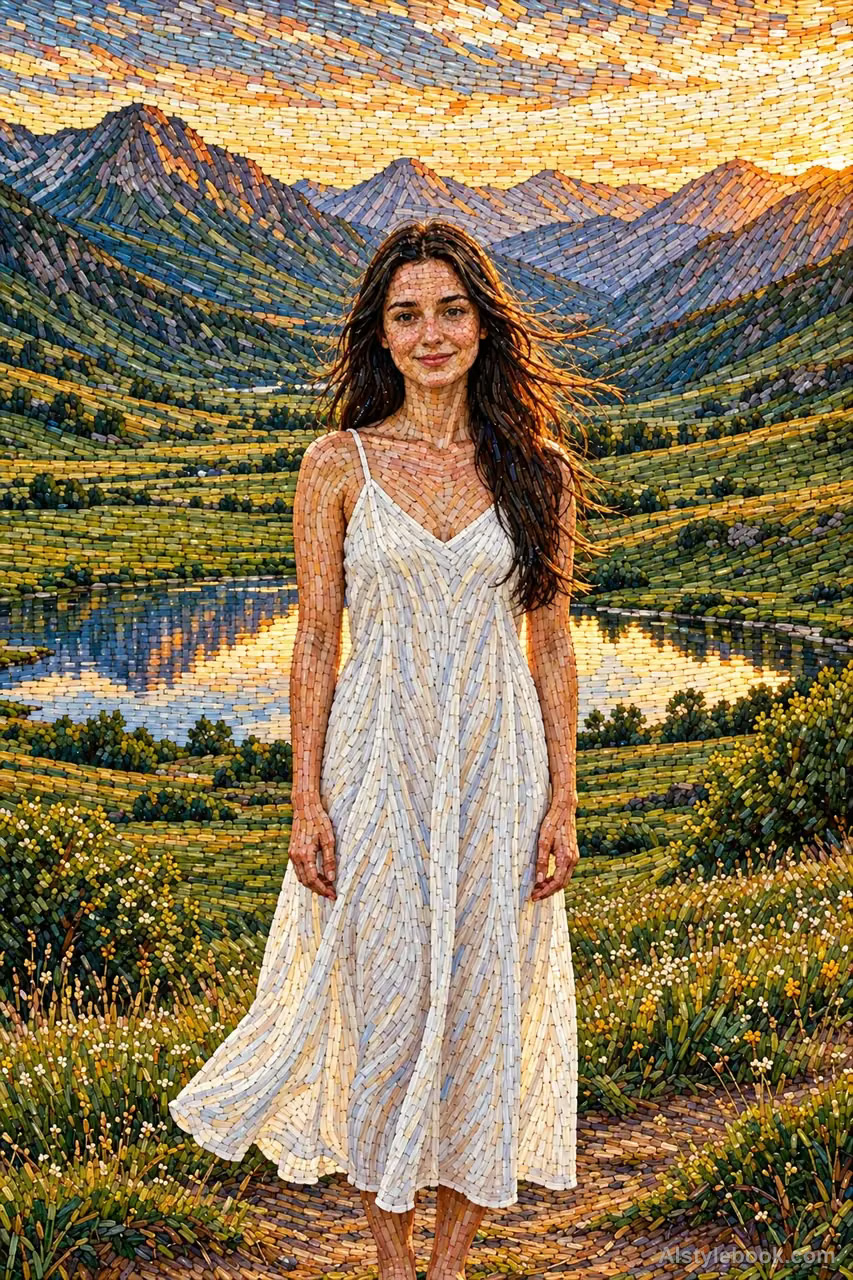
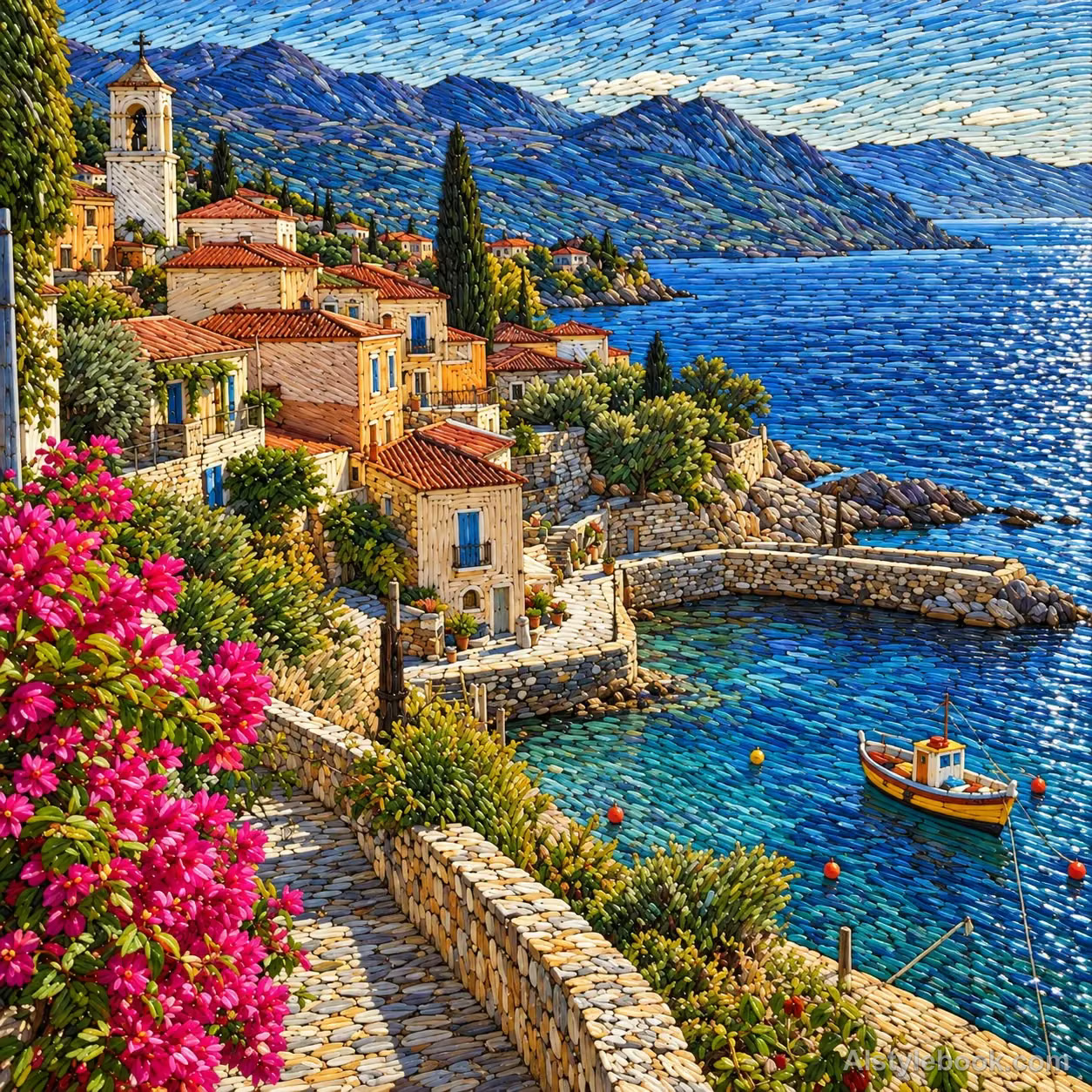
Slender colored-glass pieces fit closely along curved paths, with minute seams, tiny glints and precise color gradations modeling form.

The visual language
What is Micromosaic?
Tiny sections of fine glass rods fit closely along curved courses, resolving detail with minute color steps. Dark joints and separate glints remain visible, making a continuous image from a precise material array.
Micromosaic approaches painted continuity through tiny glass units arranged by hue and direction.
A petal that looks softly shaded from afar can resolve into short sections following its growth.
How the style changes different subjects
- Portrait
- Small pieces build face and clothing from discrete colors with granular edges.
- Landscape
- Arranged fragments separate scenery through color, density and joints.
- Objects
- Curves and reflections become pieces within a decorative, visibly joined surface.
- Subjects
- Choose frontal figures, flowers, birds, buildings or clear still lifes without tiny faces or lettering.
Micromosaic in Rome
In late-18th- and early-19th-century Rome, affluent travelers supported micromosaic work. Much smaller glass tesserae allowed meticulous reinterpretations of classical imagery on decorative surfaces including tabletops.
Bring the style to your photos
Reusable style prompt for Micromosaic
Reconstruct the image from extremely fine colored glass rods arranged in continuous curved courses around existing forms. Shorten or redirect individual rods to resolve small details. Minute dark seams distinguish each piece, while closely stepped colors follow the original values. Retain slight face tilts and tiny scattered glints instead of merging highlights into smooth surfaces. Tight material fitting and directional courses create delicate volume.Use the same style prompt for portraits, landscapes and objects.
Create with this styleKeep exploring


