
Illustration & Design
Contour-Isoline Map
Style guide
Nested dark-teal closed contours vary in spacing, with warm-white gaps and merging concentric groups creating flowing volume.
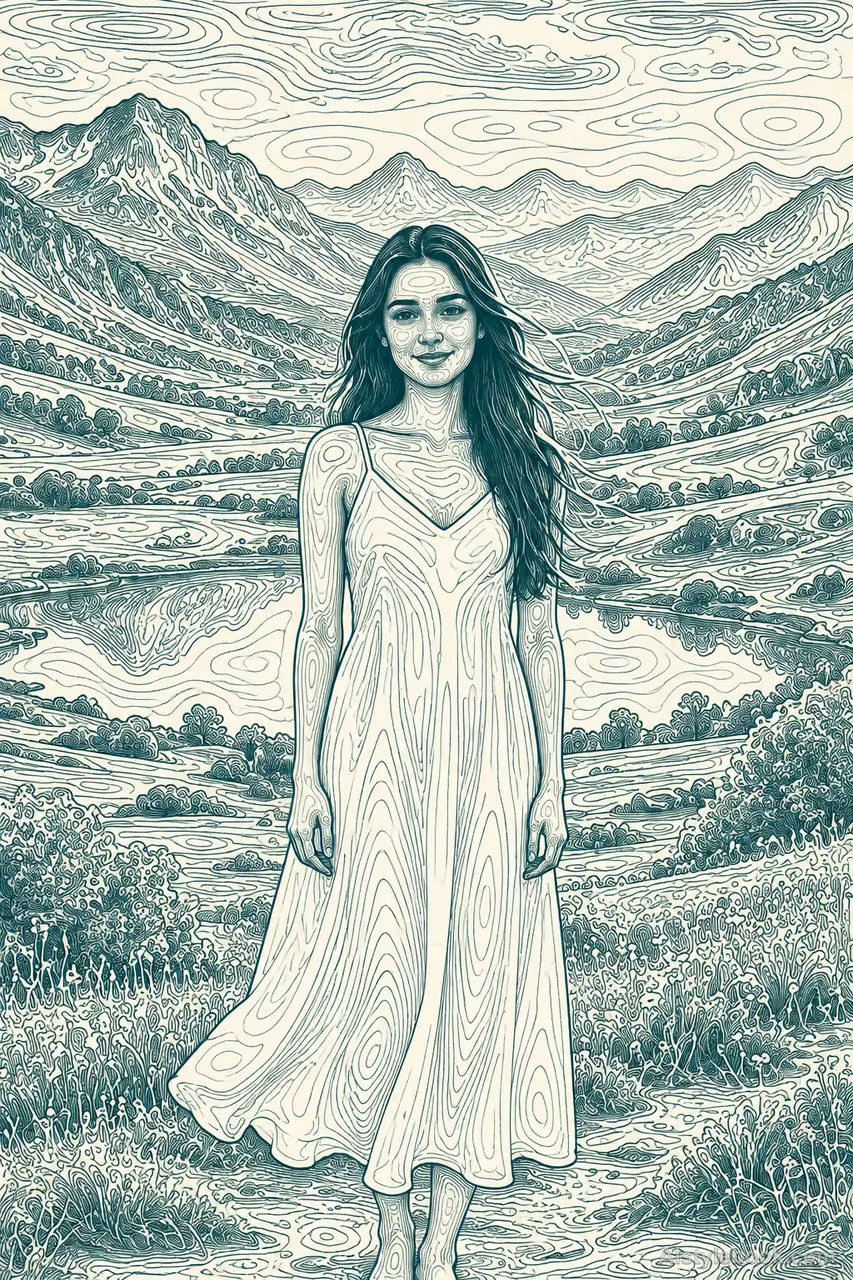
PortraitStyle effect
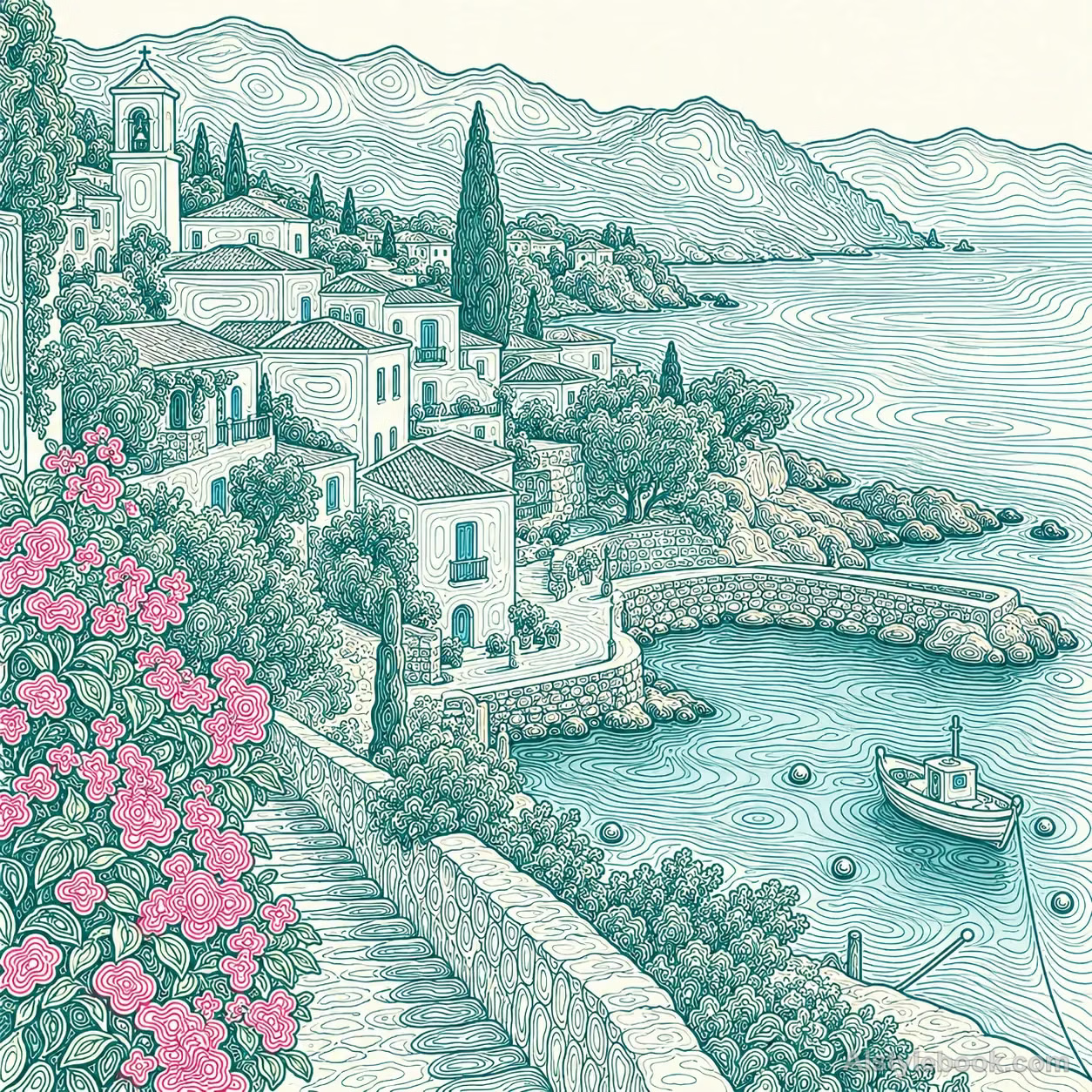
LandscapeStyle effect
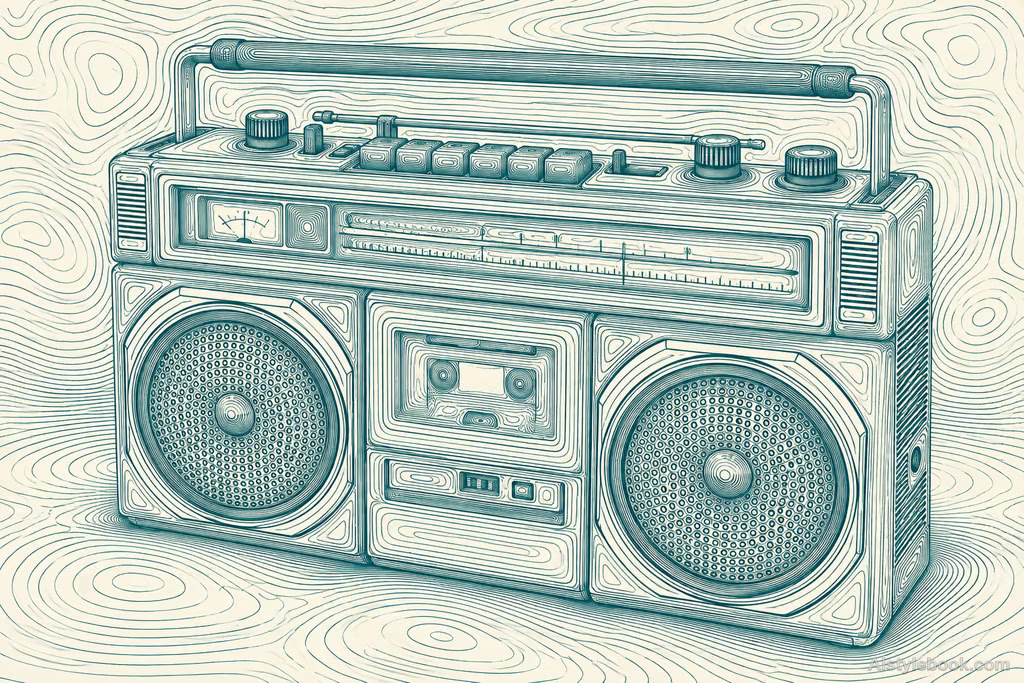
ObjectsStyle effect
The visual language
What is Contour-Isoline Map?
Nested closed loops change spacing with local tone, with merging and branching suggesting relief. Warm-white gaps remain open, making the image resemble a field of continuous topographic lines.
Isolines connect equal values; this artistic treatment uses their spacing without claiming measured topography.
Wide cheek rings tightening beside a nose can make a face resemble contoured terrain.
How the style changes different subjects
- Portrait
- Changes in line spacing or width reveal facial tones within a continuous line field.
- Landscape
- Line density separates scenery while one coherent system replaces literal texture.
- Objects
- Line spacing models curves and broad gaps supply highlights, often reducing small lettering.
- Subjects
- Choose side-lit portraits, hills, spheres or simple objects with clear tonal structure.
Bring the style to your photos
Reusable style prompt for Contour-Isoline Map
Rebuild the image solely with fine dark teal closed isoline loops. Let nested loops form irregular concentric groups around original tonal regions. Keep line width delicate and steady, tightening spacing for depth and opening it to expose warm white paper. Integrate key contours into the bends, divisions and merging of closed rings. Express volume and space through density changes, creating a precise yet fluid continuous scalar-field appearance.Use the same style prompt for portraits, landscapes and objects.
Create with this styleKeep exploring


