
3D & Miniatures
Crystal-Cluster Forms
Style guide
Intergrown hexagonal prisms, tips and stepped faces form recognizable shapes with deep gaps and translucent mineral color layers.
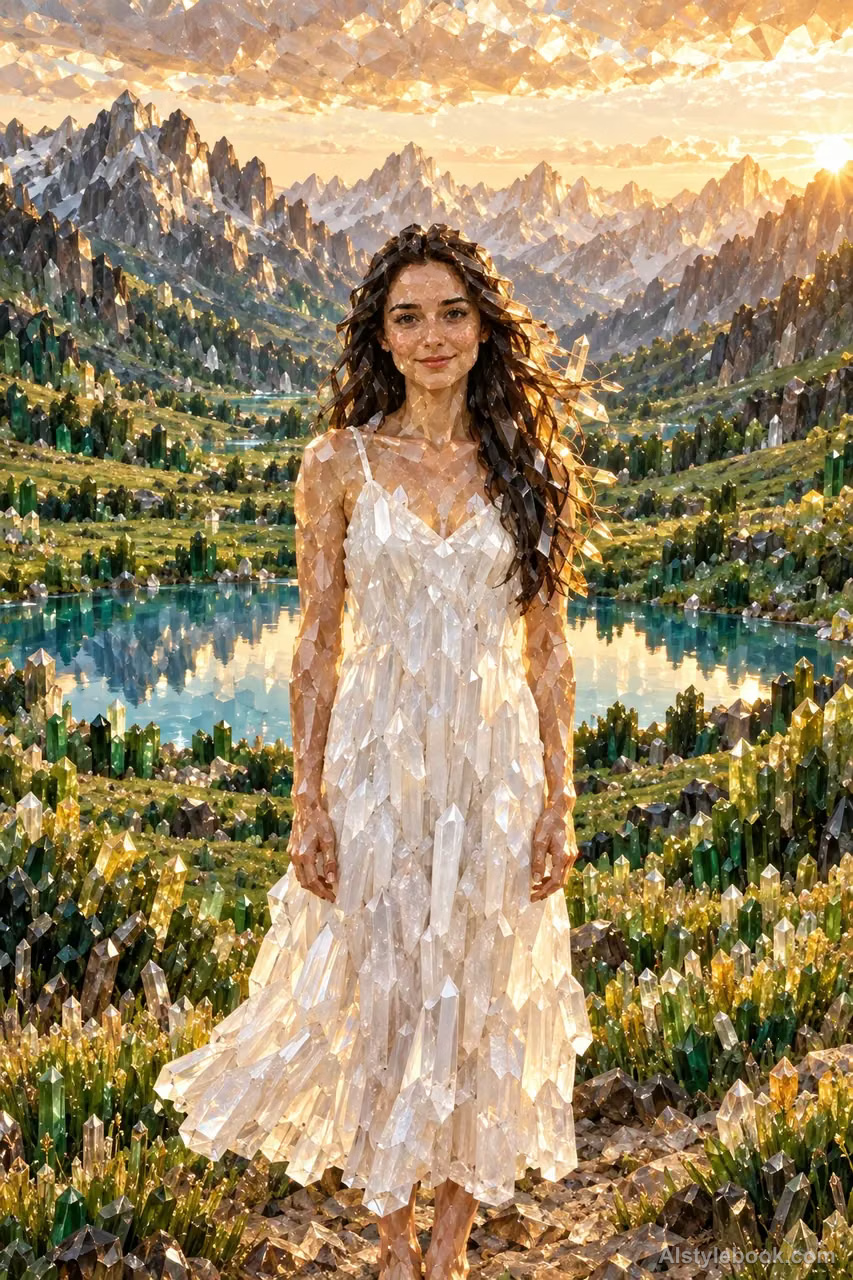
PortraitStyle effect
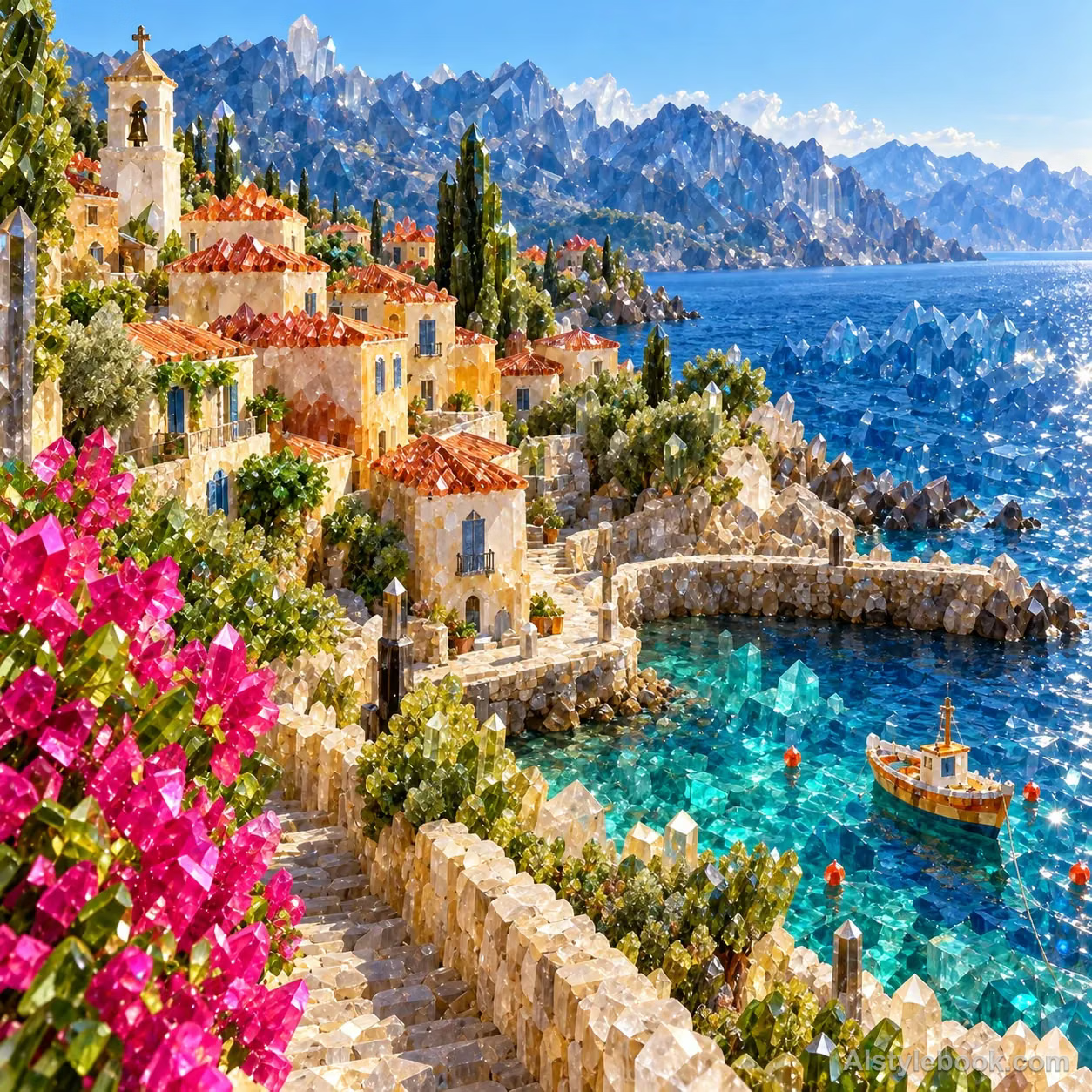
LandscapeStyle effect
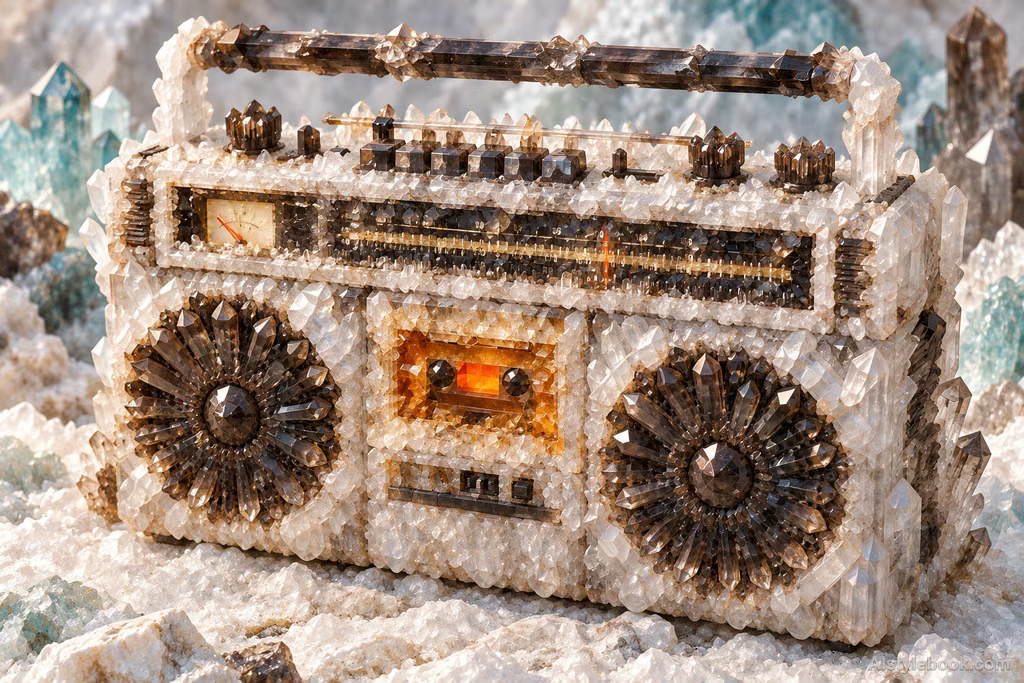
ObjectsStyle effect
The visual language
What is Crystal-Cluster Forms?
Intergrown prisms shape the silhouette through pointed ends, stepped facets and deep gaps. Translucent color layers and faceted highlights describe mineral structure rather than uniform glass transparency.
Crystal clusters depend on intergrown prisms, distinct facets and deep gaps.
Long columns around smaller growths, with selective facet highlights, can preserve mineral structure rather than generic glassiness.
How the style changes different subjects
- Portrait
- Intergrown crystals simplify features and alter the silhouette with tips and crevices.
- Landscape
- Scenery resembles directional crystal growth with faceted highlights.
- Objects
- Mineral clusters and translucent layers replace the original object surface.
- Subjects
- Choose rocks, branching forms, sculptures or simple objects with broad silhouettes for crystal growth.
Bring the style to your photos
Reusable style prompt for Crystal-Cluster Forms
Reconstruct the subject as intergrown mineral crystal clusters. Interlock elongated hexagonal prisms and pointed terminations, showing precise planar facets, stepped growth terraces, and deep crystal gaps. Use existing colors as mineral tints, combining milky, smoky translucent, and clear colored layers with reflections changing across facets. Let small crystal planes preserve identifying details while larger structures show unmistakable clustered growth geometry. Avoid ordinary low-poly tessellation or smooth glass shells.Use the same style prompt for portraits, landscapes and objects.
Create with this styleKeep exploring


