
Painting & Drawing
Drip Painting
Style guide
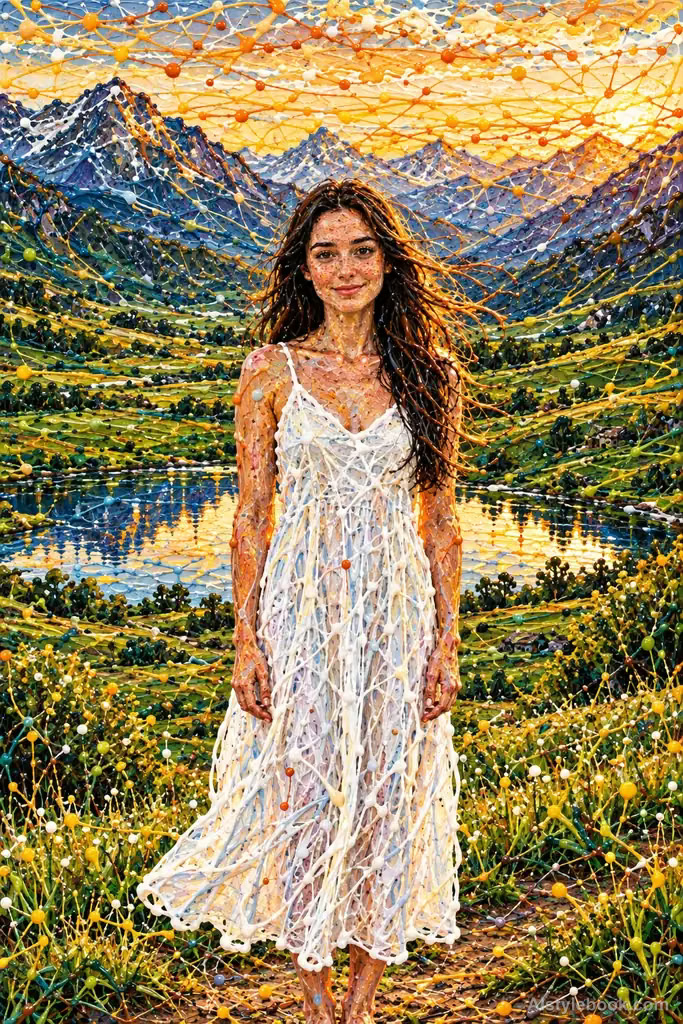
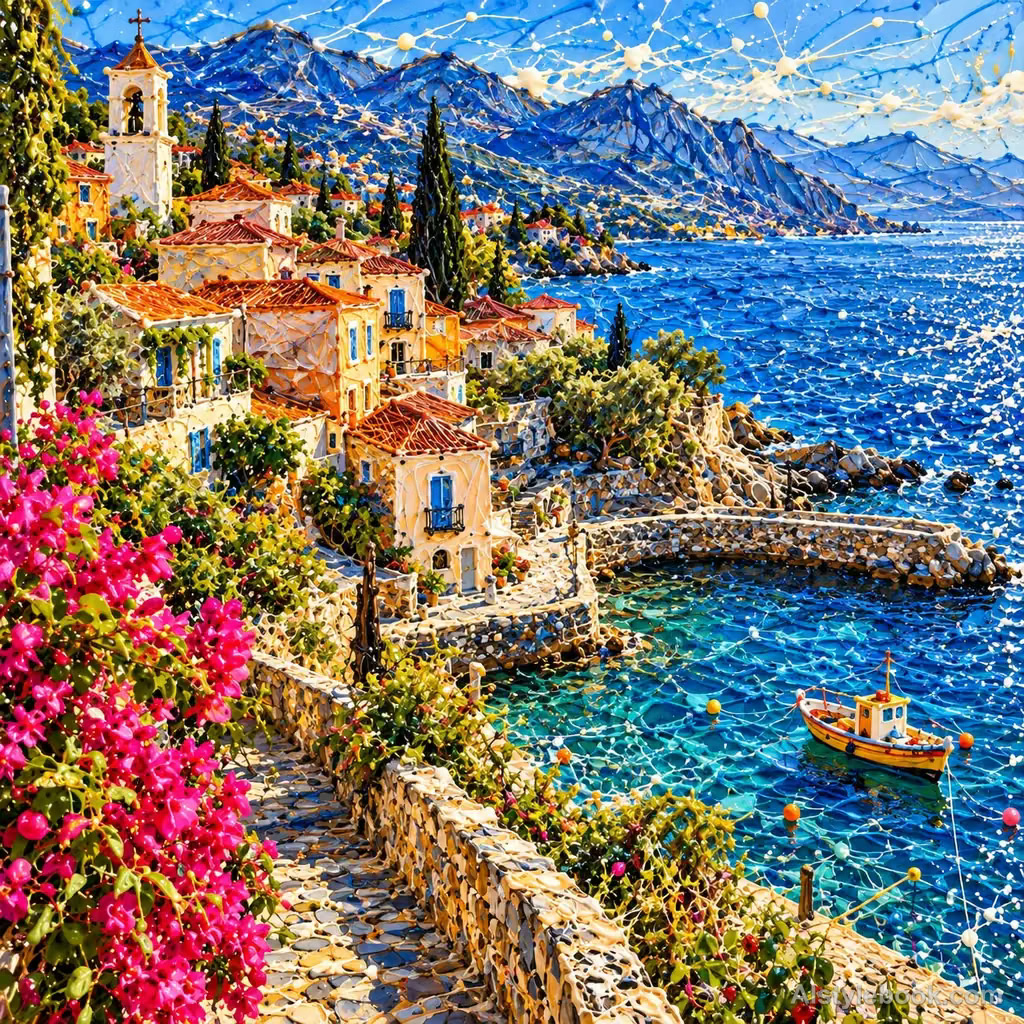
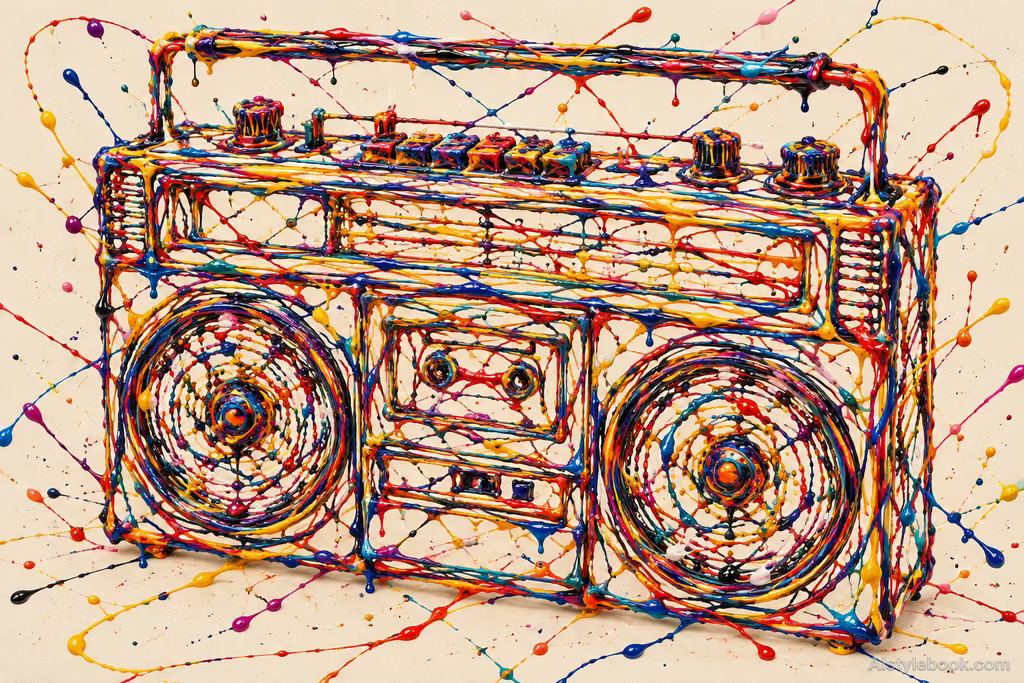
Liquid colored strands, loops and rounded drops weave into a substantial network that reconstructs the image through density and layering.
The visual language
What is Drip Painting?
Continuous liquid lines, loops and droplets cross into a network, with small raised intersections. Tonal structure emerges through strand density and overlapping color layers.
Drip painting records bodily movement and flowing paint across a surface.
Long arcs, short drops and open gaps can let viewers infer changes of pace from the marks' overlaps and density.
How the style changes different subjects
- Portrait
- Tangled, looping or dripping lines reveal features and gesture without enclosing every detail.
- Landscape
- Interwoven line networks separate scenery through density and color layers.
- Objects
- Accumulated lines reconstruct objects around a recognizable core silhouette.
- Subjects
- Choose moving figures, trees, flowers or simple objects with broad shapes that remain legible within the line network.
Pollock’s drip practice
Pollock’s drip paintings turned liquid paint and bodily movement into pictorial structure, an important practice within Abstract Expressionism.
Bring the style to your photos
Reusable style prompt for Drip Painting
Construct the entire image from dripping enamel paint: continuous colored rivulets, looping cords and rounded droplets intersect into a network. Model contours and tonal regions through changing strand density and layered color. Give paint intersections a slight rise and retain liquid tension, rounded drop endings and scattered fine splashes. From afar the forms remain clear; close up, the image reveals continuous liquid paths and tactile paint thickness.Use the same style prompt for portraits, landscapes and objects.
Create with this styleKeep exploring


