
Illustration & Design
Graffiti
Style guide
Atomized spray edges, drips and sweeping lines overlap in rich colors with rough, rapid gestural tension.
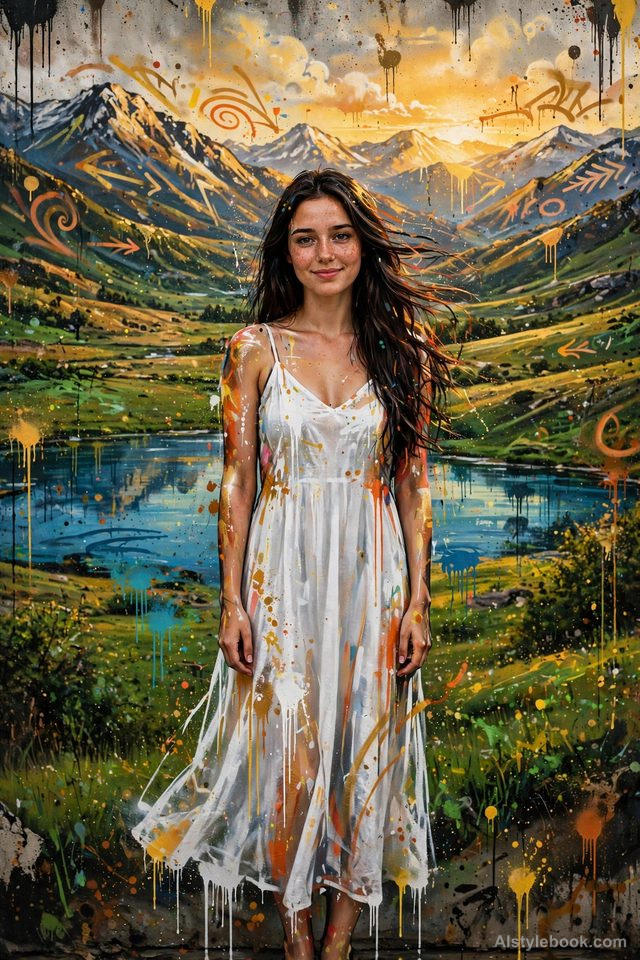
PortraitStyle effect
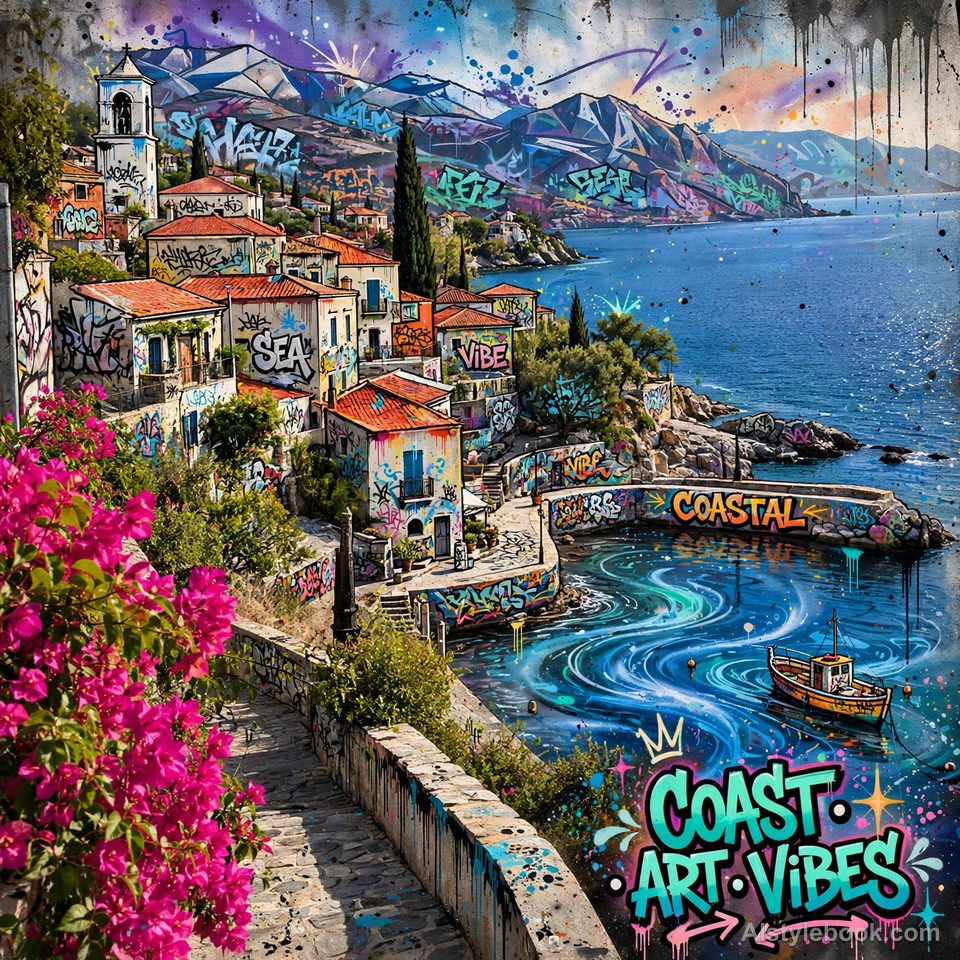
LandscapeStyle effect
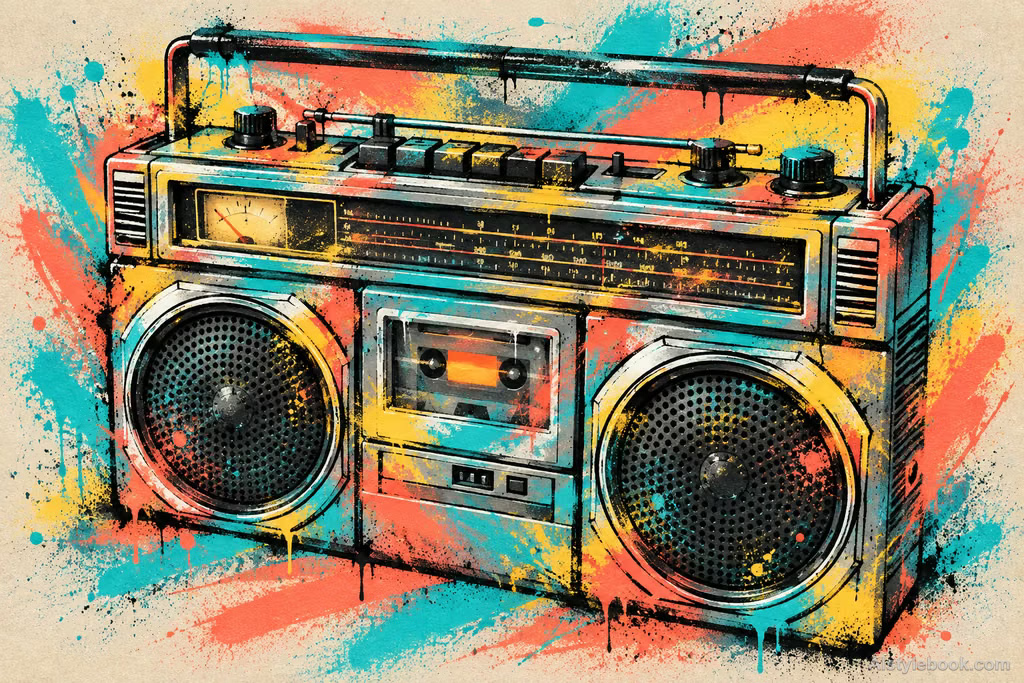
ObjectsStyle effect
The visual language
What is Graffiti?
Atomized spray alternately softens and tightens edges, while drips, overpainting and sweeping lines record quick gestures. Intense color masses weave through bold outlines.
Spray edges, overspray and overlapping strokes reveal distance and speed.
A bright arc crossing an older black line, with a small drip beside it, suggests successive physical gestures.
How the style changes different subjects
- Portrait
- Sprayed color shapes with soft overspray or stencil breaks intensify facial and clothing forms.
- Landscape
- Walls and landmarks flatten into rough color layers with strong silhouettes and urban texture.
- Objects
- Objects resemble sprayed or stenciled images, with reflections replaced by bold, granular color.
- Subjects
- Choose strong portraits, urban buildings, sneakers, skateboards or simple objects distinct from the spray texture.
Bring the style to your photos
Reusable style prompt for Graffiti
Redraw the subject with rough spray-painted color blocks, sweeping gestures, and bold outer contours. Give edges atomized paint particles, localized drips, and traces of repeated spraying. Use rich colors and lines that cross, intertwine, and curl with rapid gestural tension. Keep key contours recognizable. Vary paint thickness and coverage naturally, preserving speed and roughness rather than the tidy uniformity of vector art.Use the same style prompt for portraits, landscapes and objects.
Create with this styleKeep exploring


