
Painting & Drawing
Dry-Brush Acrylic
Style guide
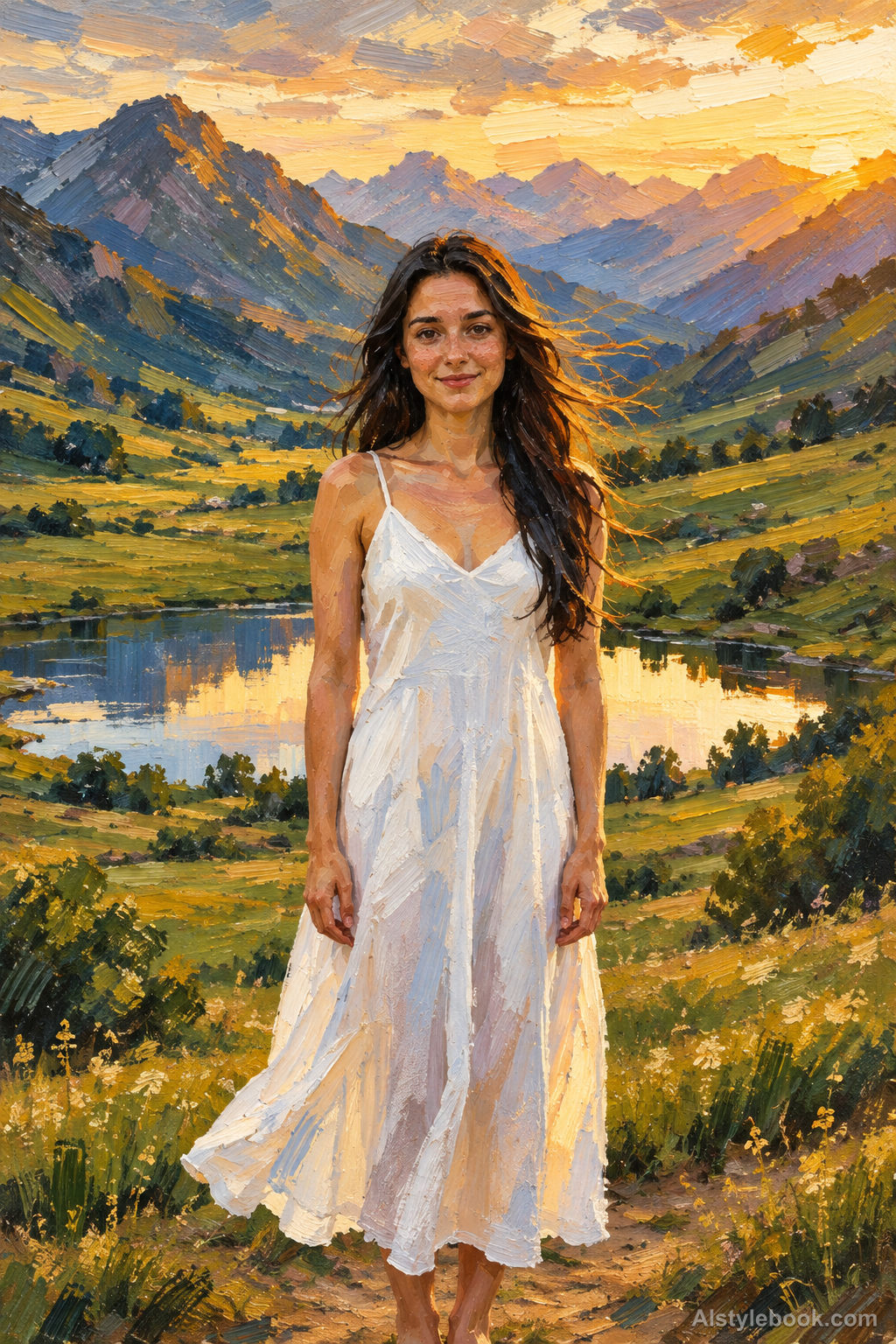
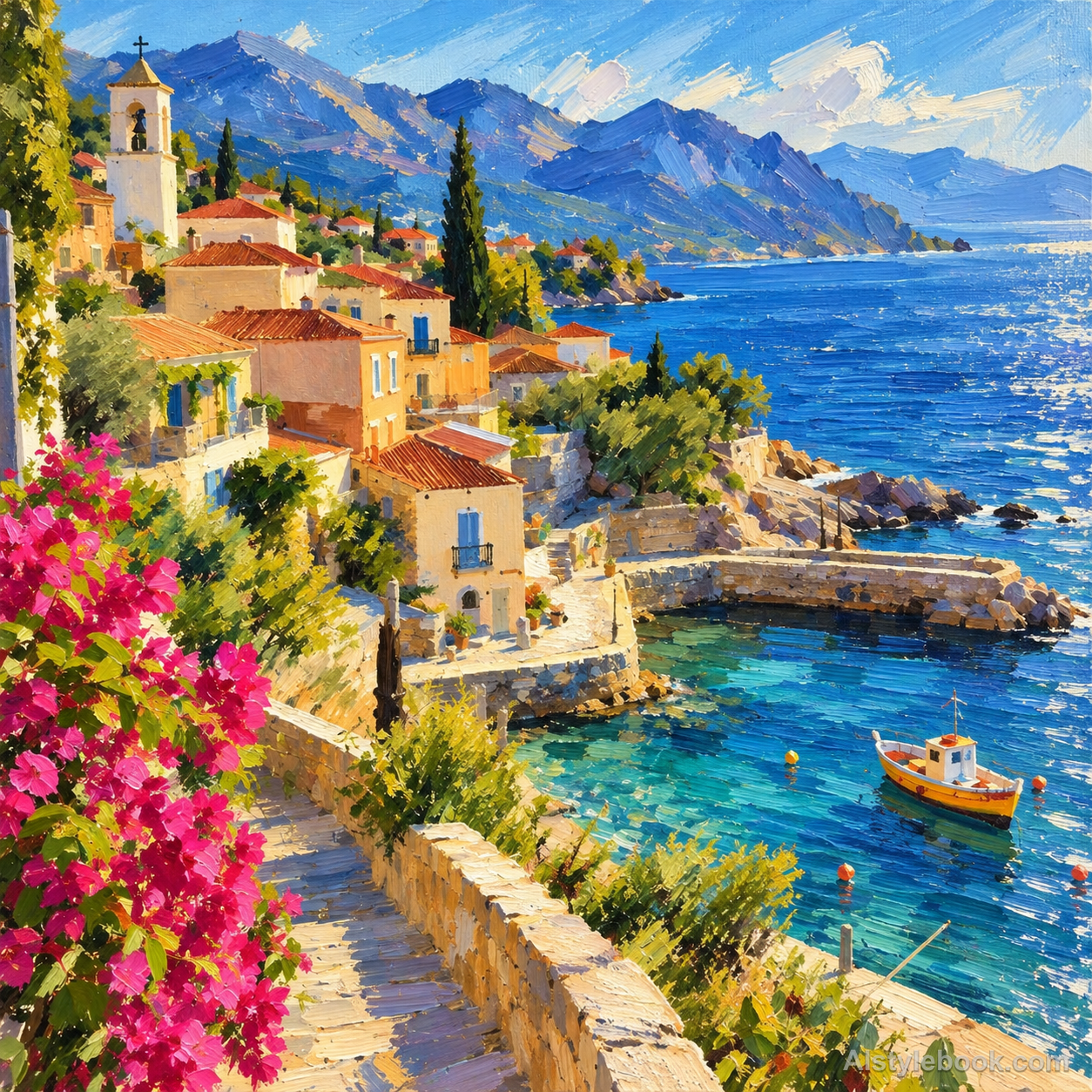
Opaque acrylic fields retain flat-brush ridges, broken dry strokes and a slight local sheen in the dried paint film.

The visual language
What is Dry-Brush Acrylic?
Opaque planes overlap in flat-brush passes that follow folds, terrain and object structure. Dry passages expose undercolor and fine canvas weave, while small paint ridges catch restrained light and retain a readable brushing rhythm.
Dry-brush acrylic catches raised texture while leaving lower color visible between marks.
Pale yellow skimming a blue hillside can turn broken contact into a directional terrain rhythm.
How the style changes different subjects
- Portrait
- Opaque color planes simplify face and clothing, with visible brush edges giving the portrait a painted quality.
- Landscape
- Adjacent color masses build scenery, clarifying warm-cool relationships while simplifying detail.
- Objects
- A few bright shapes replace reflections; brush marks connect curved surfaces and shadows into a matte finish.
- Subjects
- Choose streets, fruit, flowers, colored vessels or clearly lit figures with well-separated color masses.
Variant relationship
An acrylic-medium variant of opaque color-block painting. Compare with Gouache.
Compared with the powdery matte fields of Gouache, this acrylic variant emphasizes bundled flat-brush tracks, broken dry edges, fine canvas weave and a slight local paint-film sheen. Relative to Impasto, it favors dragged bristle paths over raised knife-built paint. Acrylic and gouache are different media.
Bring the style to your photos
Reusable style prompt for Dry-Brush Acrylic
Preserve the original framing, proportions, pose and spatial anchors. Paint every part in opaque acrylic using broad flat bristle brushes on a subtly woven canvas surface. Build decisive overlapping color planes, preserving source color relationships. Make parallel bristle ridges and broken semi-dry dragged edges visibly follow the forms; lighter opaque strokes can cross darker dried layers. Show a thin cured paint film with restrained satin catches on a few brush ridges, while most areas remain matte. Keep shapes readable and brush scale consistent across the image. Avoid transparent watercolor, chalky uniformly powdery gouache, knife-built oil impasto, glossy wet paint, marker bands, pasted textures and added details. Use a thin acrylic paint film drawn by visibly splayed flat BRISTLES, with long parallel scratchy tracks and exposed undercolor at the dry ends. Do not use a palette knife, trowel ridges, thick lumpy oil impasto or chalky smooth color patches. Enlarge individual strokes enough to distinguish their bundled brush hairs.Use the same style prompt for portraits, landscapes and objects.
Create with this styleKeep exploring


