
Painting & Drawing
Gouache
Style guide
Dense matte color planes allow light over dark, while soft handmade edges and dry-brush marks create clear, delicate gouache texture.
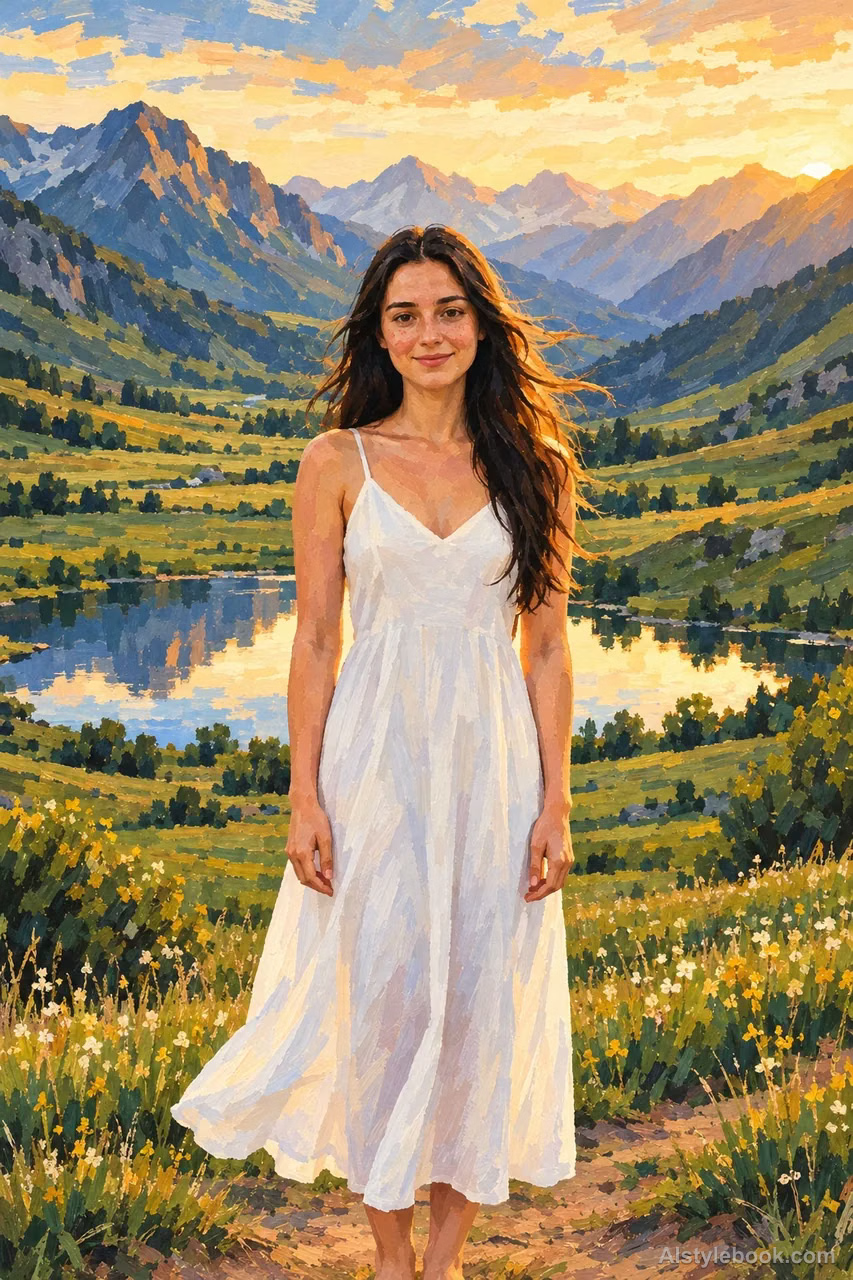
PortraitStyle effect
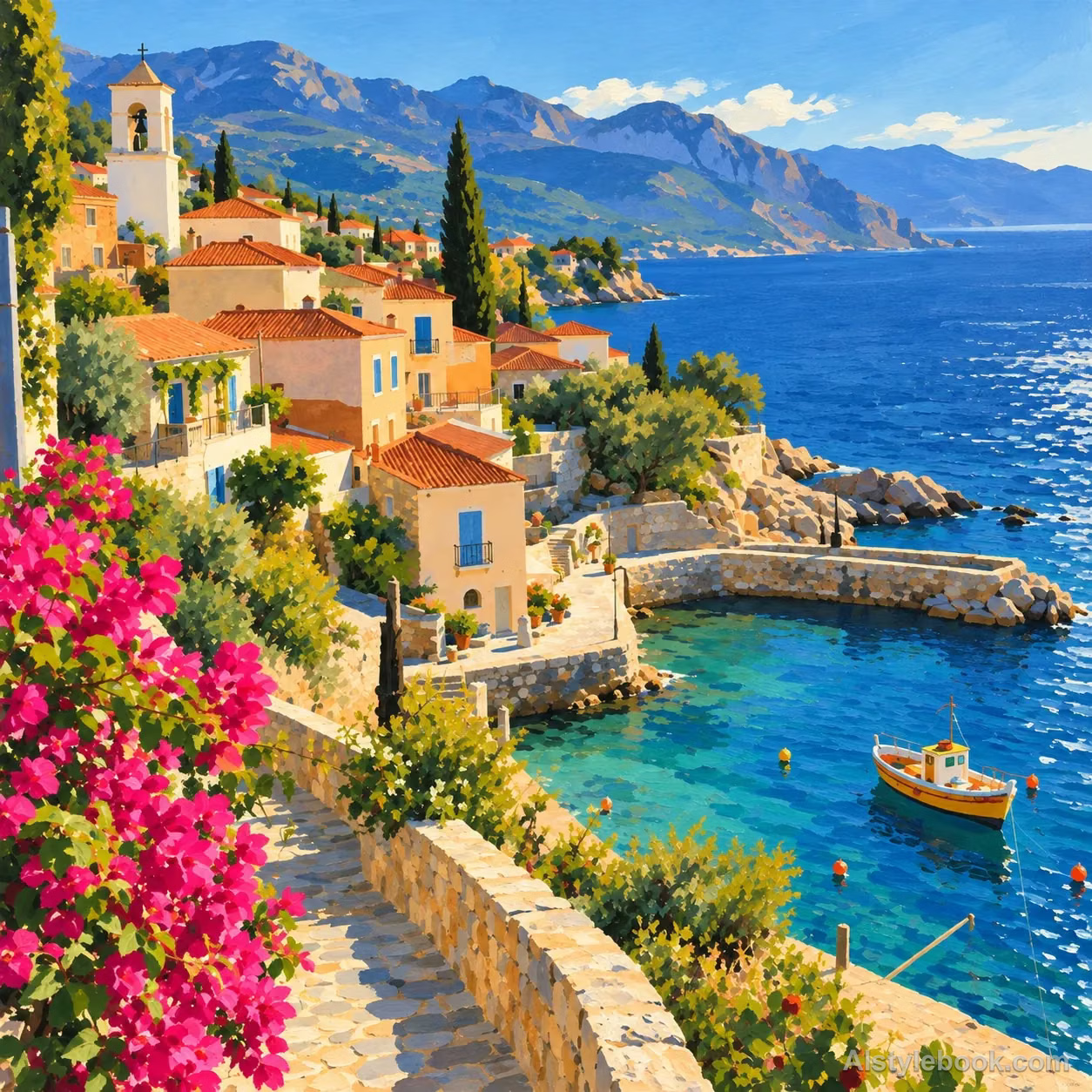
LandscapeStyle effect
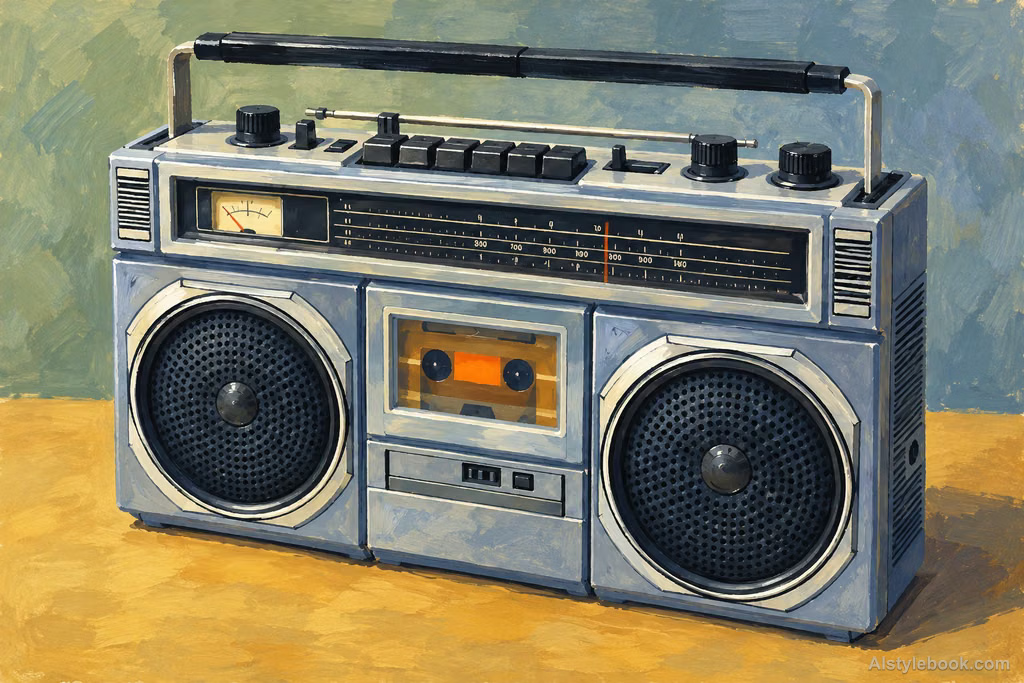
ObjectsStyle effect
The visual language
What is Gouache?
Dense matte paint lets light cover dark, with bristle marks and irregular edges linking neighboring planes. Local dry brush reveals paper grain, keeping forms clear without mechanical surfaces.
Gouache's opacity supports matte color masses and light-over-dark revisions.
A cream roof edge painted over blue-gray, with occasional dry-brush gaps, can retain both clarity and surface life.
How the style changes different subjects
- Portrait
- Opaque color planes simplify face and clothing, with visible brush edges giving the portrait a painted quality.
- Landscape
- Adjacent color masses build scenery, clarifying warm-cool relationships while simplifying detail.
- Objects
- A few bright shapes replace reflections; brush marks connect curved surfaces and shadows into a matte finish.
- Subjects
- Choose streets, fruit, flowers, colored vessels or clearly lit figures with well-separated color masses.
Bring the style to your photos
Reusable style prompt for Gouache
Paint the subject in matte opaque gouache. Use dense color shapes to organize structure and tone clearly, allowing light paint to genuinely cover dark layers. Preserve softly irregular hand-painted boundaries, local broken dry-brush marks, and moderate changes in paint thickness. Keep the surface quiet with delicate paper character. Build clear, harmonious layers through overlapping color blocks rather than transparent bleeding, wet oil gloss, or highly raised paint buildup.Use the same style prompt for portraits, landscapes and objects.
Create with this styleKeep exploring


