
Textiles & Embroidery
Fabric Collage
Style guide
Coarse fabric patches, hand-sewn stitches and frayed fringe overlap in a modest, playful flat textile collage.
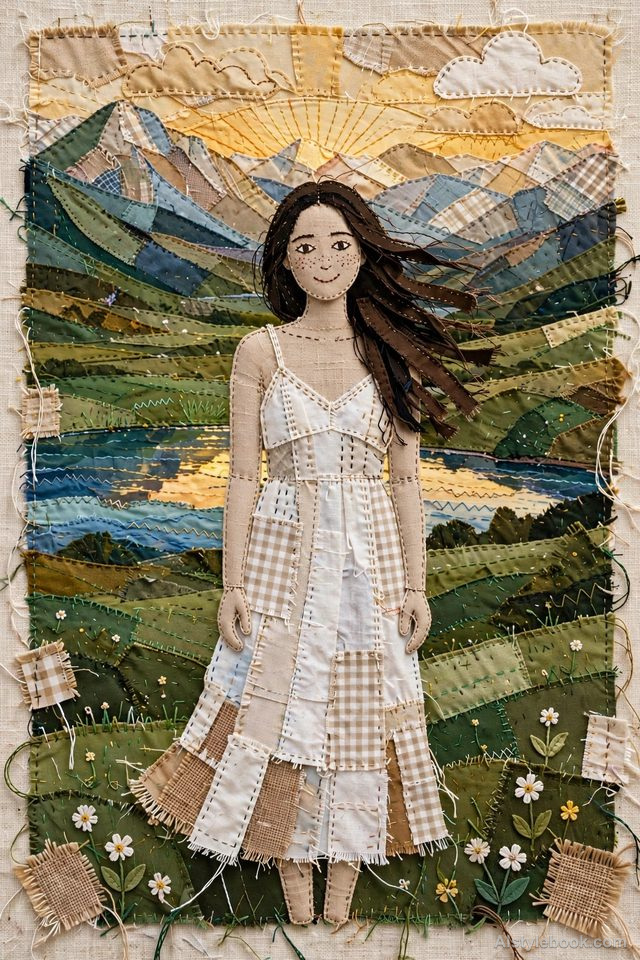
PortraitStyle effect
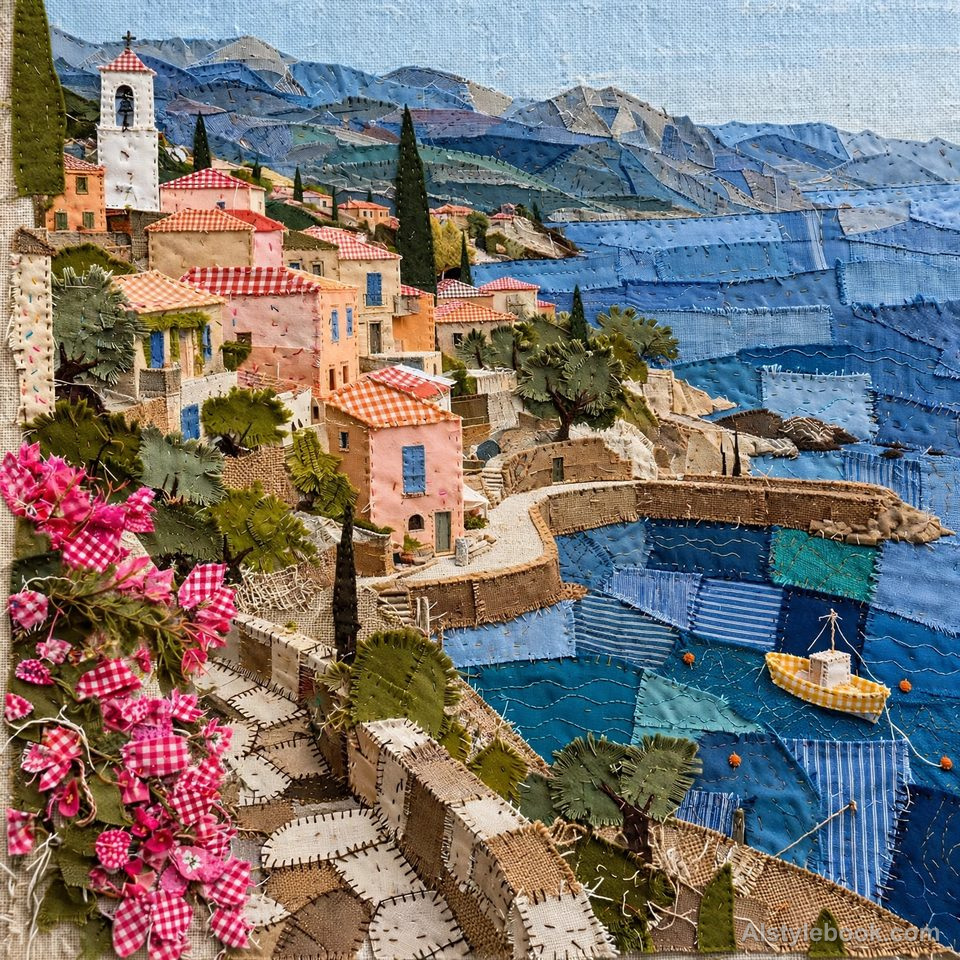
LandscapeStyle effect
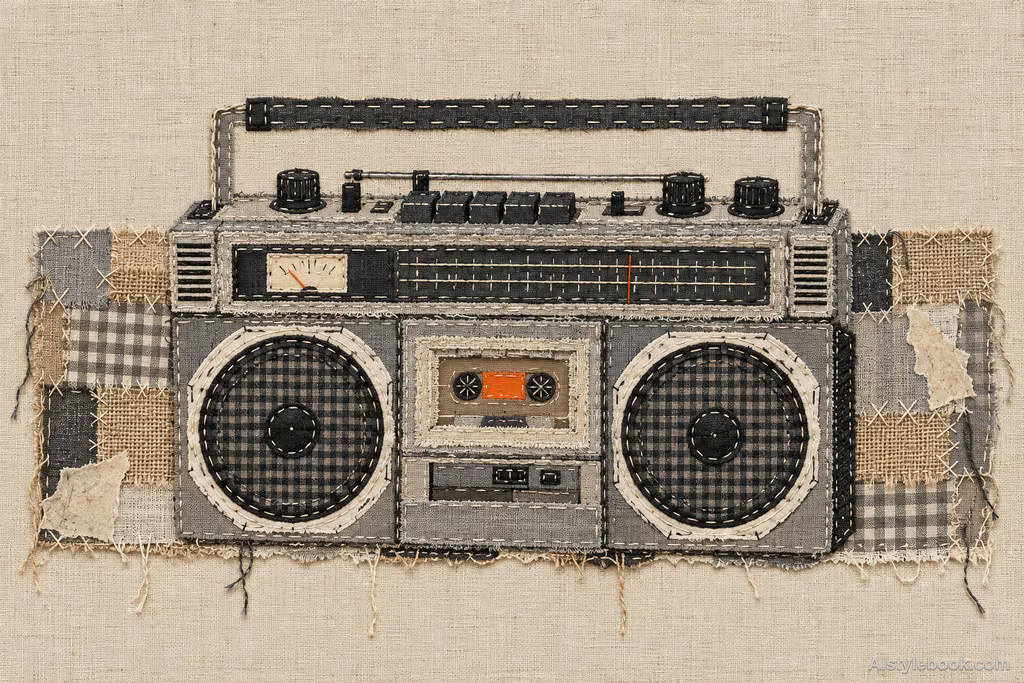
ObjectsStyle effect
The visual language
What is Fabric Collage?
Cotton, linen and coarse cloth meet as cut patches, with frayed edges and exposed seams acting as drawn lines. Color and weave differences replace smooth shading with tactile, lightweight layers.
Fabric collage lets textile color, weave and seams describe the image.
A checked-cotton roof against linen sky can make a familiar scene feel assembled from nearby scraps.
How the style changes different subjects
- Portrait
- Fabric pieces replace skin and clothing, with seams and weave giving figures a sewn character.
- Landscape
- Overlapping cloth layers flatten houses, trees and ground into a warm tactile scene.
- Objects
- Fabric shapes soften hard objects and emphasize joined edges.
- Subjects
- Choose clothed figures, village scenes, animals or simple objects with clear areas for separate fabrics.
Bring the style to your photos
Reusable style prompt for Fabric Collage
Build flat, simplified subject shapes from gingham cotton, linen, and washed coarse cloth. Preserve overlapping patches, uneven edges, and conspicuous hand sewing. Connect contours with running stitch, outline stitch, and a little cross-stitch. Let fabric edges fray into fringe and loose threads, with some shapes naturally extending beyond the patchwork. Leave extensive empty pale-beige linen, using modest colors, patch widths, density, and weave differences for light, believable material layers.Use the same style prompt for portraits, landscapes and objects.
Create with this styleKeep exploring


