
Textiles & Embroidery
Mola Reverse Appliqué
Style guide
Cuts through dark cloth reveal nested colored channels; turned stitched edges and lower fabrics create intricate reverse-appliqué layers.
The visual language
What is Mola Reverse Appliqué?
Dark upper cloth is cut, turned under and stitched to expose brighter fabrics beneath. Nested color channels and fine turned seams make the image appear gradually through the textile layers.
Reverse appliqué reveals lower fabric through cut and turned upper layers.
A curved opening exposing red and a narrower yellow edge can show depth while fine seams keep the layers connected.
How the style changes different subjects
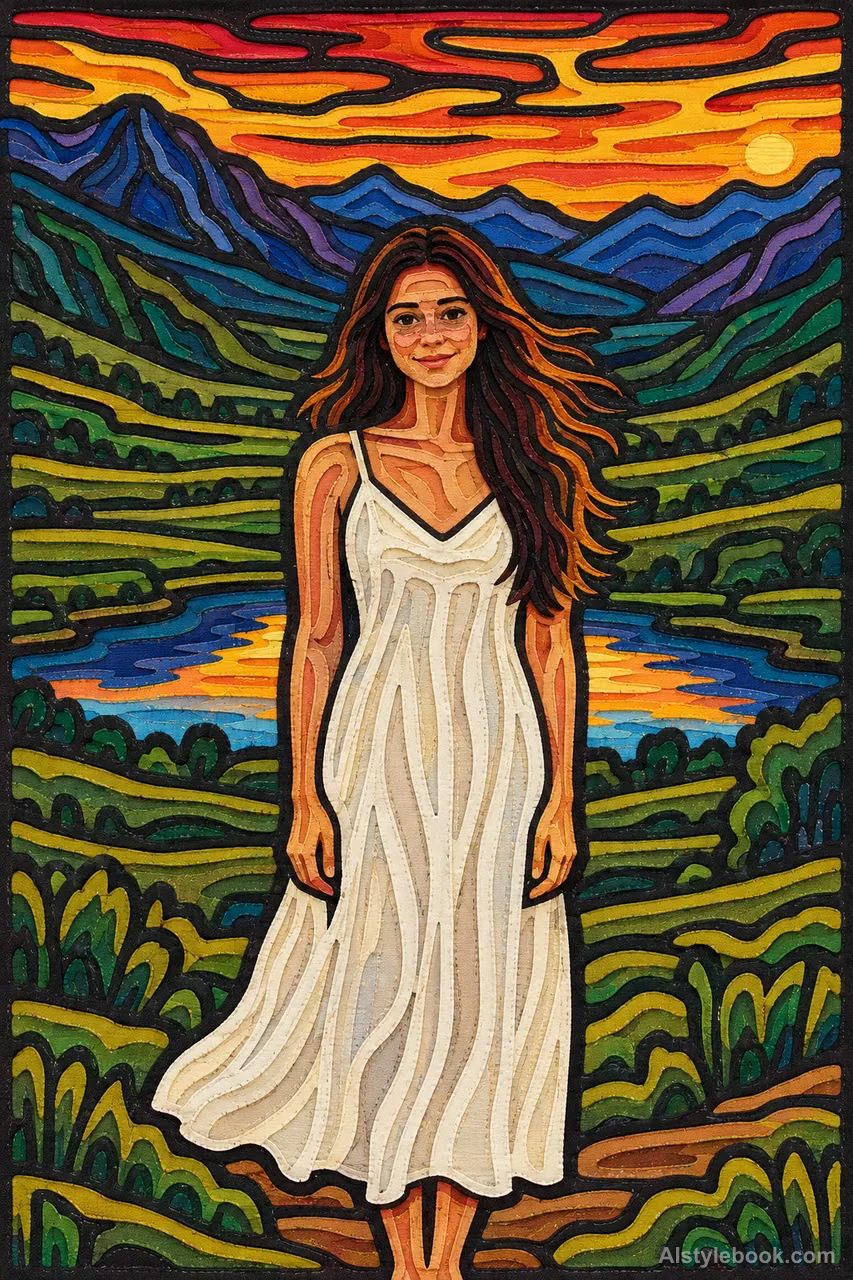
- Portrait
- Fabric pieces replace skin and clothing, with seams and weave giving figures a sewn character.
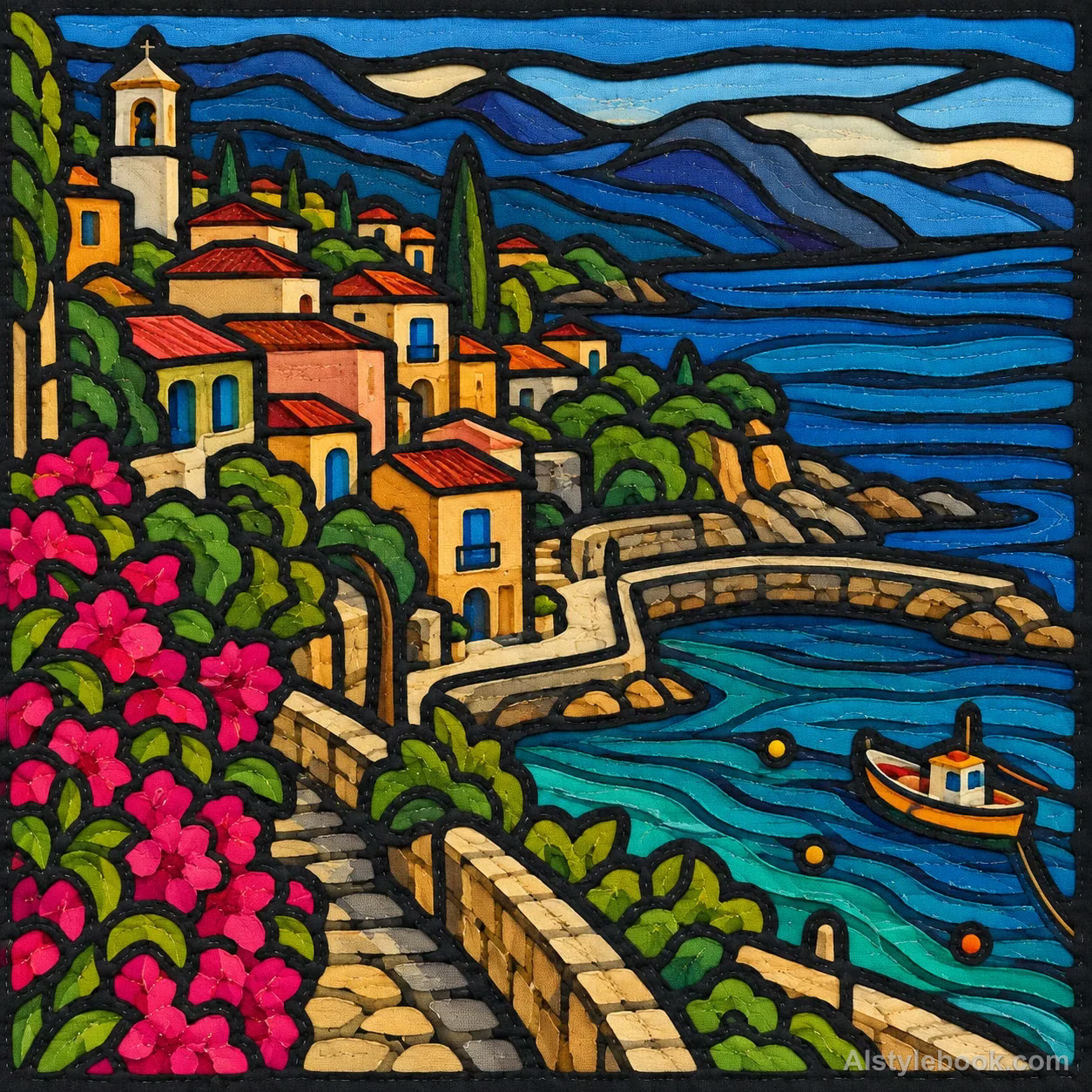
- Landscape
- Overlapping cloth layers flatten houses, trees and ground into a warm tactile scene.
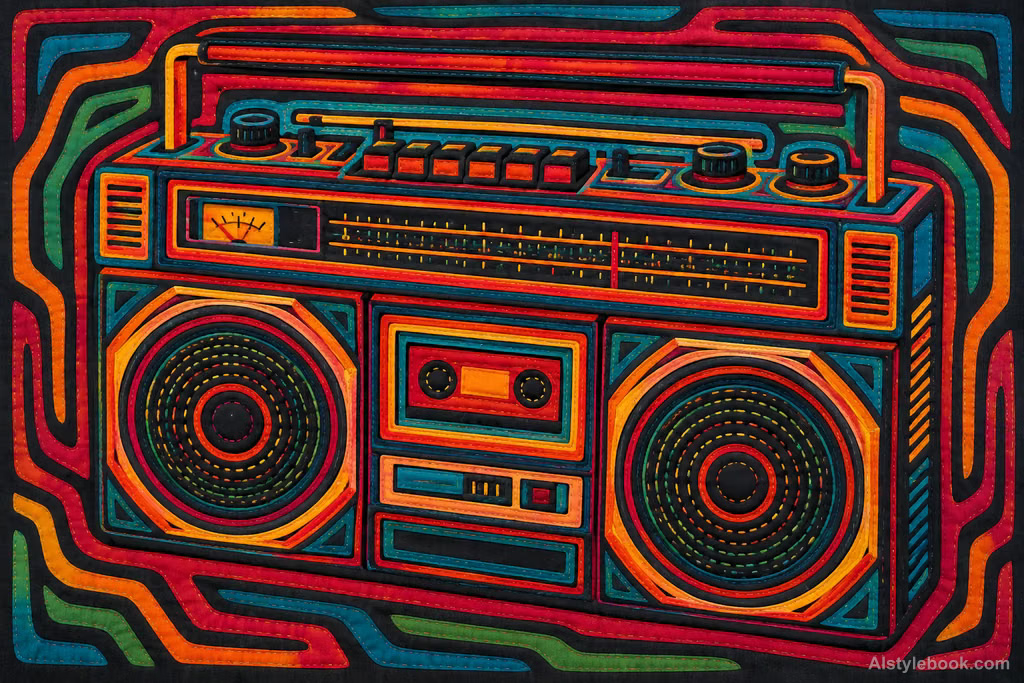
- Objects
- Fabric shapes soften hard objects and emphasize joined edges.
- Subjects
- Choose clothed figures, village scenes, animals or simple objects with clear areas for separate fabrics.
Craft and history
Mola panels are central to Guna women’s dress in Panamá; reverse appliqué sustains cultural identity and individual expression in everyday clothing.
Bring the style to your photos
Reusable style prompt for Mola Reverse Appliqué
Reconstruct the image through Mola-inspired reverse applique. Cut narrow nested channels into a continuous dark top cloth, turn the cut edges inward and secure them with fine stitches. Reveal red, yellow, green and blue cloth layers beneath, translating existing structure into flowing layered color bands. Keep weave, tiny stitches and folded-edge thickness clear. Shallow shadows follow the channel edges, creating vivid color and finely tactile layered fabric.Use the same style prompt for portraits, landscapes and objects.
Create with this styleKeep exploring


