
Paper & Collage
Feather Mosaic
Style guide
Directional feathers overlap lightly, with fine barbs, soft edges and localized satin iridescence creating depth.
The visual language
What is Feather Mosaic?
Thin feathers overlap with the forms, their barbs controlling tone like fine hatching. Soft edges and localized satin iridescence connect the pieces naturally while preserving an airy surface.
Feather mosaic uses overlapping vanes whose direction affects both texture and sheen.
A change of feather orientation across a bird's chest can describe curvature without a heavy solid surface.
How the style changes different subjects
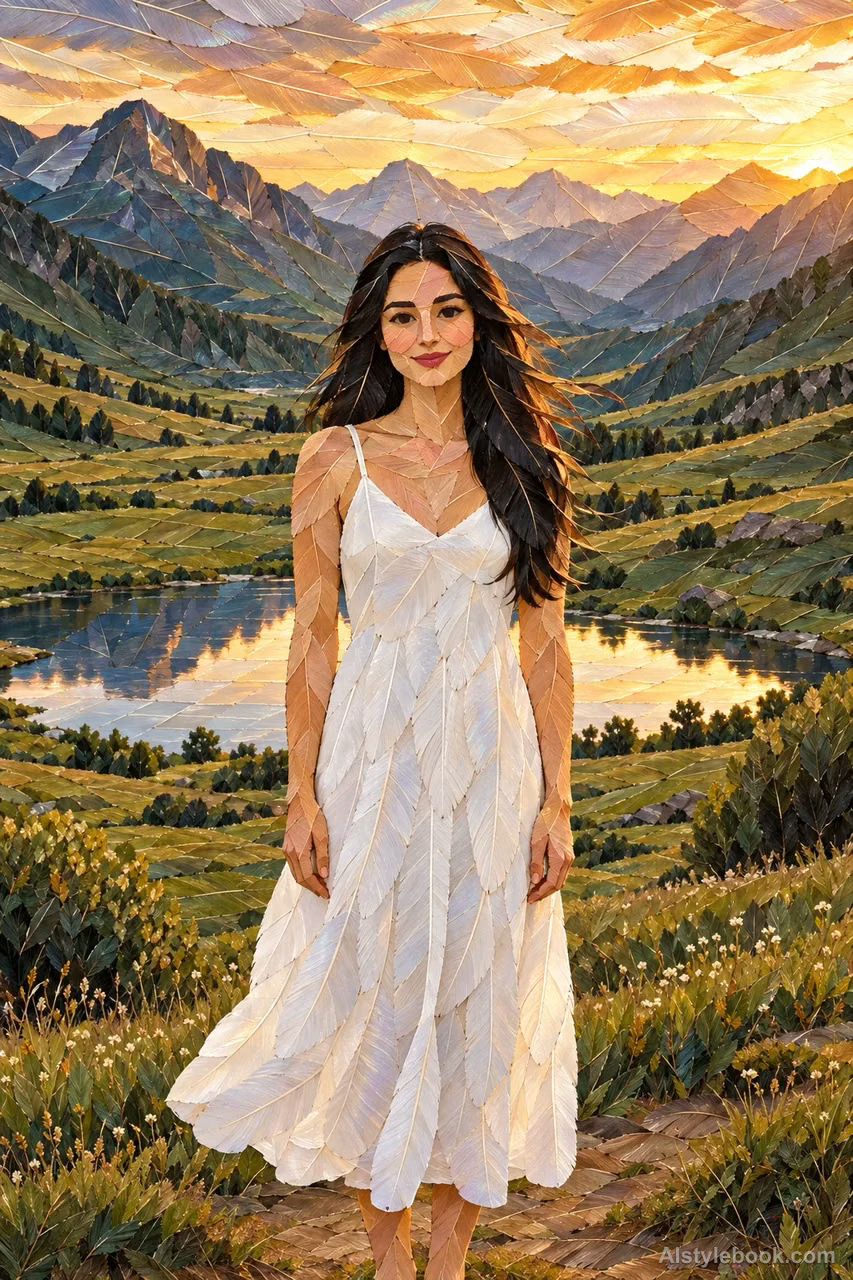
- Portrait
- Recognizable natural fragments rebuild face and clothing, leaving broad contours to carry identity.
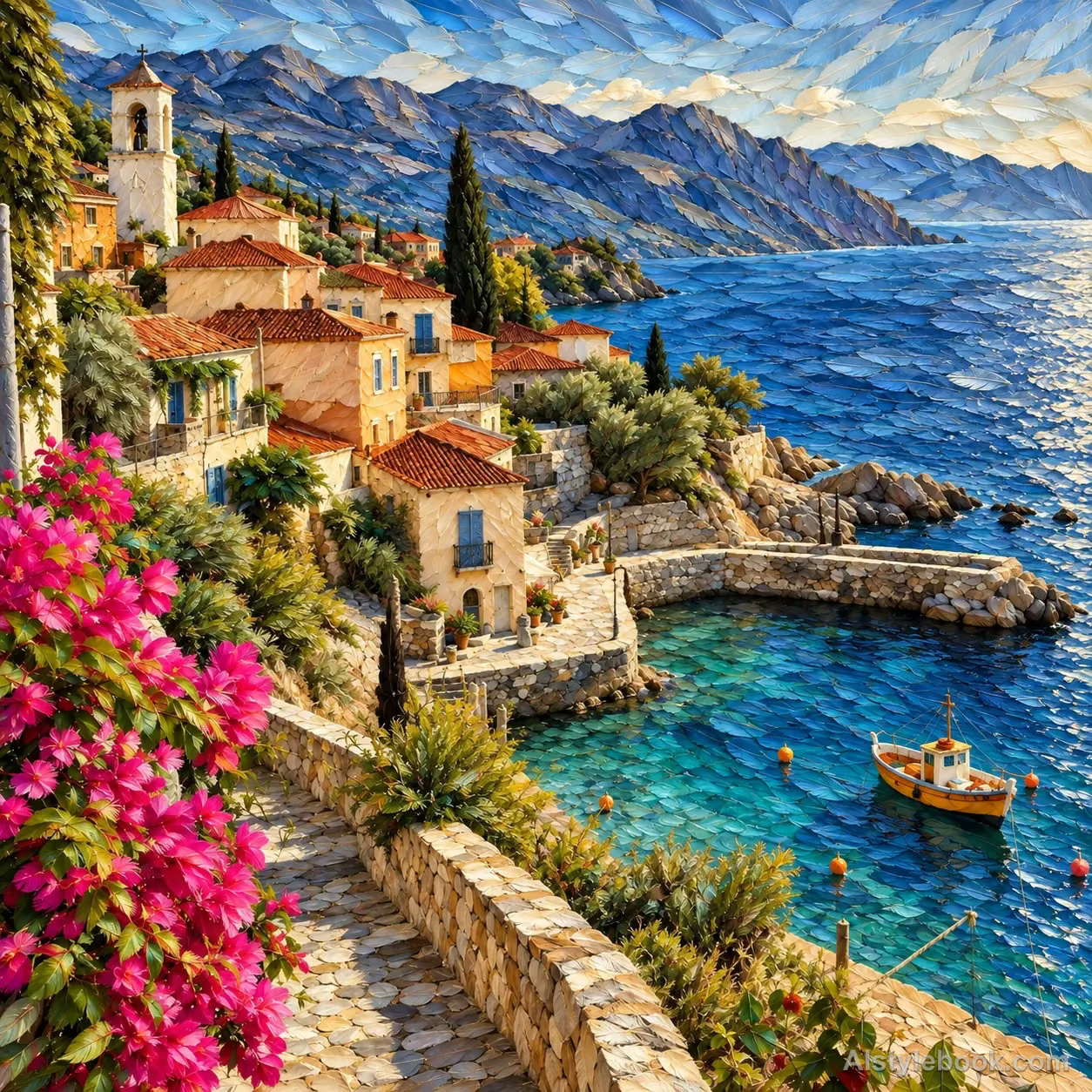
- Landscape
- Layered fragments recreate terrain and plants with leaf, fiber or feather-like textures.
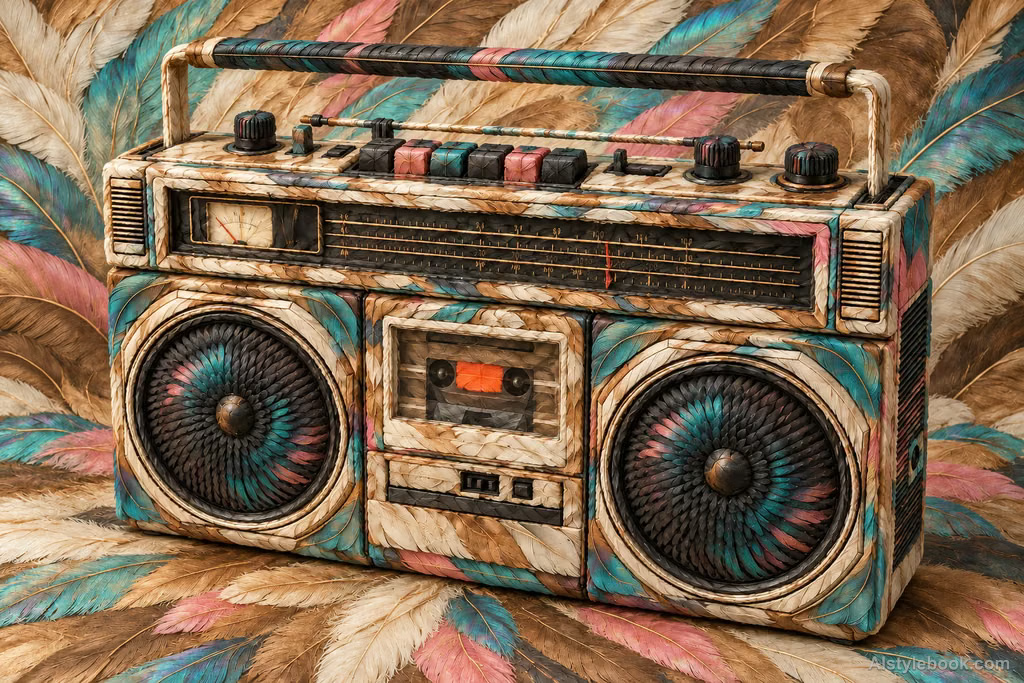
- Objects
- The silhouette remains while natural materials and their joined edges replace the surface.
- Subjects
- Choose animals, flowering stems, profiles or simple still lifes with contours that tolerate fragment shapes.
Feathered panels in the Andes
Ancient Andean featherwork provides elaborate precedents for working with this material. Wari panels dated about 650–1000 arrange many small macaw feathers into blue-and-yellow rectangles, demonstrating a tradition of building surfaces from feather color, sheen and dense placement.
Bring the style to your photos
Reusable style prompt for Feather Mosaic
Construct every form as an intricate feather mosaic. Overlap small feather vanes, trimmed barbs and tiny quill structures along existing volumes. Soft fringed edges create continuous texture, changing direction naturally at turns. Combine cream, bronze, charcoal and the original hues in gentle gradients. Let satin-like natural iridescence appear locally with angle, while shallow layered shadows give every contour and detail a tangible feather thickness.Use the same style prompt for portraits, landscapes and objects.
Create with this styleKeep exploring


