
Paper & Collage
Pressed-Plant Picture
Style guide
Flattened plant membranes overlap lightly, with branching veins, natural broken edges and soft translucency creating fine color layers.
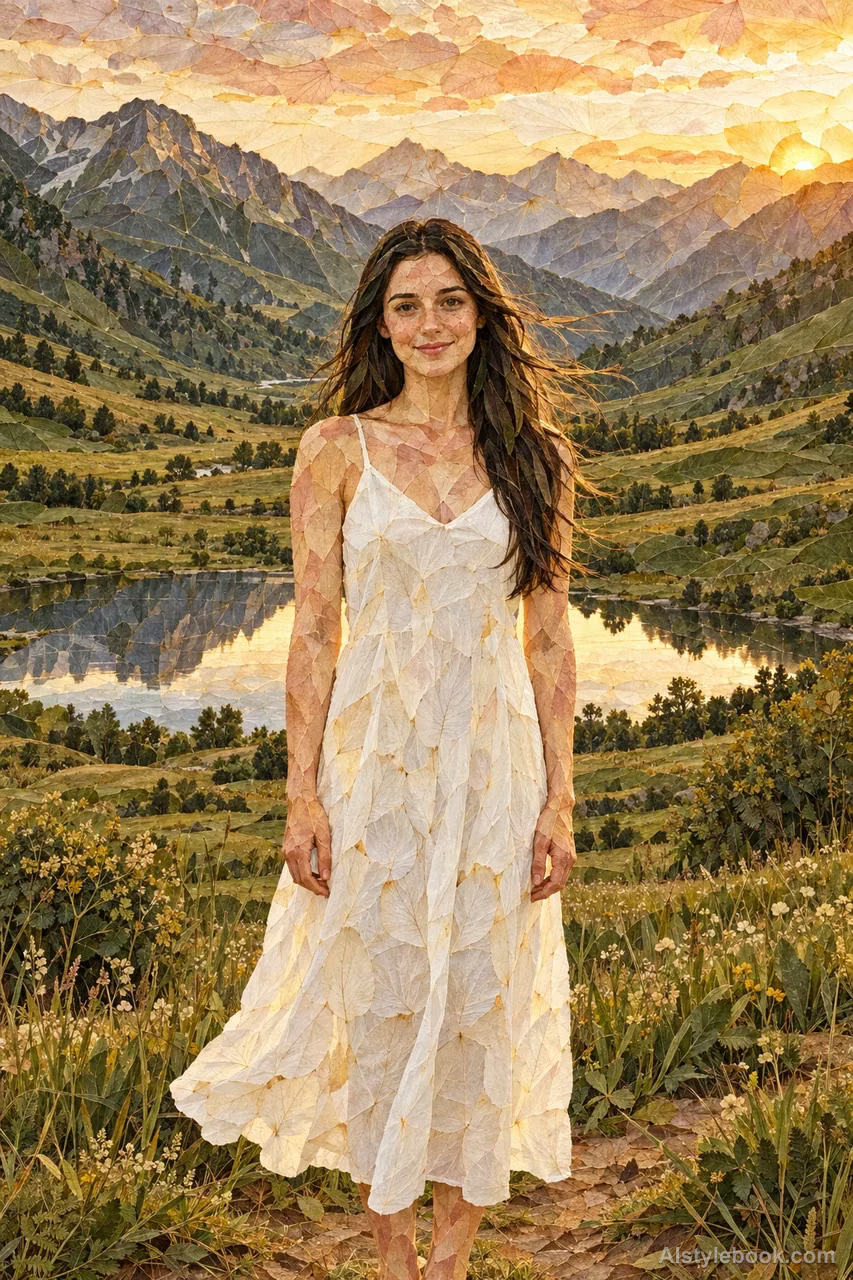
PortraitStyle effect
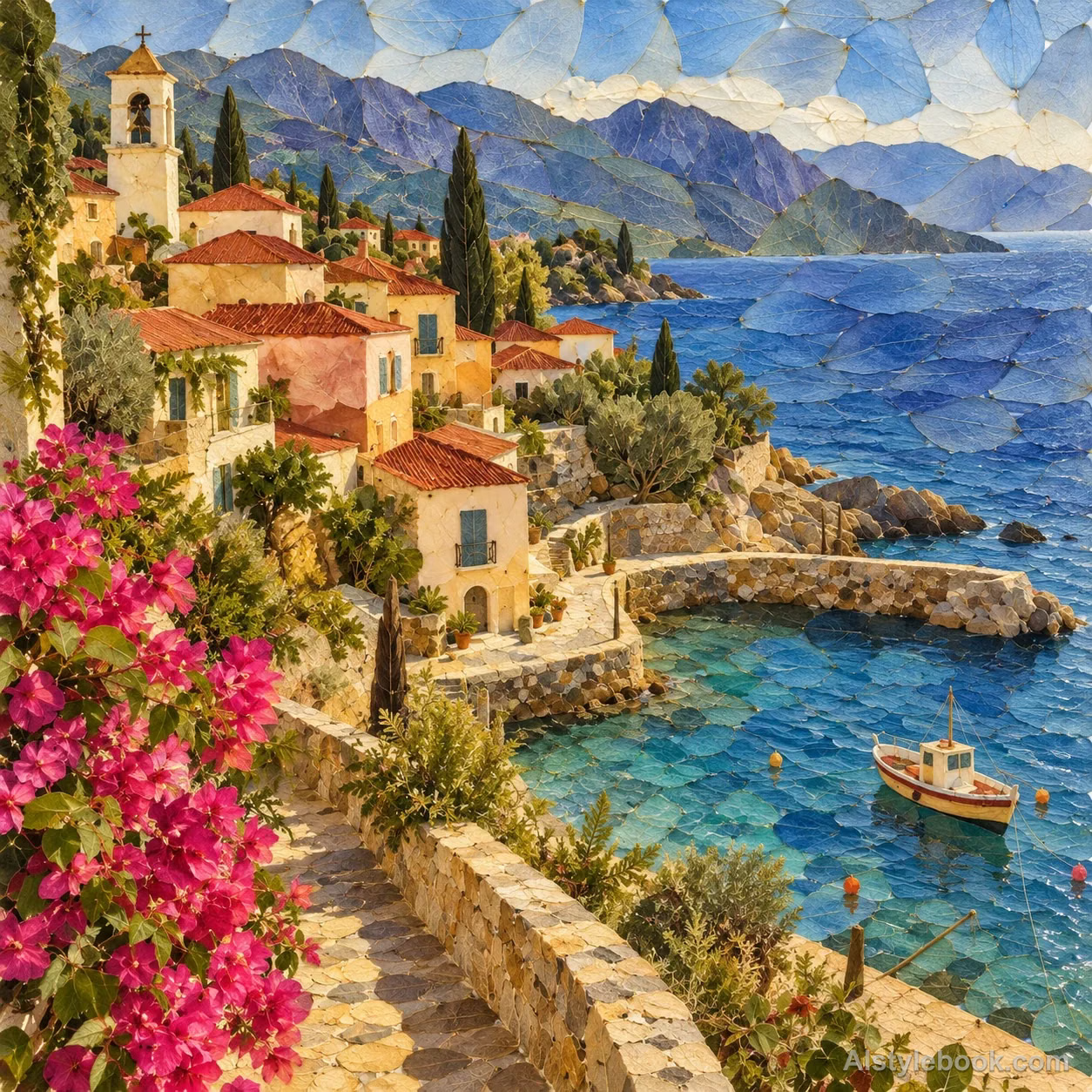
LandscapeStyle effect
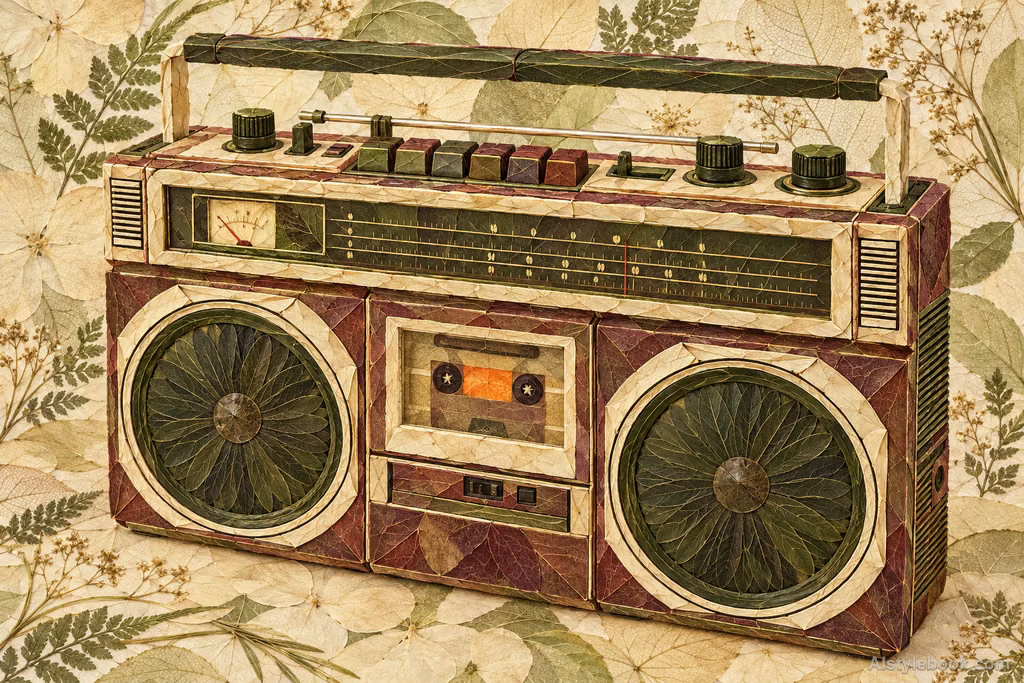
ObjectsStyle effect
The visual language
What is Pressed-Plant Picture?
Pressed petals and leaves overlap like translucent membranes, with natural veins and broken edges supplying the drawing. Slight color layers and transmitted light distinguish depth without concealing botanical detail.
Pressed-plant pictures use existing veins, translucency and irregular outlines as image-making elements.
Overlapping leaves forming a skirt can darken at their intersection while retaining recognizable botanical edges.
How the style changes different subjects
- Portrait
- Recognizable natural fragments rebuild face and clothing, leaving broad contours to carry identity.
- Landscape
- Layered fragments recreate terrain and plants with leaf, fiber or feather-like textures.
- Objects
- The silhouette remains while natural materials and their joined edges replace the surface.
- Subjects
- Choose animals, flowering stems, profiles or simple still lifes with contours that tolerate fragment shapes.
Bring the style to your photos
Reusable style prompt for Pressed-Plant Picture
Assemble existing forms precisely from pressed-plant materials. Use flattened translucent petal membranes, veined leaf pieces and slender botanical fragments for every color region. Preserve each natural membrane's branching veins, soft torn edges and real translucency, overlapping pieces shallowly along the original volumes. Model structure through subtle natural color differences. A flat backing reveals faint paperlike shadows, maintaining gentle color and clearly readable material detail.Use the same style prompt for portraits, landscapes and objects.
Create with this styleKeep exploring


