
Paper & Collage
Hinged Pop-Up Scene
Style guide
Angled supports, parallel folded platforms and glue tabs connect thin paper planes into a hinged, foldable spatial structure.
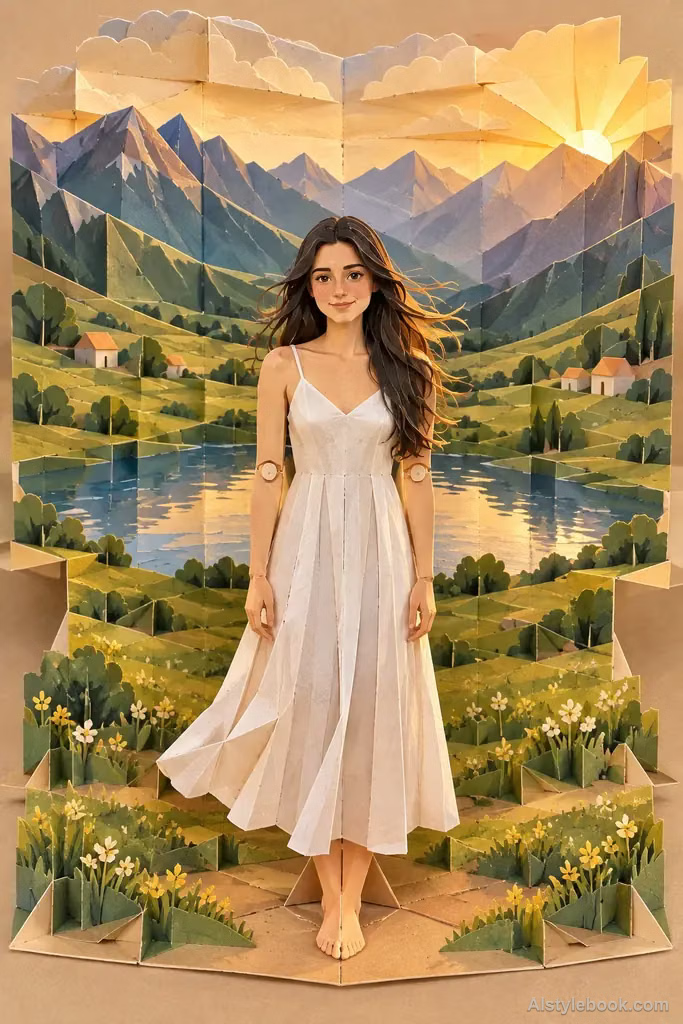
PortraitStyle effect
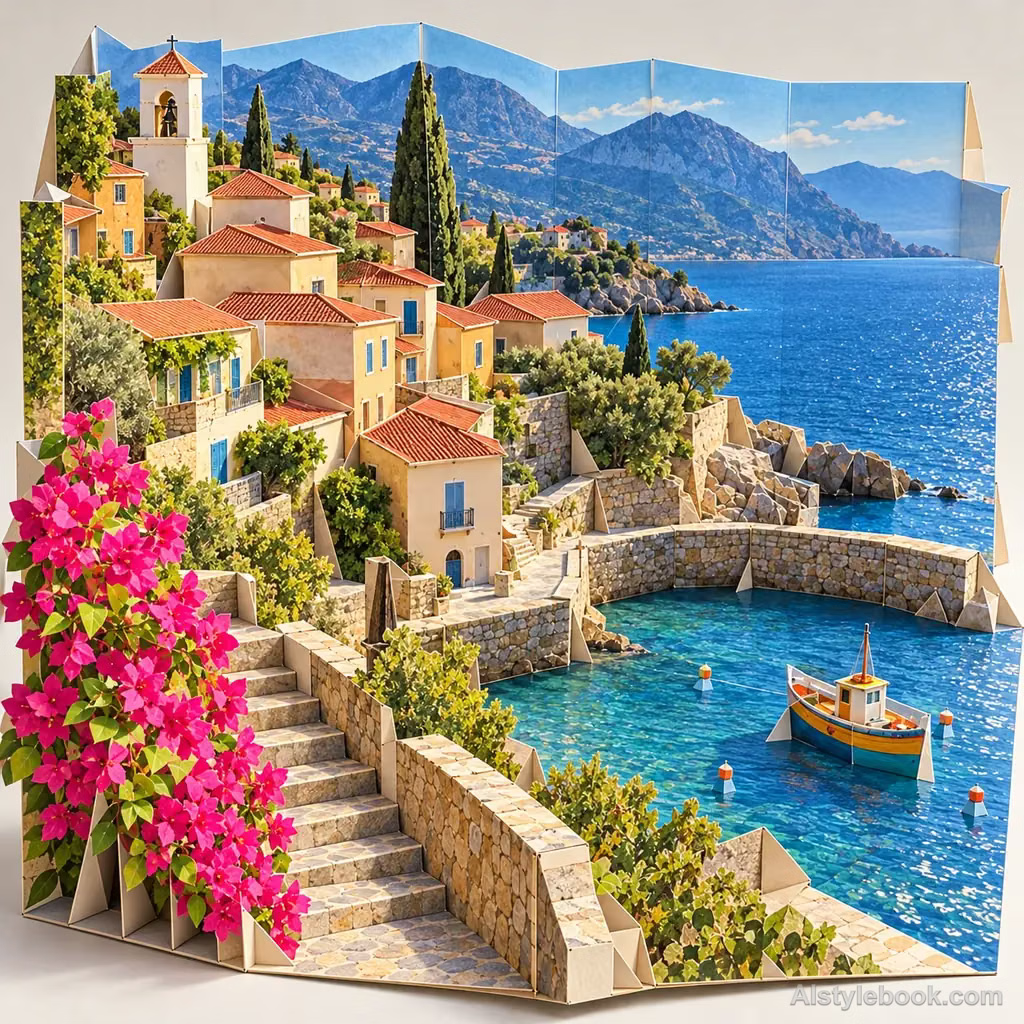
LandscapeStyle effect
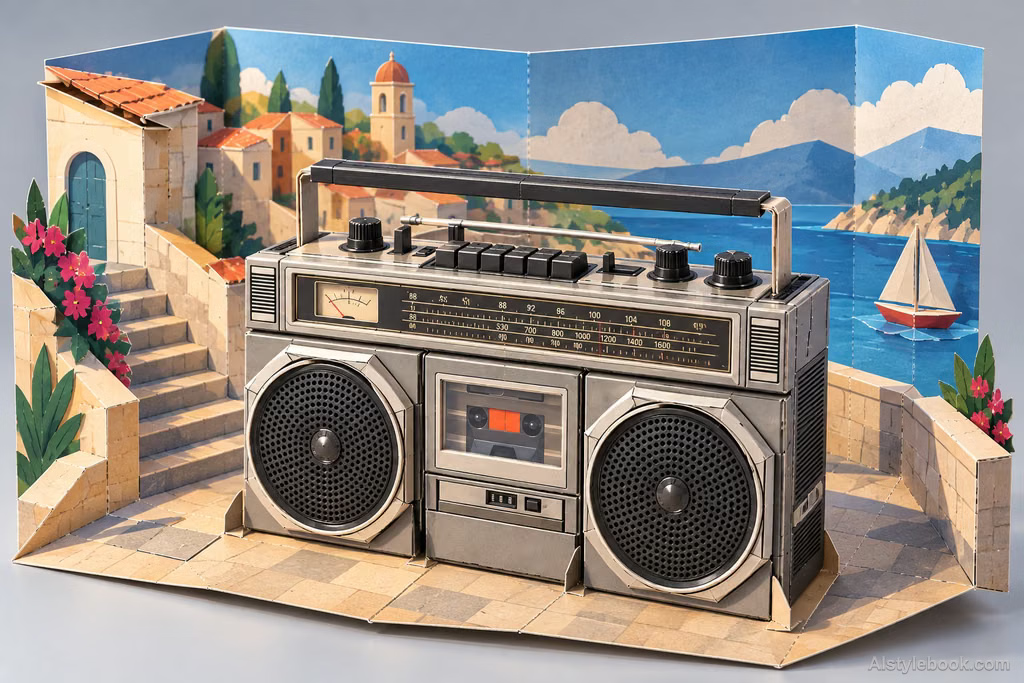
ObjectsStyle effect
The visual language
What is Hinged Pop-Up Scene?
Folded supports, parallel platforms and glue tabs connect thin paper planes into a collapsible spatial scene. Depth follows actual hinge positions and overlaps, with visible sheet thickness throughout.
Pop-up scenes rely on folds, tabs and supporting planes that can close together.
A bridge on folded supports and trees attached to the page can establish layered depth without losing a plausible folding logic.
How the style changes different subjects
- Portrait
- Figures resemble thin cut-out characters with readable fronts and visible placement in depth.
- Landscape
- Offset layers of buildings, trees and terrain create space through overlap and shadows.
- Objects
- Objects flatten into upright image planes rather than fully rounded volumes.
- Subjects
- Choose stage-like figures, streets, forests or isolated objects with clear foreground, middle and background layers.
Bring the style to your photos
Reusable style prompt for Hinged Pop-Up Scene
Construct the entire image as a foldable hinged-paper mechanism. Prominent V-fold supports, parallel-fold platforms, glue tabs and thin upright panels connect to shared base planes, deriving depth from operable folding assemblies. Divide existing forms into mutually supporting paper surfaces according to their contours. Keep creases and hinges visible; soft cast shadows reveal paper thickness and spacing, with simplified colors and recognizable defining features.Use the same style prompt for portraits, landscapes and objects.
Create with this styleKeep exploring


