
Painting & Drawing
Kalamkari
Style guide
Dark flowing outlines enclose natural dye colors, while contour-following curls interact with fine cotton fibers absorbing the color.
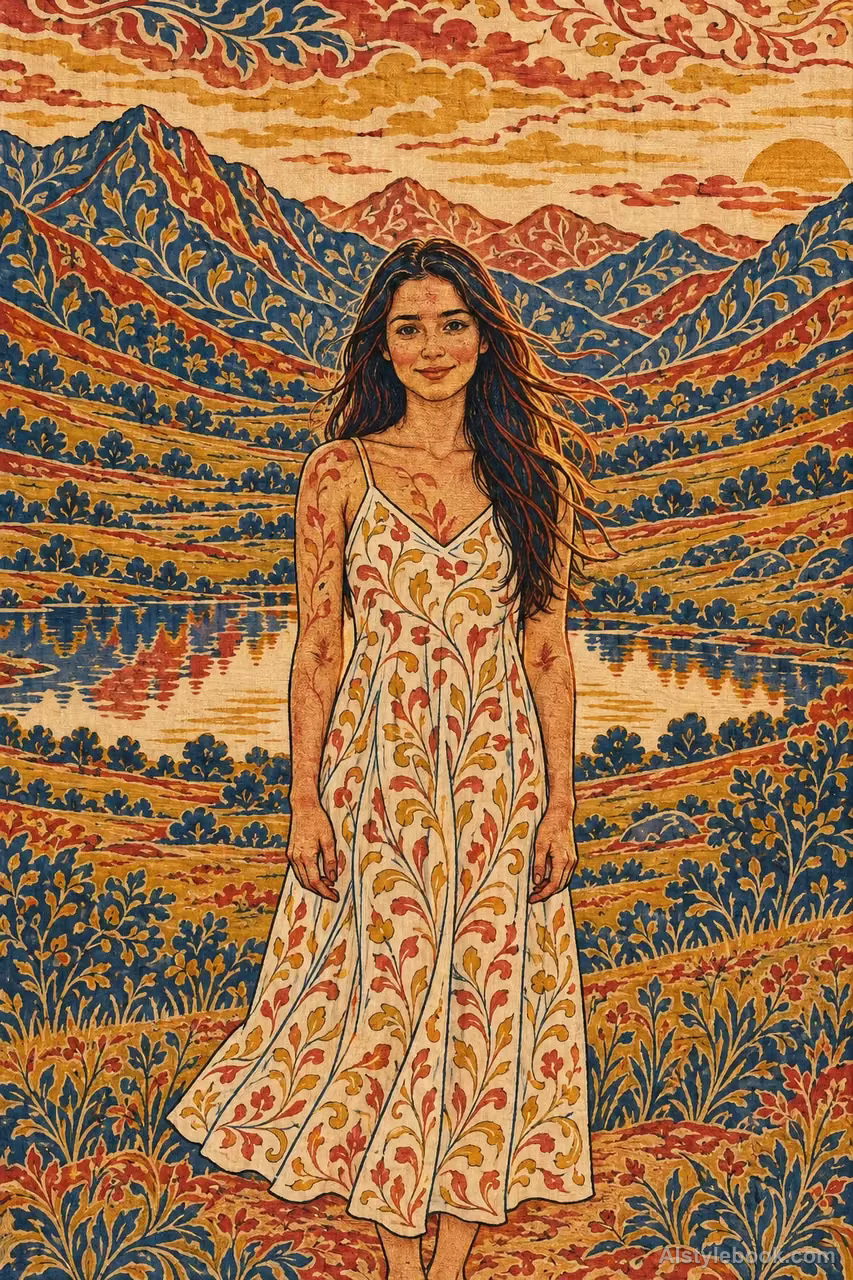
PortraitStyle effect
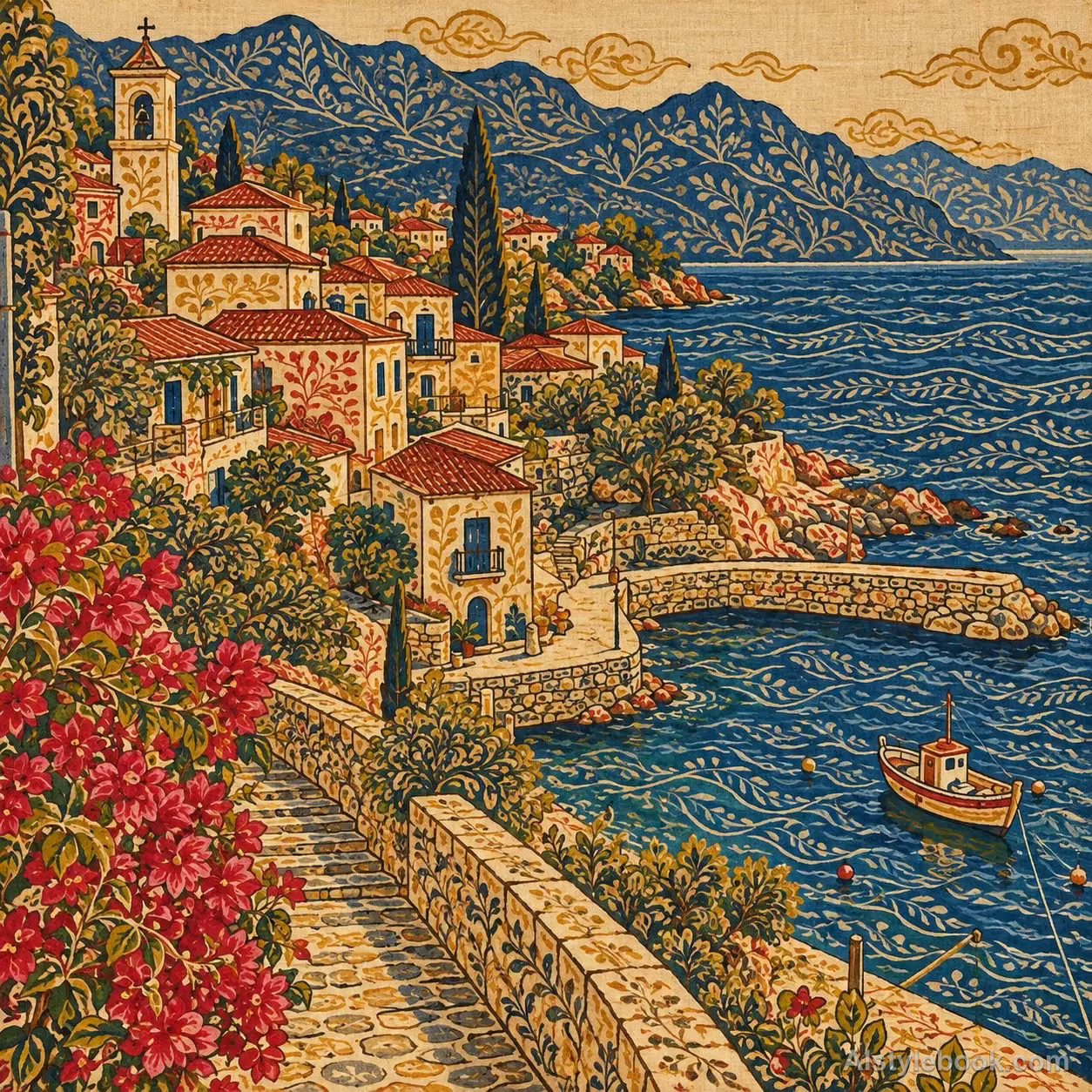
LandscapeStyle effect
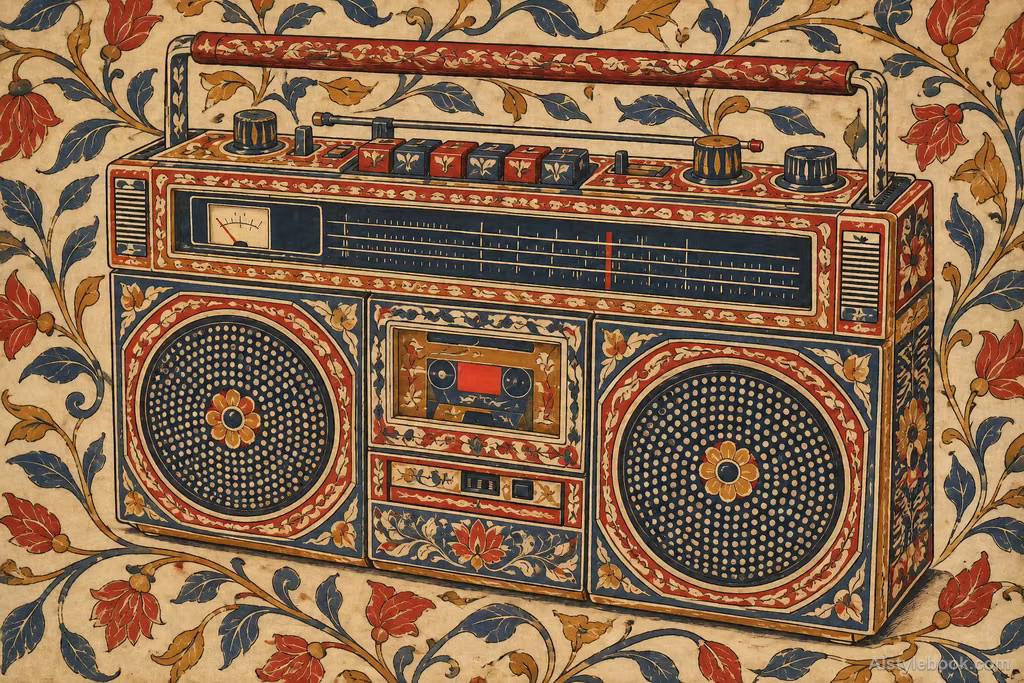
ObjectsStyle effect
The visual language
What is Kalamkari?
Flowing dark contours enclose naturally dyed-looking color absorbed into cotton, with curling patterns extending along the structure. Fibers soften the edges so ornament and dye feel embedded in one surface.
Kalamkari connects drawn or printed ornament with dyed cloth.
A stem whose edges soften into cotton while its inner curls remain readable suggests color absorbed into fibers rather than laid over them.
How the style changes different subjects
- Portrait
- Clear figures contain fine lines, dots and decorative color areas rather than realistic shading.
- Landscape
- Flatter plants, animals and buildings connect through repeated patterns into narrative ornament.
- Objects
- Strong silhouettes contain detailed patterns that replace literal reflections.
- Subjects
- Choose animals, foliage, clothed figures or clear vessels without overcrowding both subject and background.
Bring the style to your photos
Reusable style prompt for Kalamkari
Reconstruct the image with the hand-drawn dyed-cloth language of Kalamkari. Use long, dark bamboo-pen-like contours with supple, slightly varying width. Let madder red, indigo, mustard and warm cream absorb into one continuous fine cotton surface. Translate internal details into curling lines that follow each form. Preserve subtle hand-drawn edge undulations and visible dye absorption, producing a calm, coherent planar rhythm.Use the same style prompt for portraits, landscapes and objects.
Create with this styleKeep exploring


