
Textiles & Embroidery
Batik Painting
Style guide
Pale resist lines enclose indigo and ochre fields, with fine wax crackle interwoven with dye absorbed into cotton.
The visual language
What is Batik Painting?
Pale wax-resist lines surround dyed color fields, crossed by fine crackle. Dye spreads slightly through cotton fibers, combining clear resist boundaries with the softness of absorbed color.
Batik reserves areas with wax, allowing dye to color the exposed cloth.
Pale leaf boundaries and occasional crackle within blue areas can coexist with the visible texture of dyed cotton.
How the style changes different subjects
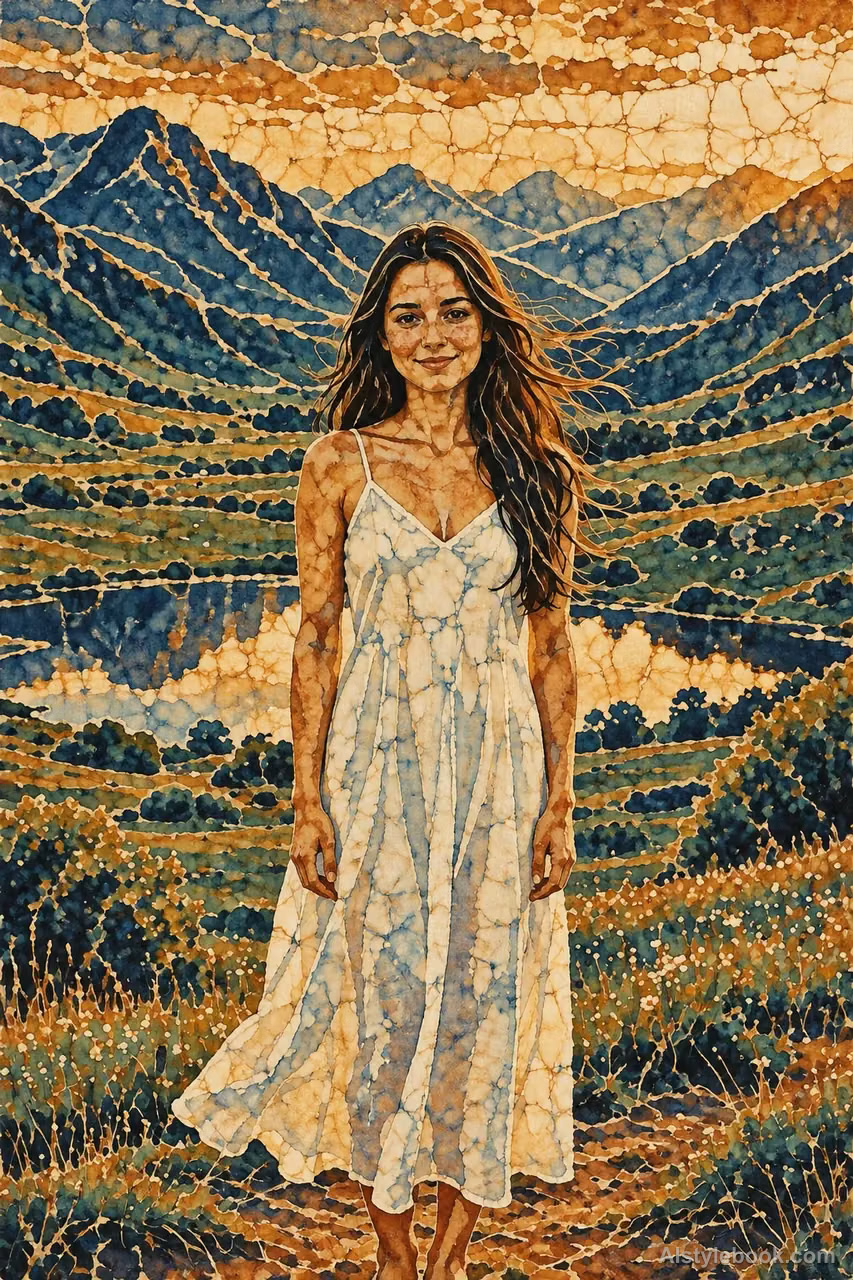
- Portrait
- Dyed fabric tones and softened resist edges replace skin and clothing detail.
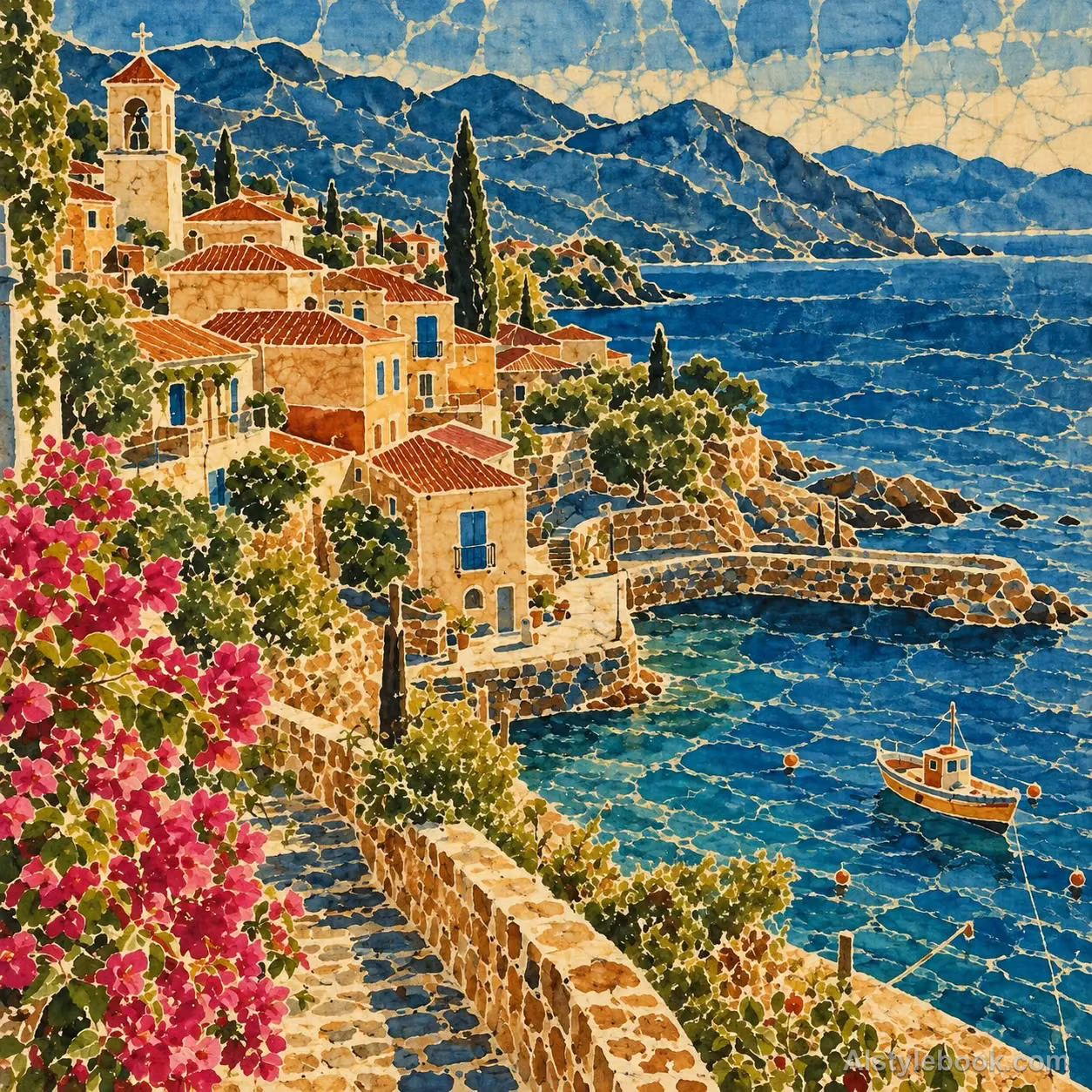
- Landscape
- Reserved areas and dye divide scenery over a continuous fabric weave.
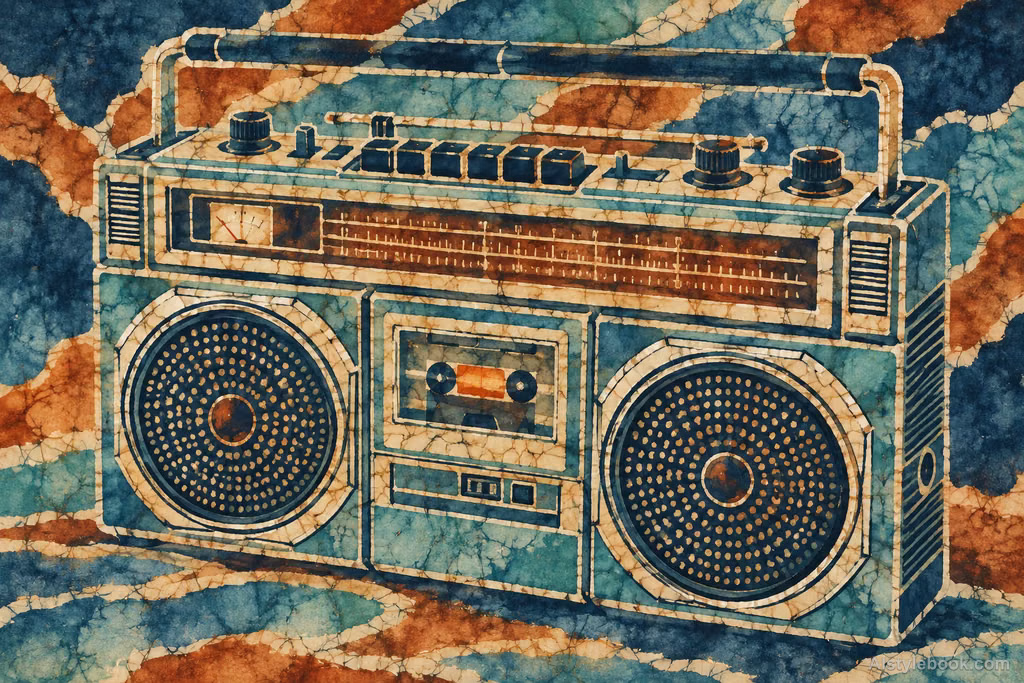
- Objects
- Resist boundaries and pale gaps replace object surfaces and reflections.
- Subjects
- Choose foliage, mountains, animals or simple portraits with broad areas for dye variation.
Craft and history
UNESCO documents Indonesian batik in clothing and life-cycle ceremonies, with patterns carrying symbolic meanings.
Bring the style to your photos
Reusable style prompt for Batik Painting
Translate every form into dyed regions on batik cotton. Connect the original structure through pale wax-resist lines, using indigo, warm sienna and muted turquoise color pools. Reveal the weave through absorbed dye and soften boundaries with slight capillary spreading. Fine broken-wax crackle crosses color fields but remains subordinate to major contours. Accumulated dye layers create gentle tonal depth and a warm handmade quality.Use the same style prompt for portraits, landscapes and objects.
Create with this styleKeep exploring


