
Materials & Craft
Kintsugi Ceramic Tableau
Style guide
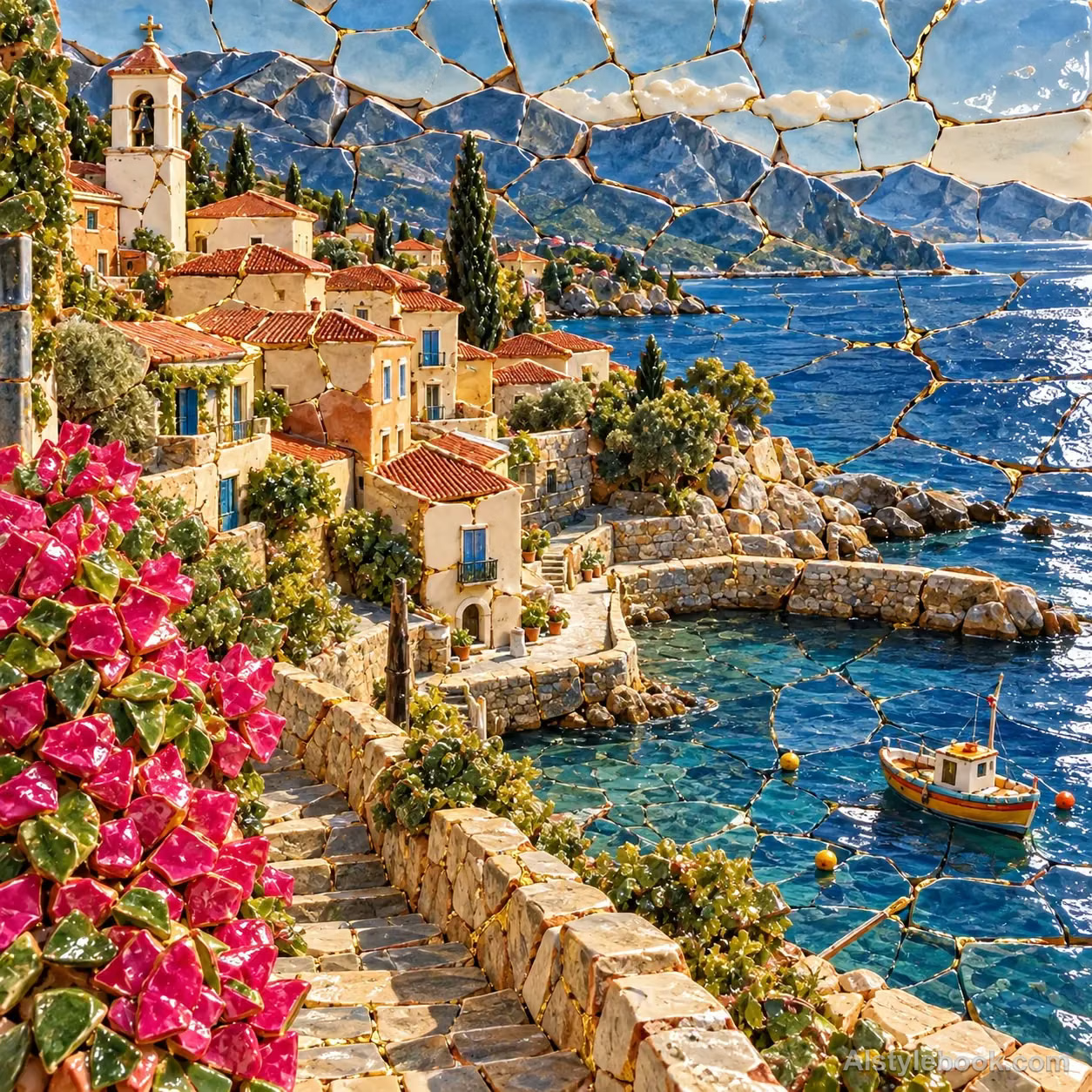
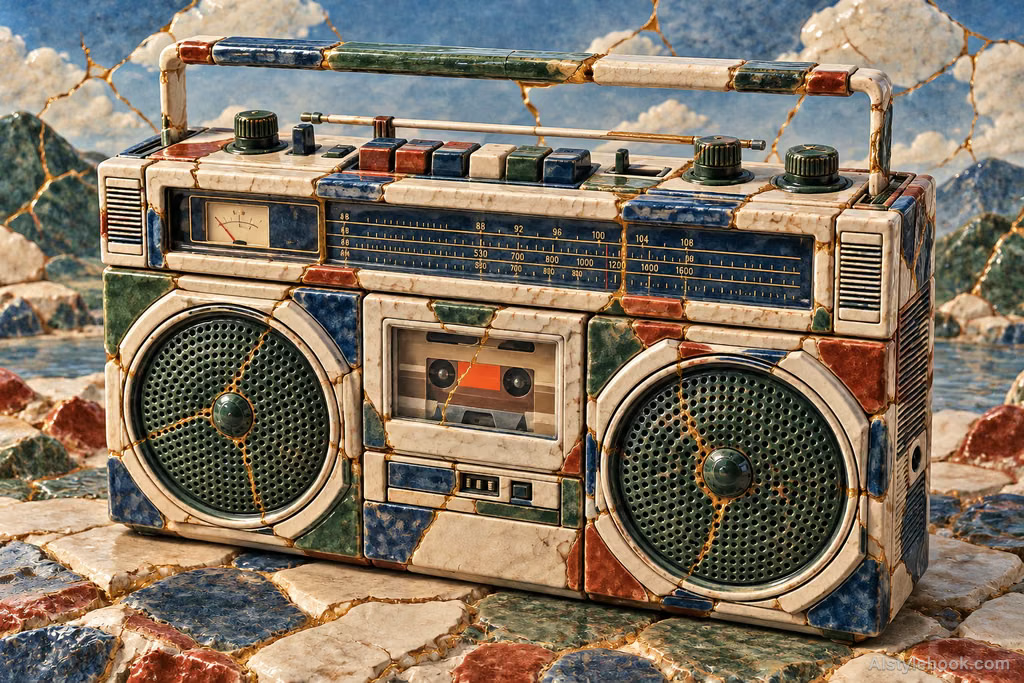
Pale glazed ceramic joins along irregular gold-lacquer cracks, while fragment lips and varied glaze sheen retain layers of repair.

The visual language
What is Kintsugi Ceramic Tableau?
Pale glazed ceramic fragments reconnect along irregular breaks, with golden lacquer seams becoming the composition’s framework. Raised fragment lips and glossy-matte glaze changes preserve evidence of separation.
Kintsugi makes a repair seam part of an object's visible history.
An irregular gold join meeting a missing fragment's boundary can suggest a vessel once broken and brought together again.
How the style changes different subjects
- Portrait
- A ceramic-like figure gains gold repair lines while broad forms retain recognition.
- Landscape
- Cracked ceramic planes replace scenery, with gold seams reconnecting regions.
- Objects
- Ceramic cracks and gold joins make repair marks the main visual feature.
- Subjects
- Choose vessels, sculptures, simple portraits or stone-like objects with broad surfaces for readable seams.
Repair becomes part of the object
Kintsugi’s exact origins remain uncertain, but it became more widespread in Japan through its association with tea in the late 16th century. It continues lacquer repair of ceramics, adding gold powder to make the repair part of the object’s appreciation.
Bring the style to your photos
Reusable style prompt for Kintsugi Ceramic Tableau
Rebuild every form as a shallow glazed-ceramic tableau, fractured irregularly and rejoined with restrained gold lacquer. At selected junctions, reveal ceramic thickness and slightly displaced shard lips. Preserve the original color relationships through cream, green, earth red and blue glazes, balancing glossy and satin finishes. Gold glints only intermittently along real repair cracks. Keep forms continuous and recognizable across repairs, using side light to reveal ceramic relief.Use the same style prompt for portraits, landscapes and objects.
Create with this styleKeep exploring


