
Materials & Craft
Azulejo Panel
Style guide
Cobalt-blue and ochre glaze painting crosses regular tile joints on a creamy ceramic surface with delicate glaze reflections.
The visual language
What is Azulejo Panel?
Cobalt and ochre brushwork continues across a regular grid of tiles. Grout divides a coherent picture into countable units, while creamy ceramic and gentle glaze reflections connect painterly detail to architectural order.
Azulejo imagery can continue across ceramic tile joints while the grid preserves architectural scale.
Blue branches aligned over cream tiles remain continuous without concealing glaze reflections or mortar lines.
How the style changes different subjects
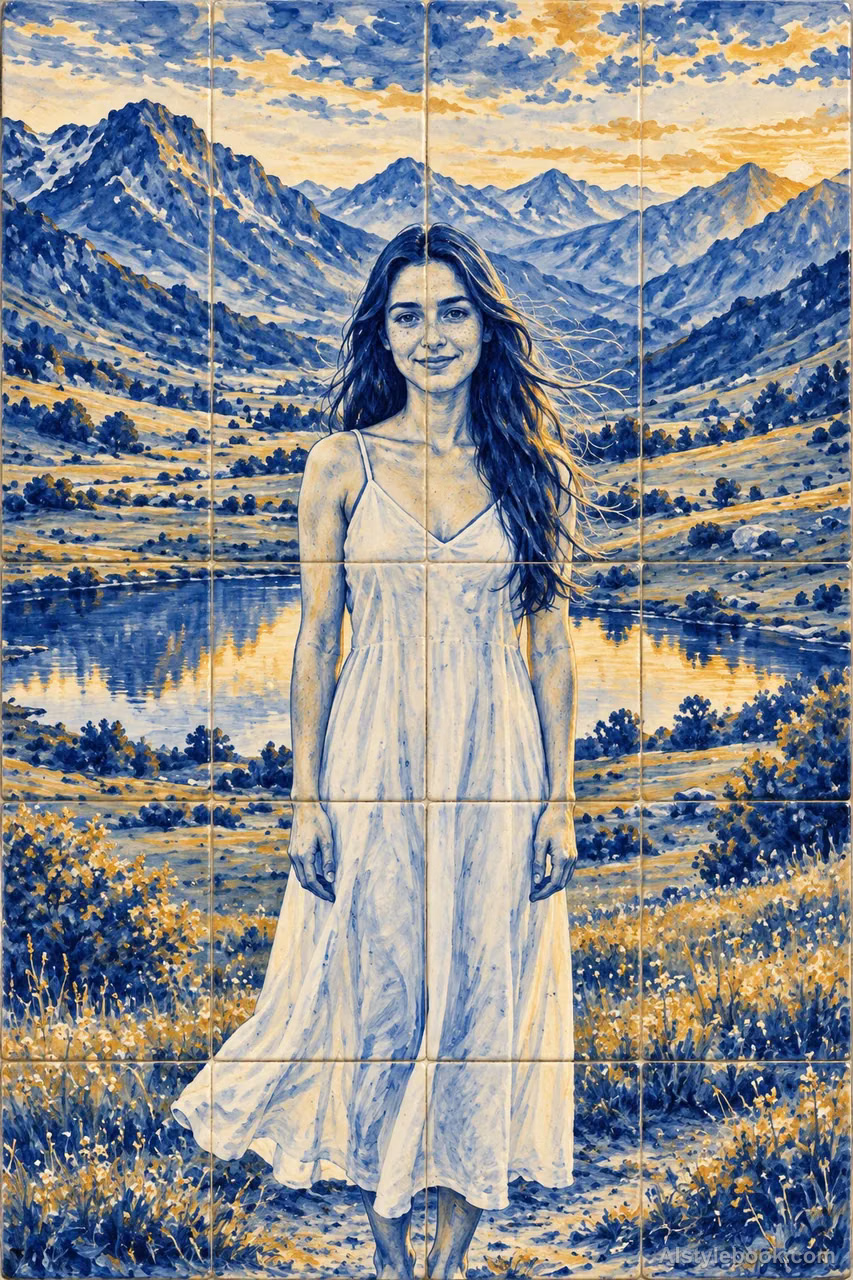
- Portrait
- Small pieces build face and clothing from discrete colors with granular edges.
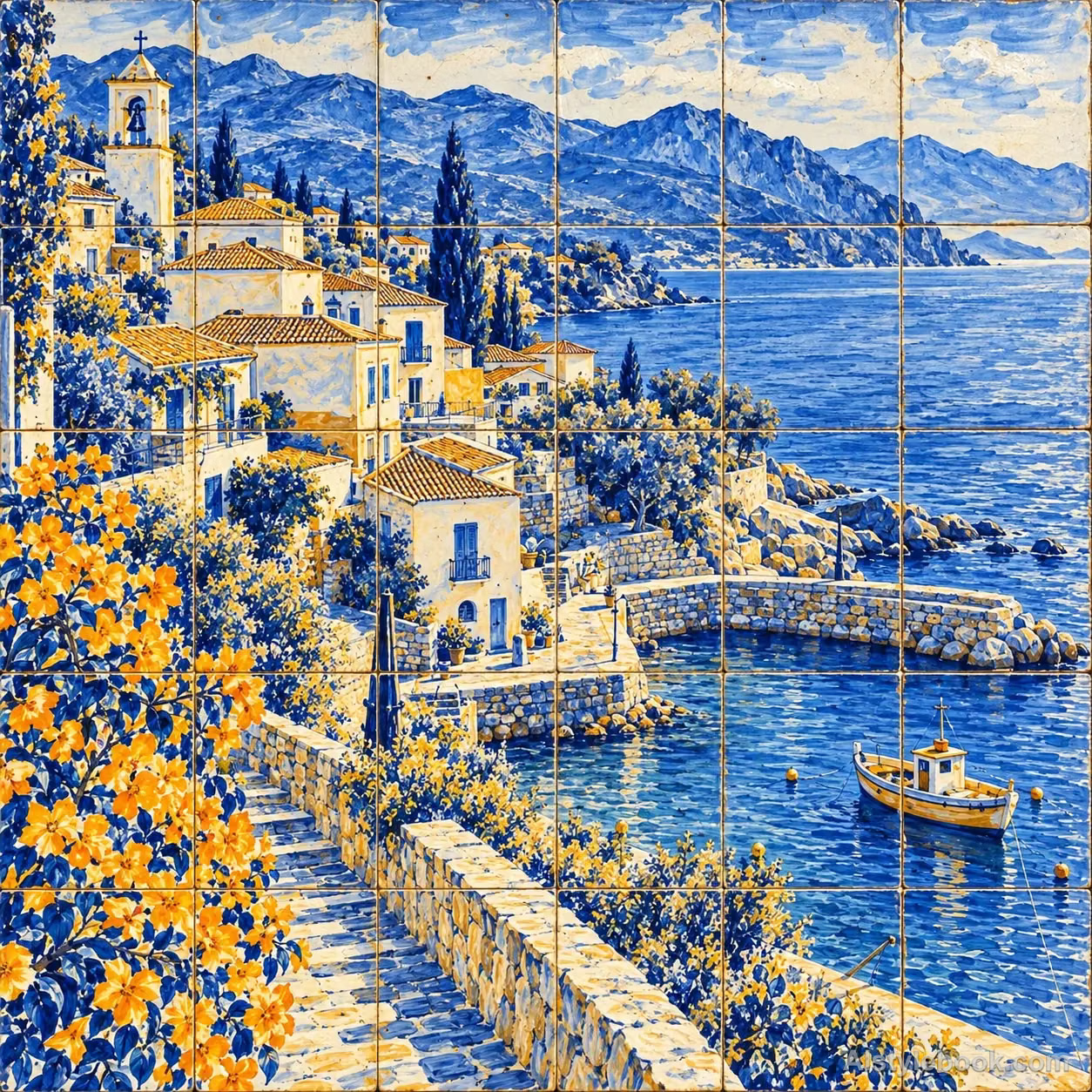
- Landscape
- Arranged fragments separate scenery through color, density and joints.
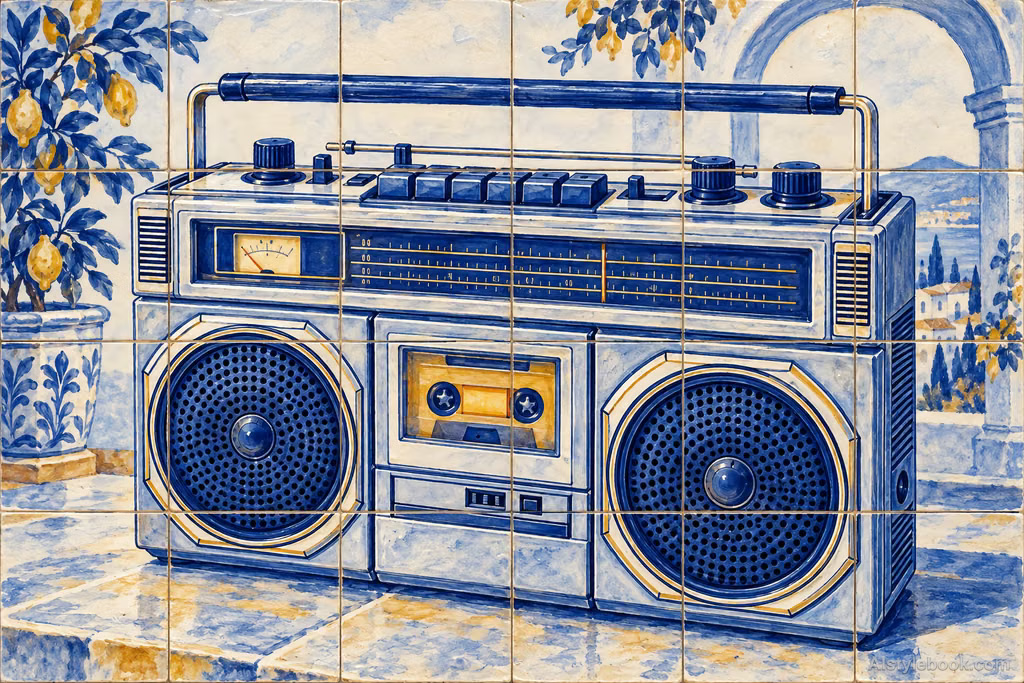
- Objects
- Curves and reflections become pieces within a decorative, visibly joined surface.
- Subjects
- Choose frontal figures, flowers, birds, buildings or clear still lifes without tiny faces or lettering.
Glazed tiles in Portuguese architecture
Glazed tiles gained an important place in Portuguese architecture from the 15th century and spread widely through churches, palaces, homes and gardens in the 18th. Geometric patterns and continuous narrative scenes made tiled walls a distinctive decorative surface.
Bring the style to your photos
Reusable style prompt for Azulejo Panel
Repaint the image as a continuous glazed azulejo tile picture, keeping every form connected across a regular square-tile grid. Model contours and shadows with supple fine brushwork in luminous cobalt, restrained ochre and creamy white glaze. Run narrow grout seams throughout, with slight glaze buildup at tile edges. Gentle surface irregularities and soft specular reflections should convey the refined texture of fired ceramic.Use the same style prompt for portraits, landscapes and objects.
Create with this styleKeep exploring


