
Fantasy & Architecture
Living-Root World
Style guide
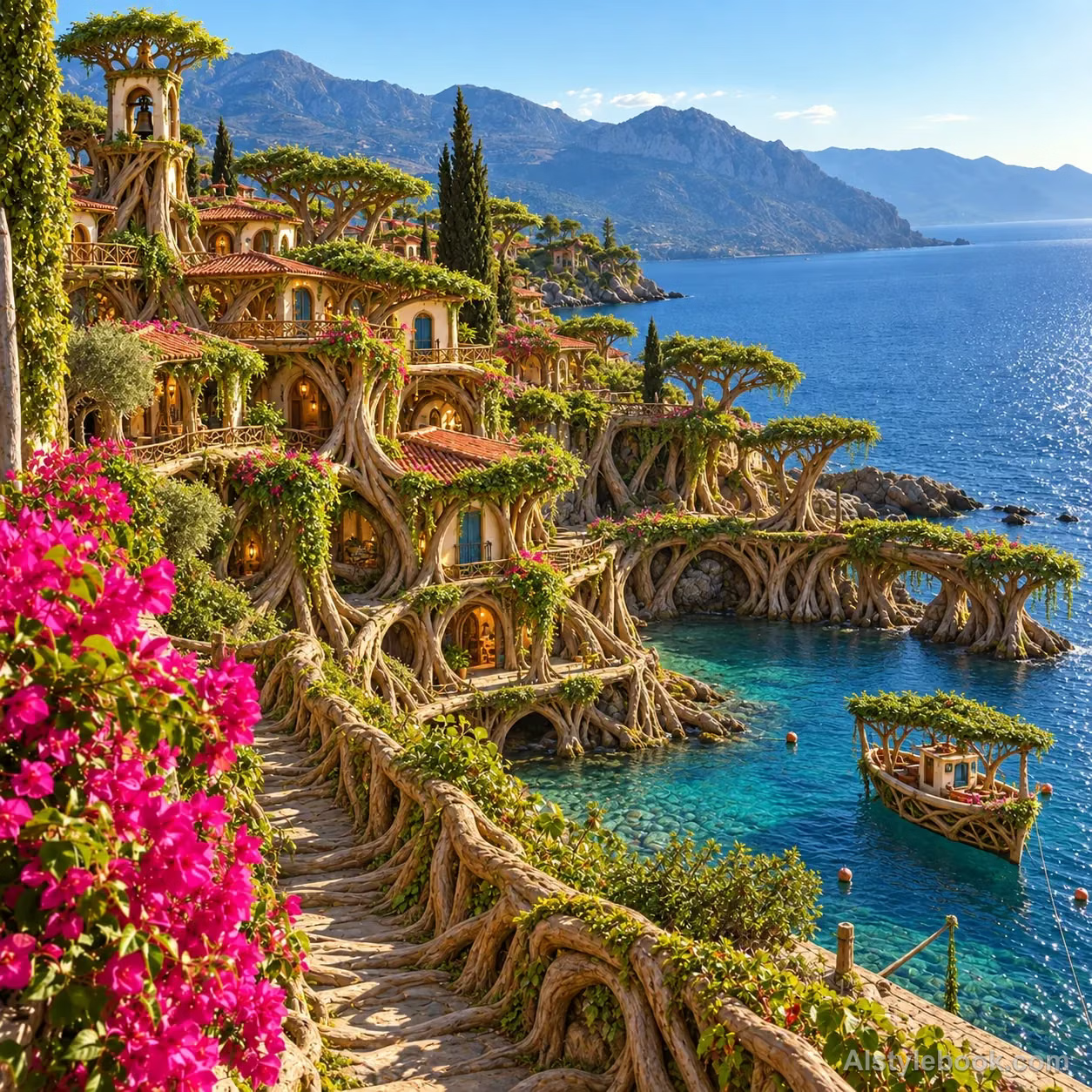
Roots, trunks and living branches become the load-bearing paths of an organic inhabited landscape.


The visual language
What is Living-Root World?
Roots and branches grow continuously into paths, bridges and roofs. Thick roots, fine twigs and attached plants create layers that suggest sustained living growth rather than ordinary timber assembly.
Living-root structures emphasize guided growth, with major roots and smaller connections retaining continuity.
A bridge supported by intertwined roots still connected to bank-side trees can suggest formation over time.
How the style changes different subjects
- Portrait
- Branches, roots or fibrous networks extend body and clothing into growing organic forms.
- Landscape
- Growth connects buildings and routes into continuous, plant-like space.
- Objects
- Growing cavities and connecting tissue replace manufactured seams with irregular surfaces.
- Subjects
- Choose trees, arches, building groups, animals or curved objects with a clear base for branching growth.
A cultural context for living-root construction
Khasi communities in Meghalaya guide Ficus roots and maintain living bridges across generations. This speculative settlement draws on that continuing growth and care, extending it into roofs, platforms and paths.
Bring the style to your photos
Reusable style prompt for Living-Root World
Redesign existing forms as living-root construction. Branch, merge and interlace rootlike supports of graded thickness along the original load directions. Broad bases taper toward fine ends, with naturally swollen grafts and continuous woody grain at junctions. Keep existing openings clear. Use subtle warm brown, gray-green and pale wood tones. Side light reveals longitudinal bark texture and softly rounded connection thickness, combining growth-like resilience with stable original contours.Use the same style prompt for portraits, landscapes and objects.
Create with this styleKeep exploring


