
Painting & Drawing
Madhubani Painting
Style guide
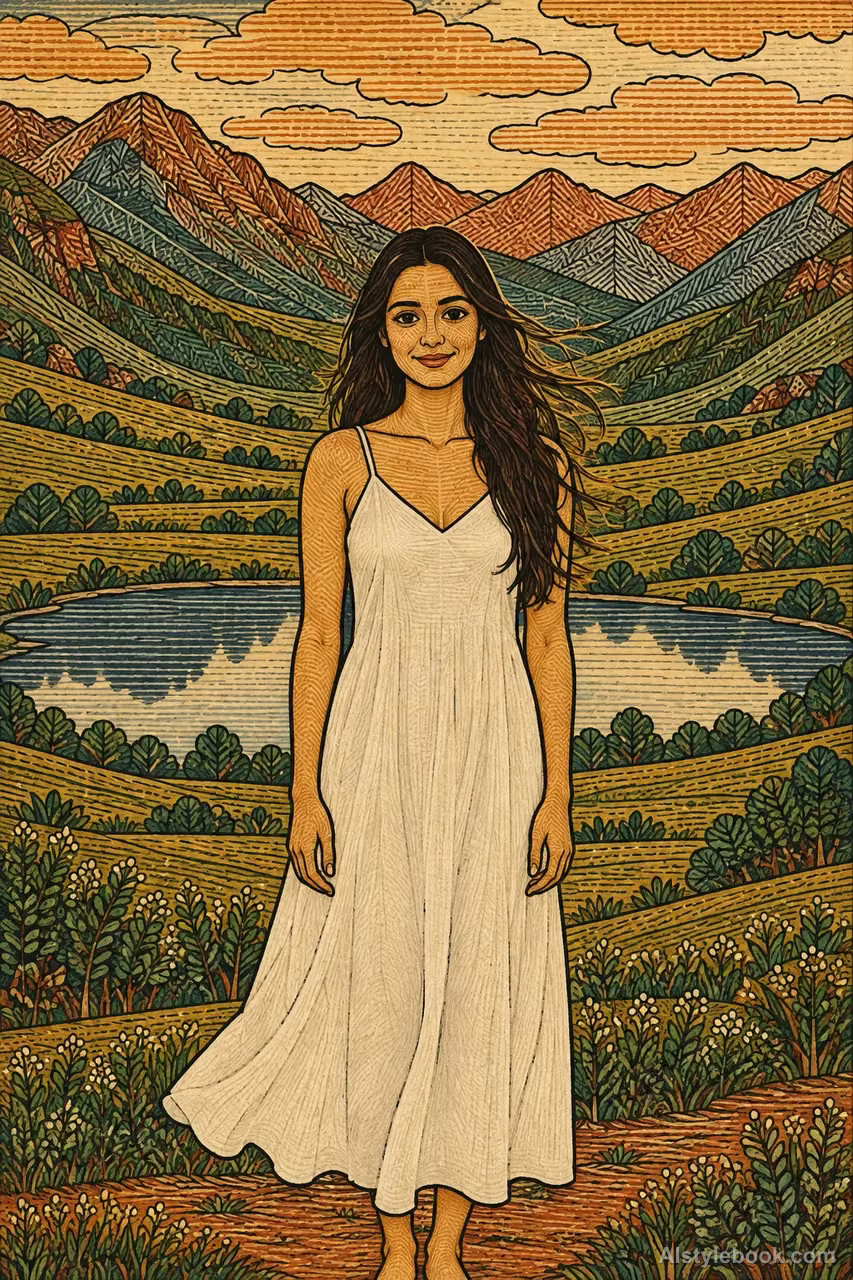
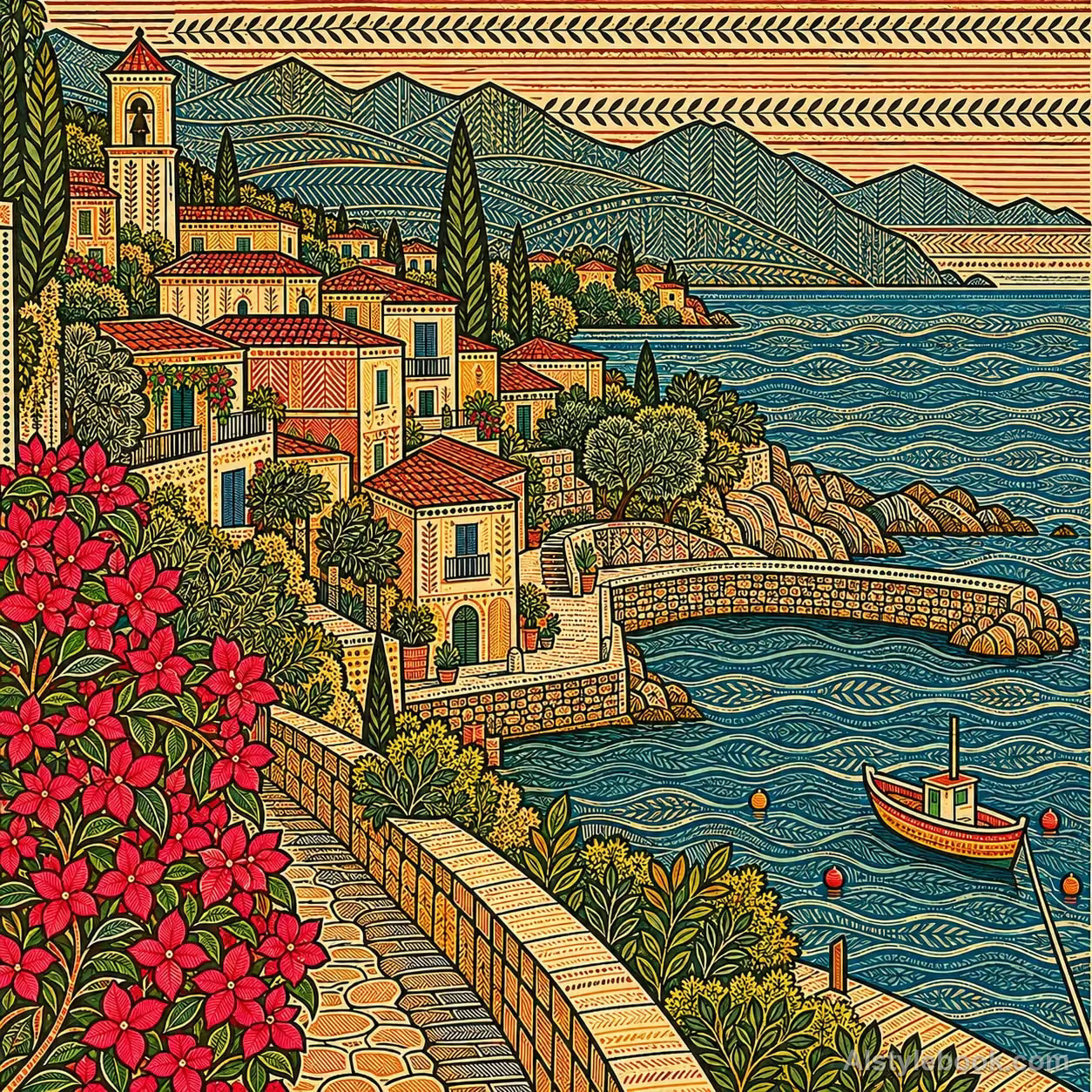
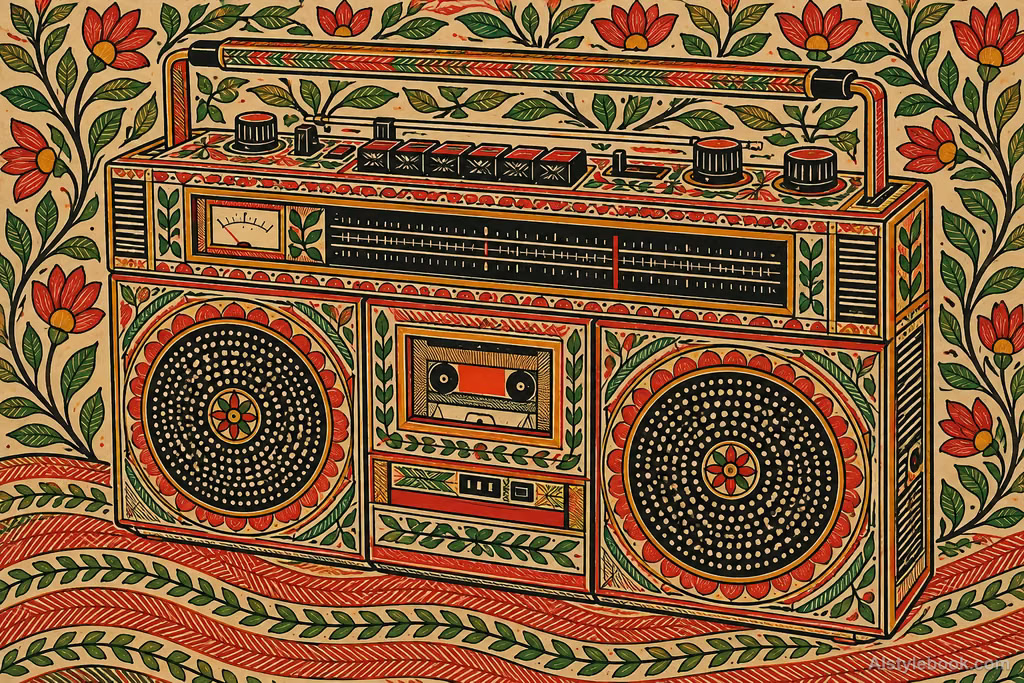
Paired dark lines enclose earthy flat colors, with alternating chevrons and parallel infill creating dense decorative layers.
The visual language
What is Madhubani Painting?
Paired dark lines enclose color fields that fill with chevrons, parallel marks and repeating patterns. Earthy flat colors and doubled outlines turn each form into a self-contained ornamental unit.
Madhubani painting has regional and ritual contexts beyond its double outlines and dense patterns.
Different fills for a fish and surrounding plants can distinguish forms while paired contours keep them legible.
How the style changes different subjects
- Portrait
- Clear figures contain fine lines, dots and decorative color areas rather than realistic shading.
- Landscape
- Flatter plants, animals and buildings connect through repeated patterns into narrative ornament.
- Objects
- Strong silhouettes contain detailed patterns that replace literal reflections.
- Subjects
- Choose animals, foliage, clothed figures or clear vessels without overcrowding both subject and background.
Painting from Mithila
Madhubani painting, also called Mithila art, is associated with the Mithila region of Bihar and often combines bright color with patterned line drawing.
Bring the style to your photos
Reusable style prompt for Madhubani Painting
Repaint the image with Madhubani-inspired doubled contours. Enclose major forms in precise paired dark lines with slight handmade undulation. Fill them with opaque earthy red, yellow ochre and indigo, alternating dense herringbone marks, fine parallel lines and curling motifs. Organize each pattern by existing structural region and bring it to an orderly finish at boundaries. Express values through fill density and the relative strength of flat color fields.Use the same style prompt for portraits, landscapes and objects.
Create with this styleKeep exploring


