
Painting & Drawing
Warli Painting
Style guide
Off-white geometric signs connect across a rough red-earth ground, simplifying forms through triangles, fine rods and angular turns.
The visual language
What is Warli Painting?
Off-white geometric signs sit on a rough red-earth ground, connecting triangles, fine rods and dots into recognizable forms. Repetition and density carry detail in a flat, slightly irregular image.
Warli's geometric vocabulary can carry narratives of community life and ritual.
Two triangles joined as a body, repeated in a linked circle, can communicate collective dancing with very few marks.
How the style changes different subjects
- Portrait
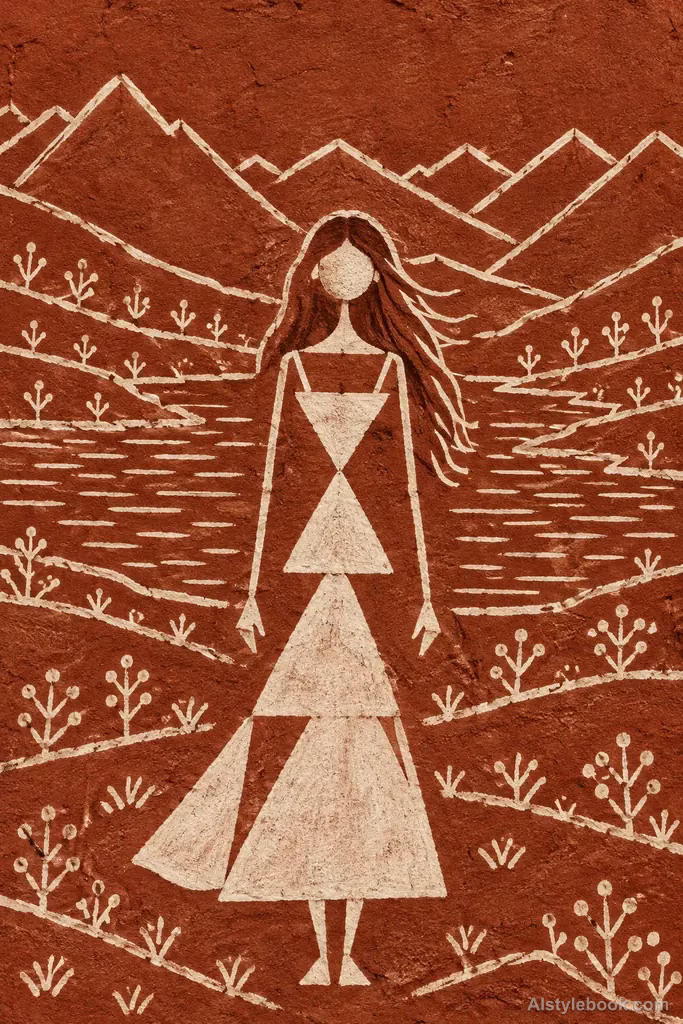
- Triangles, rods and dots retain bodily action while removing most facial identity detail.
- Landscape
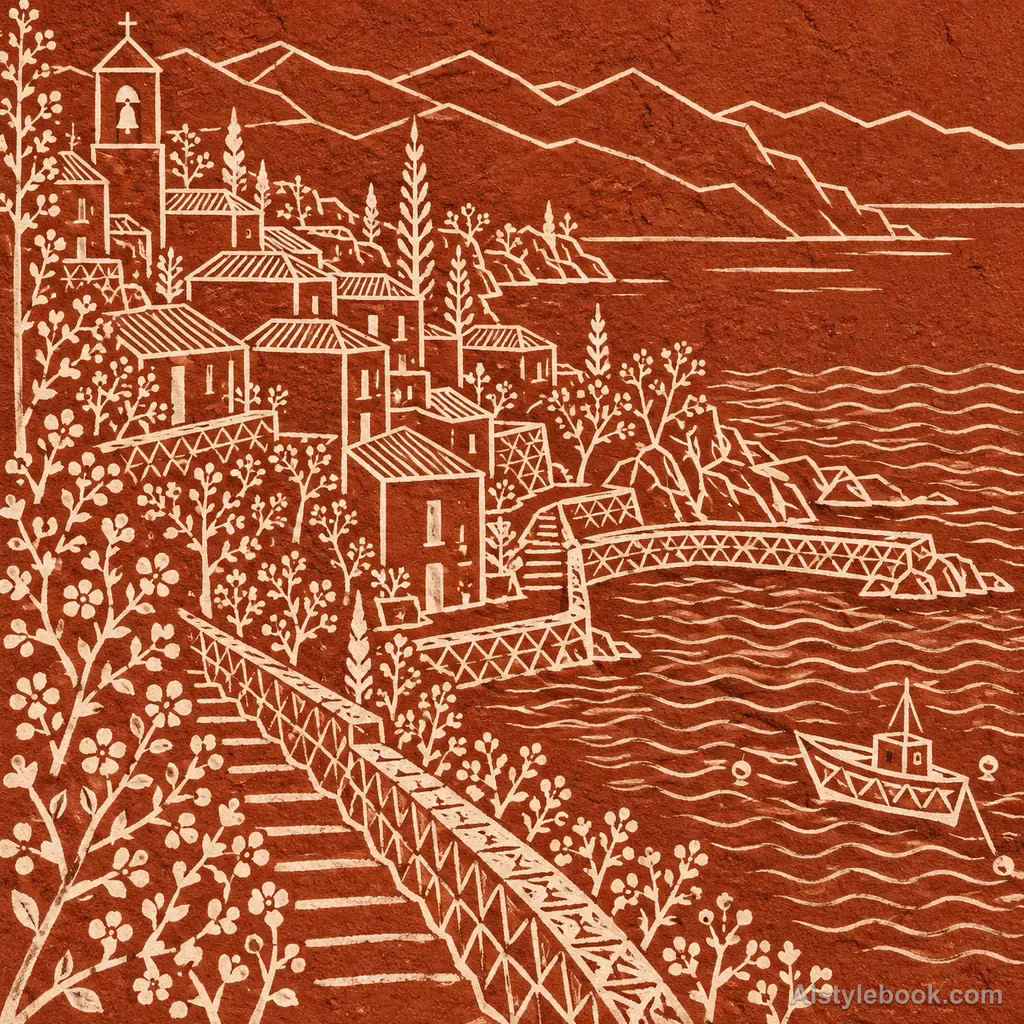
- Pale geometric symbols turn trees, houses and paths into arrangements and repetition.
- Objects
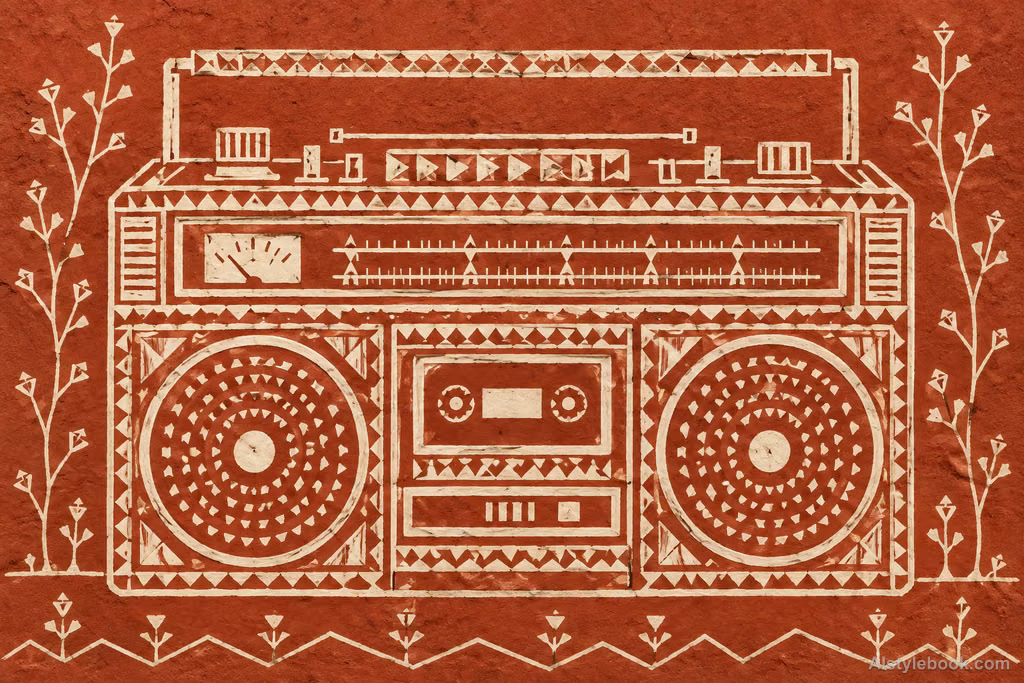
- A few lines and shapes reduce objects to functional silhouettes.
- Subjects
- Choose dance, work, animal interactions or village scenes where action and group relationships matter more than facial detail.
A tradition extending from wall painting
Warli painting is associated with Warli communities in Maharashtra, India. Its domestic wall-painting tradition has also extended to a variety of crafted objects.
Bring the style to your photos
Reusable style prompt for Warli Painting
Redraw the entire image as Warli-inspired geometric painting on rough red-earth ground. Build spare hand-painted signs from off-white rice-paste-like pigment, using joined triangles, fine rod-like lines, dots and continuous angular turns to summarize existing forms. Express details through density and repetition. Keep the image flat, modest and slightly irregular, organizing symbols according to the original spatial relationships so recognizability arises from contours and geometric connections.Use the same style prompt for portraits, landscapes and objects.
Create with this styleKeep exploring


