
Painting & Drawing
New Chinese Line-and-Color Illustration
Style guide
Delicate ink contours and restrained sage, ivory and ochre-red fields reorganize the source.
The visual language
What is New Chinese Line-and-Color Illustration?
Delicate ink contours and restrained sage, ivory and ochre-red fields reorganize the source. Long flowing curves, economical details and small paper gaps between line and color create a spacious contemporary East Asian illustration.
New Chinese line-and-color illustration combines inherited line rhythms with contemporary simplification.
Long garment curves and muted green planes separated by paper gaps can connect classical cadence with modern clarity.
How the style changes different subjects
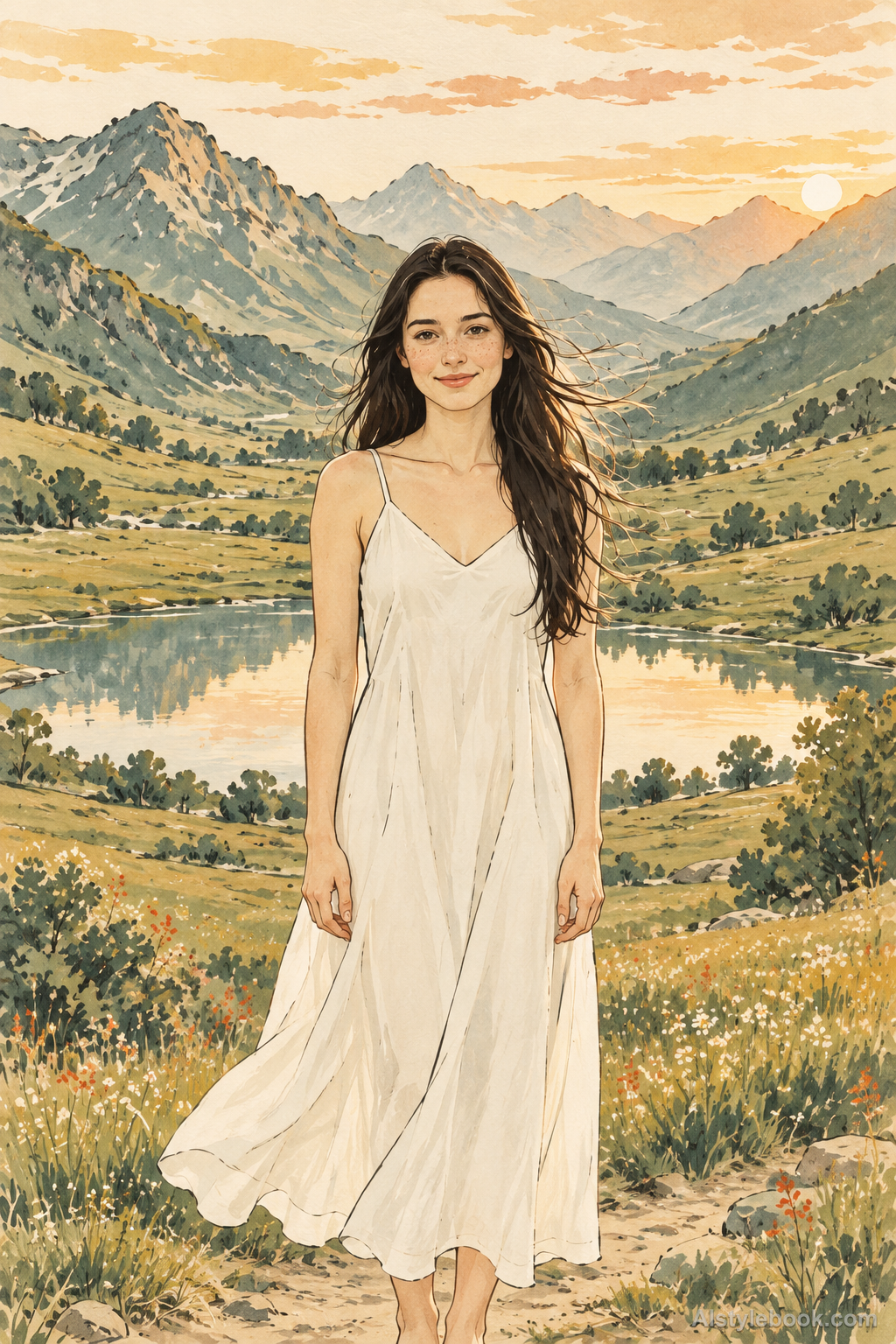
- Portrait
- Decorative lines and distinct color emphasize hair, clothing and pose as an illustrated design.
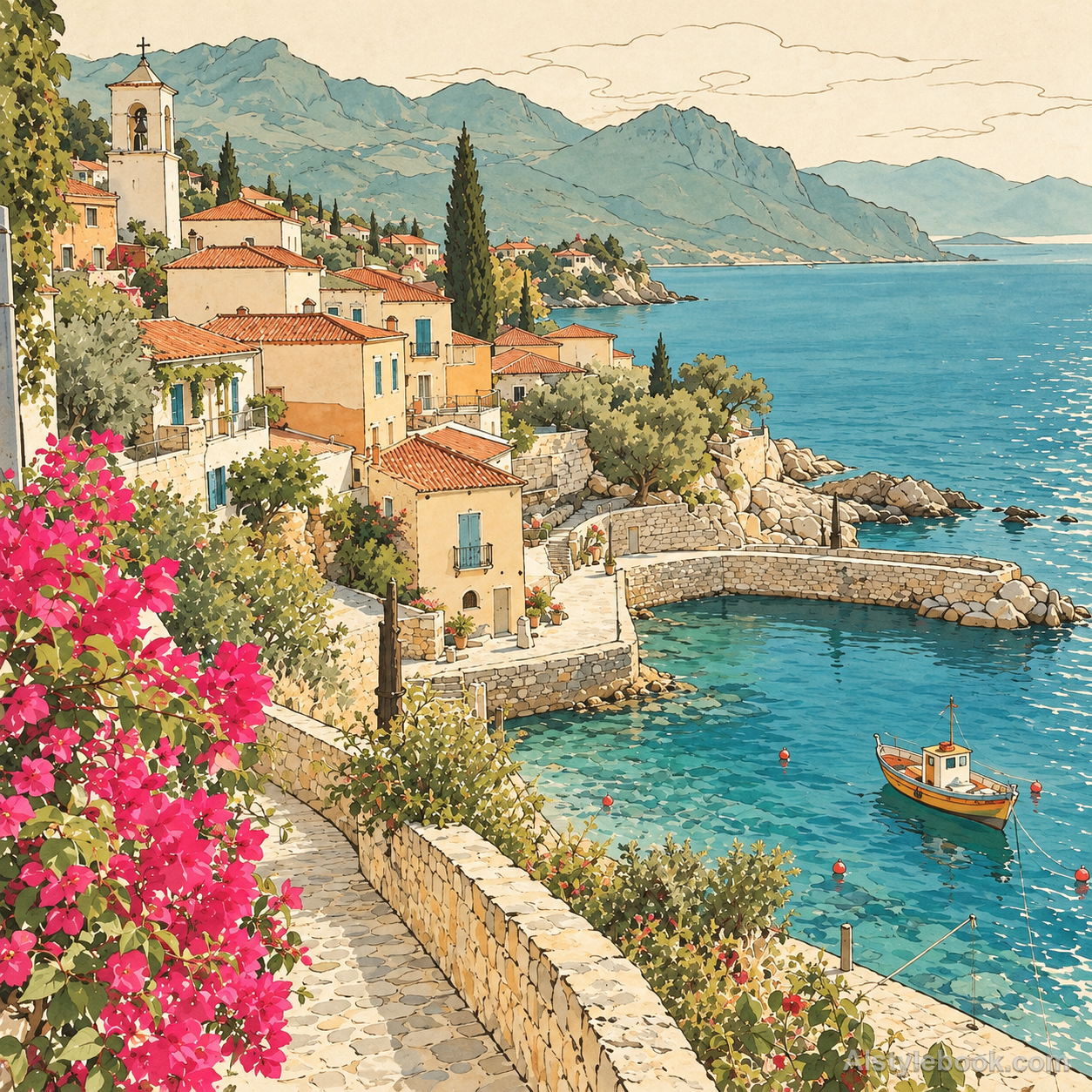
- Landscape
- Architecture, terrain and plants become layered decorative color planes.
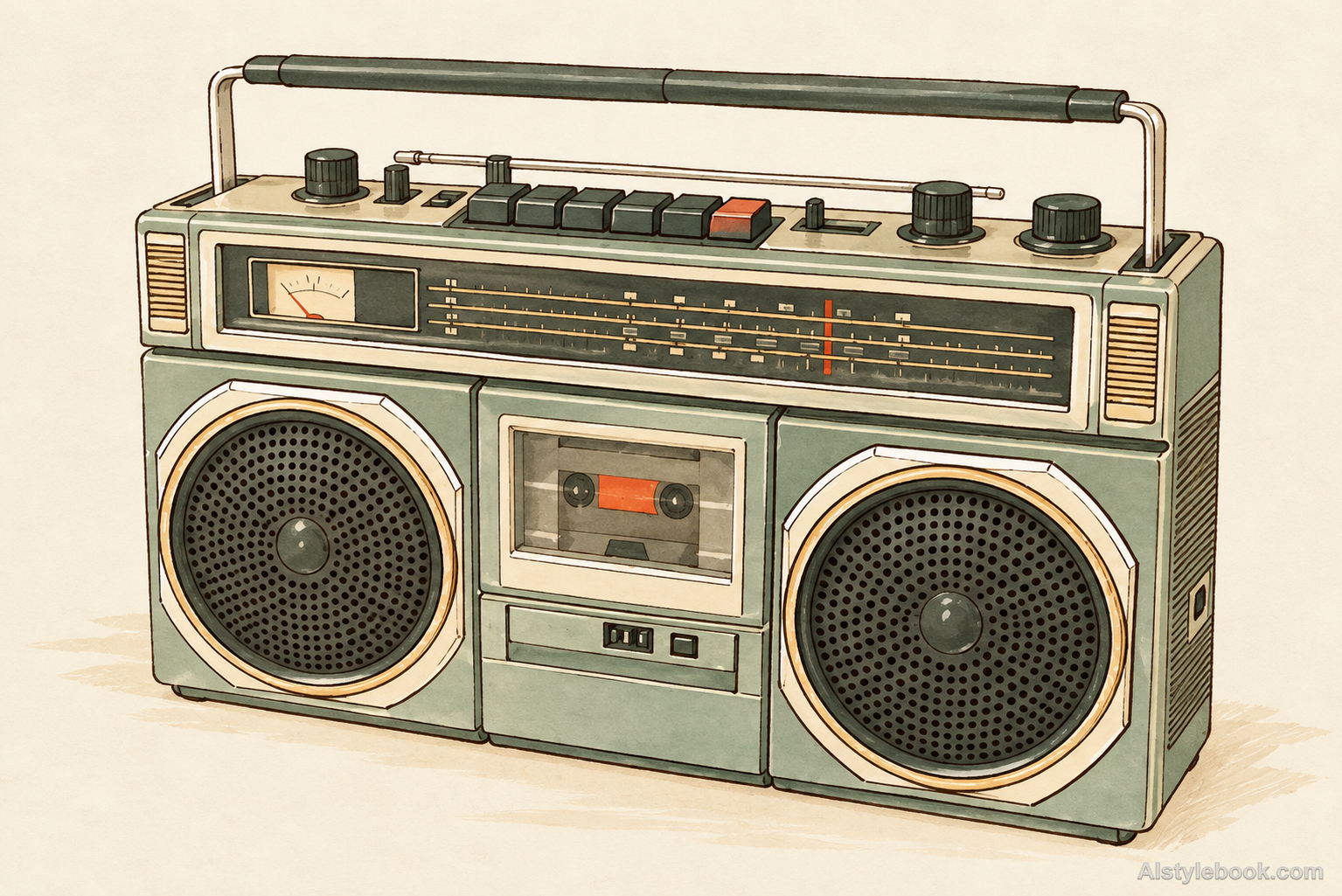
- Objects
- Contours, patterns and selected accents unify the object's visual character.
- Subjects
- Choose distinctive clothing, flowers and birds, architecture or patterned objects with room for both line and color.
Variant relationship
A contemporary line-and-color variant of East Asian contour drawing. Compare with Baimiao Outline Drawing.
Compared with the line-only structure of Baimiao, this contemporary variant adds restrained flat color and paper gaps between color and contour, reducing dense fold lines and realistic shading. Existing clothing and architecture remain; line, space and color carry the interpretation.
Bring the style to your photos
Reusable style prompt for New Chinese Line-and-Color Illustration
Keep the source identity, clothing, framing and spatial anchors. Repaint the image as contemporary Chinese line-and-color illustration. Use thin fluid dark-umber ink contours, long elegant curves and economical internal marks. Organize shapes into restrained flat sage-green, warm ivory, muted ochre and tiny vermilion accents, retaining source-related color relationships. Leave small deliberate paper-white gaps between selected contours and color areas, and reserve generous calm light passages within the existing scene. Make the contrast between precise light linework and quiet color fields visible. Avoid dense gongbi detailing, monochrome-only drawing, broad wet ink washes, realistic volume gradients, antique aging, random dragons, seals, calligraphy, new architecture or period costume.Use the same style prompt for portraits, landscapes and objects.
Create with this styleKeep exploring


