
Painting & Drawing
Gongbi Polychrome Painting
Style guide
Extremely fine ink lines combine with multiple layers of mineral color washes, while warm silk texture supports precise, soft tonal layers.
The visual language
What is Gongbi Polychrome Painting?
Very fine ink lines establish the structure before repeated washes deepen the mineral colors. Warm silk remains visible through thin layers, preserving both exact detail and gentle shading.
Gongbi combines precise outlines with repeated delicate washes.
A lotus leaf can retain crisp veins while pale green gradually deepens beside them, producing quiet volume.
How the style changes different subjects
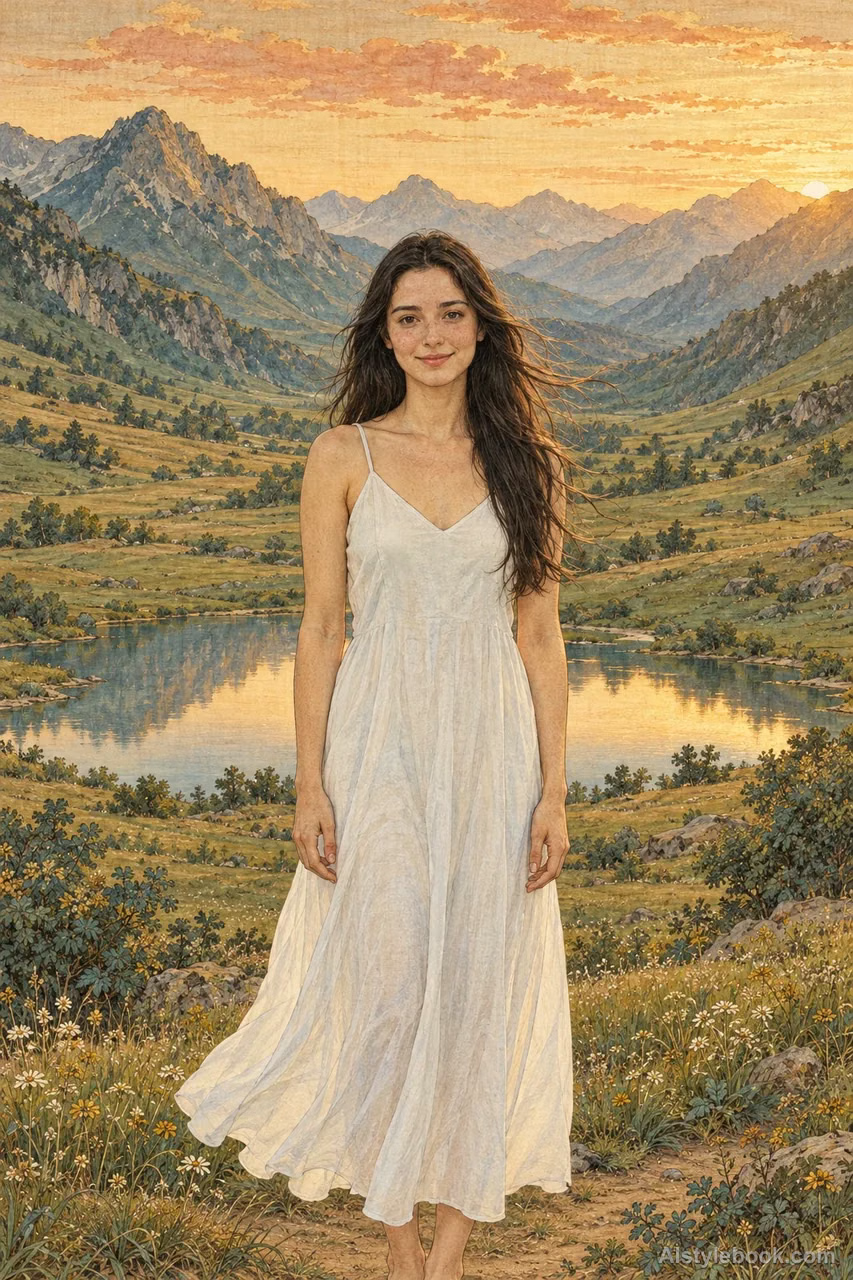
- Portrait
- Careful outlines and color layers emphasize garments, folds and composed facial expression.
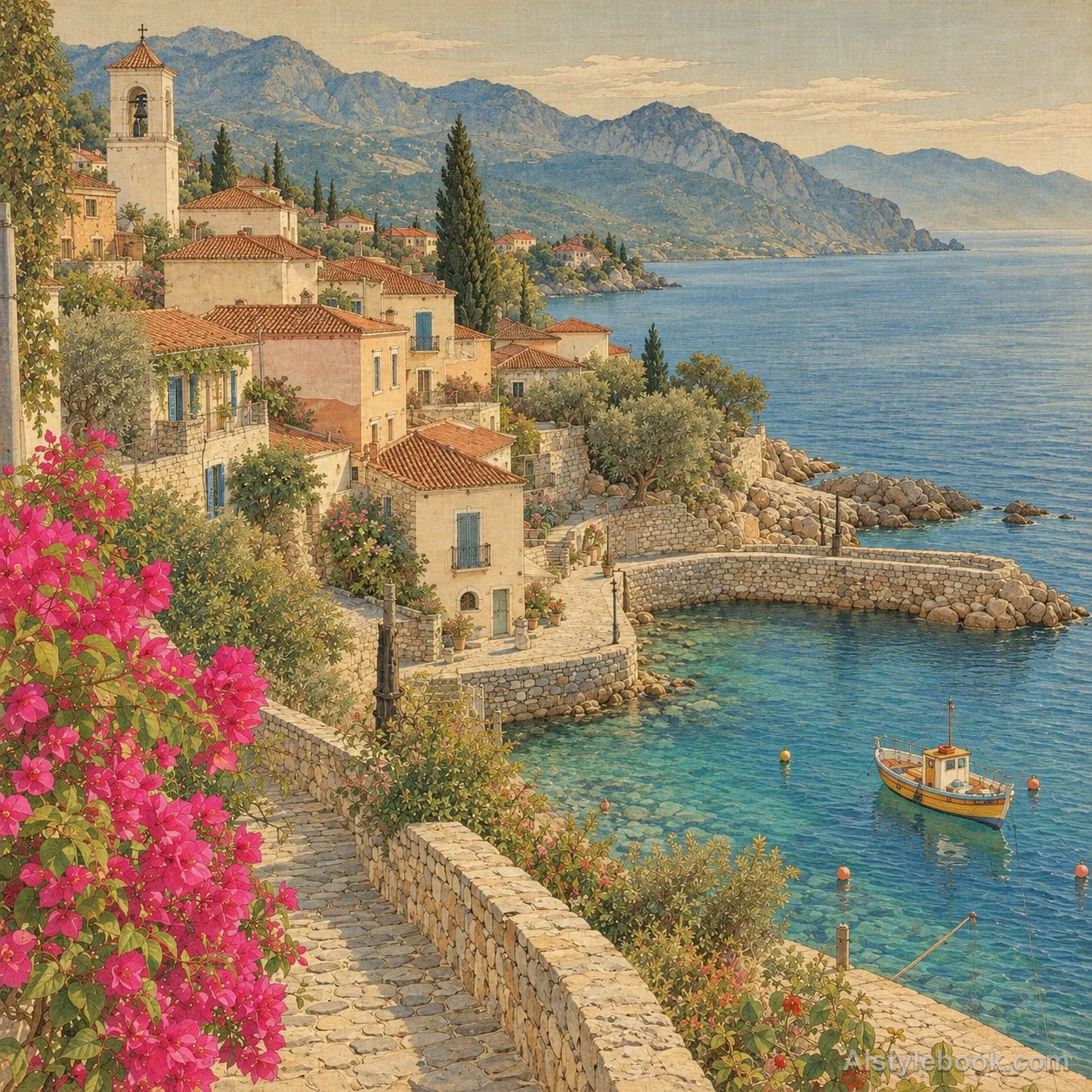
- Landscape
- Ordered contours and color planes separate rocks, trees and buildings into decorative spatial layers.
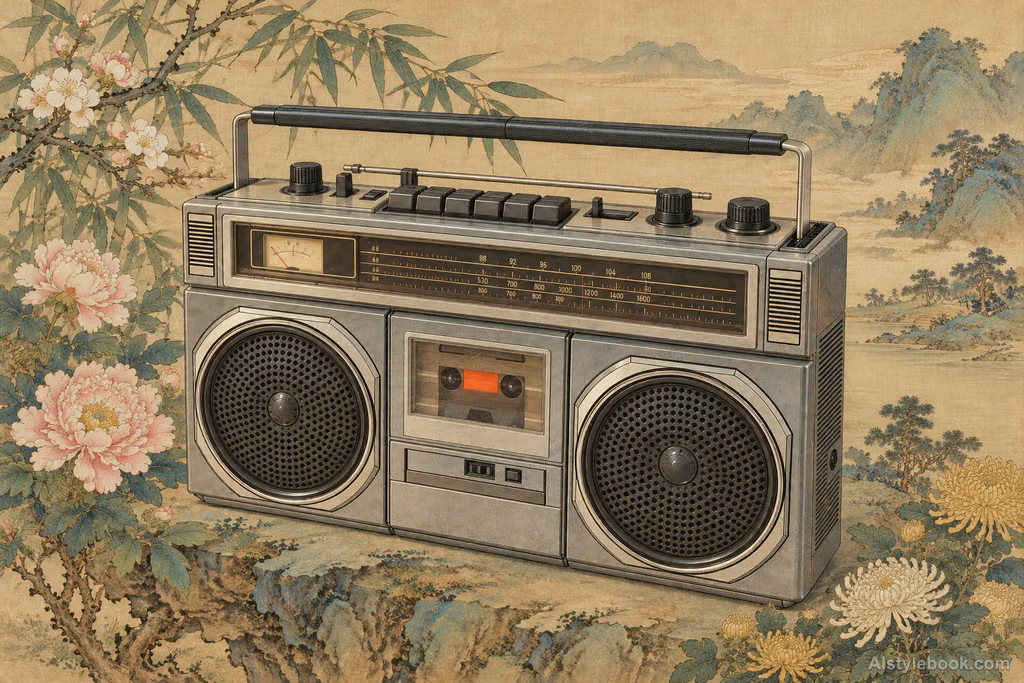
- Objects
- Fine contours and controlled color clarify vessels and plants while restraining reflective effects.
- Subjects
- Choose figures with readable clothing folds, flowers and birds, layered rocks or fine vessels with room for detail.
Gongbi in court academies
The meticulous gongbi approach to birds and flowers was cultivated by professional painters associated with imperial court academies, combining fine lines and color with close observation of forms.
Bring the style to your photos
Reusable style prompt for Gongbi Polychrome Painting
Repaint the image with meticulous gongbi polychrome technique. Draw precise, supple hairline ink contours on finely textured silk. Build soft gradients with many thin translucent mineral-color washes, maintaining crisp edges and developing details layer by layer from the original structure. Strengthen shadows through accumulated color while preserving the silk ground's warm translucency in highlights, balancing disciplined line drawing with understated volume.Use the same style prompt for portraits, landscapes and objects.
Create with this styleKeep exploring


