
3D & Miniatures
Oil Painting Diorama
Style guide
Miniature volumes and thick palette-knife marks combine with diagonal color bands and broad white paper for bright, airy painted space.
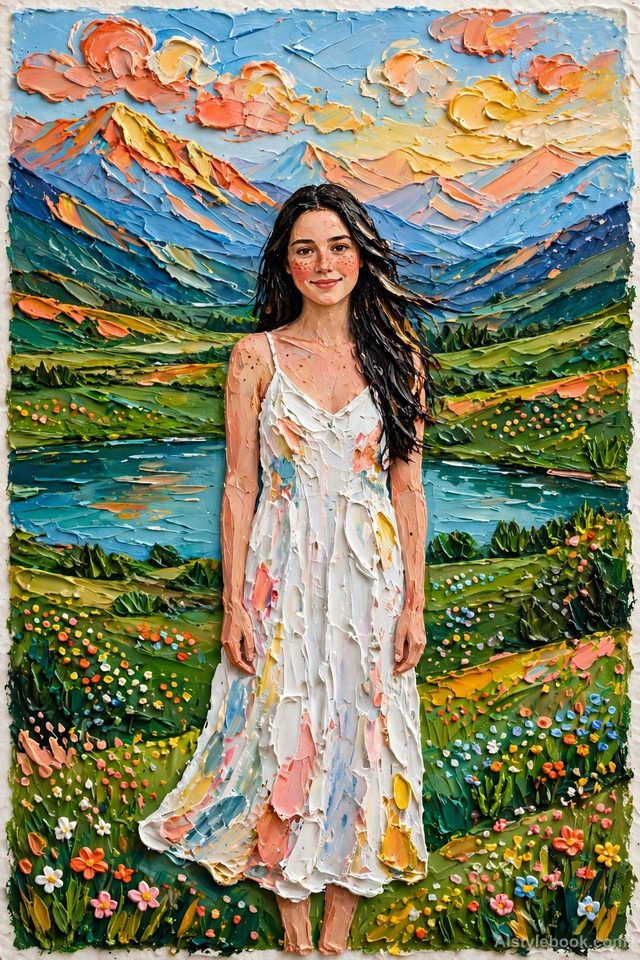
PortraitStyle effect
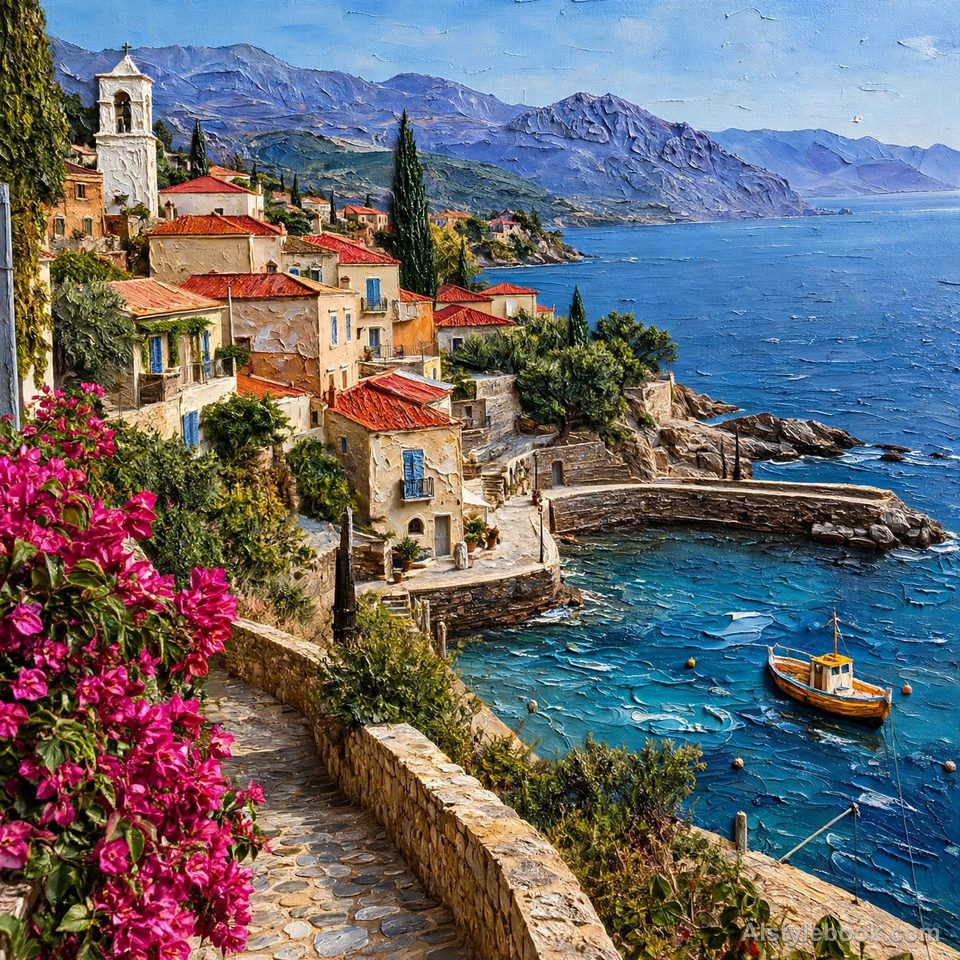
LandscapeStyle effect
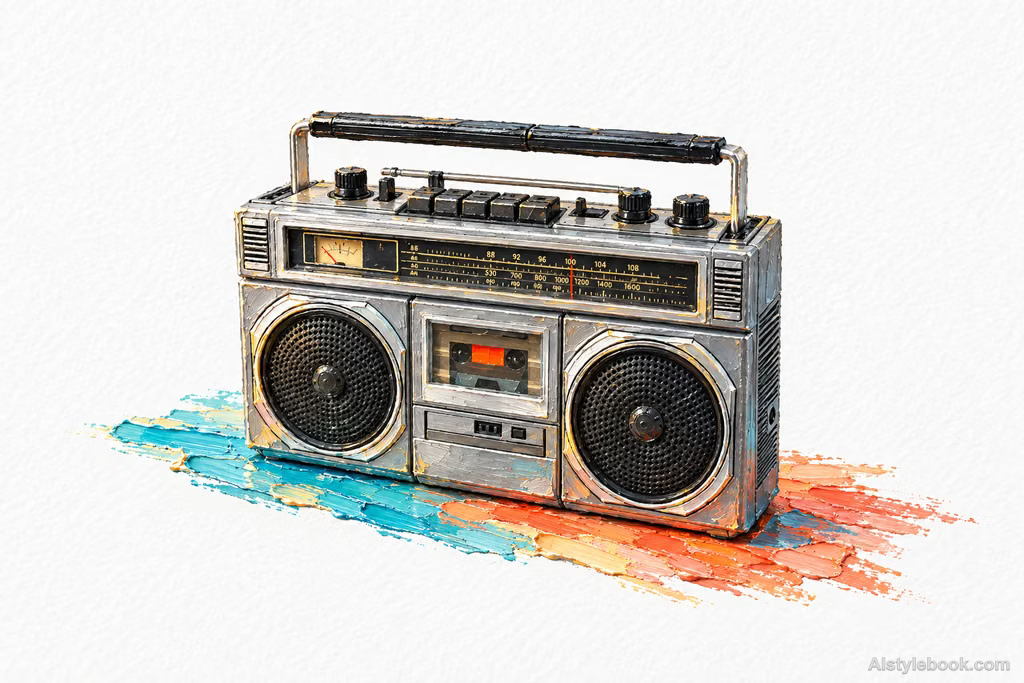
ObjectsStyle effect
The visual language
What is Oil Painting Diorama?
Thick oil paint and palette-knife marks cover miniature 3D forms while a flat color band becomes their stage. Broad white paper and diagonal composition keep the heavy paint visually light.
An impasto diorama combines paint relief with modeled forms, so marks should follow each surface.
Vertical wall strokes, diagonal roof scrapes and a small cast shadow can reveal both painting and miniature construction.
How the style changes different subjects
- Portrait
- Miniature figures emphasize pose and spacing, simplifying expressions and tiny accessories.
- Landscape
- Buildings, plants and terrain become small viewable sets whose thickness and shadows establish scale.
- Objects
- Small physical props emphasize seams, edges and handmade surfaces.
- Subjects
- Choose two-person interactions, cottages, street corners, keepsakes or compact still-life groups readable in miniature.
Bring the style to your photos
Reusable style prompt for Oil Painting Diorama
Distill the subject into a three-dimensional image combining impasto painting and miniature objects, unfolding along a diagonal axis on bright white textured paper. Organize space with a thick painted band supporting the forms. Keep paint buildup, palette-knife marks, and undulating edges visibly tactile, while selected details remain refined. Brighten and purify existing colors, using clear warm-cool relationships and a few warm highlights. Extensive negative space should create a light, poetic atmosphere.Use the same style prompt for portraits, landscapes and objects.
Create with this styleKeep exploring


