
Paper & Collage
Pricked-Paper Picture
Style guide
Tiny pinholes model form through density and rows, with lifted paper fibers, hole shadows and faint backlighting creating light depth.
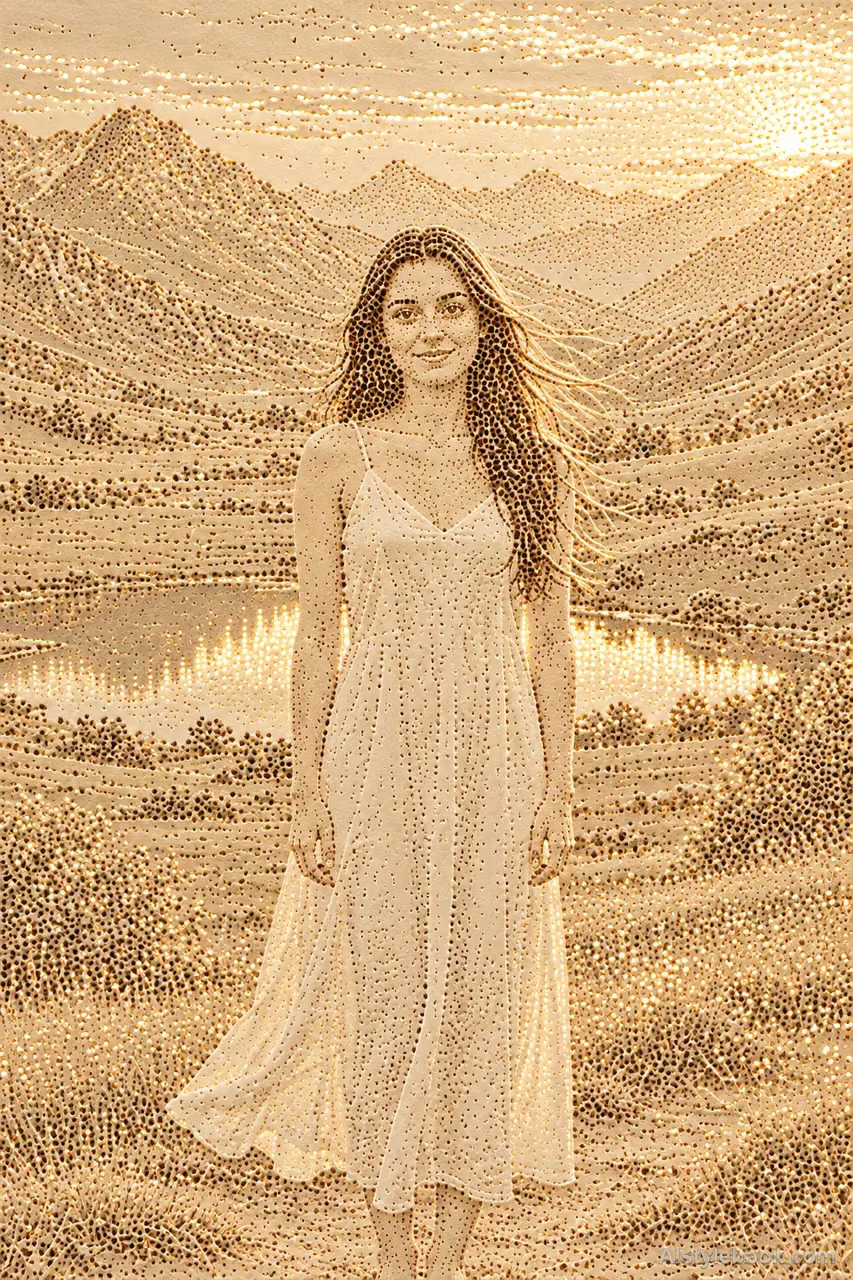
PortraitStyle effect
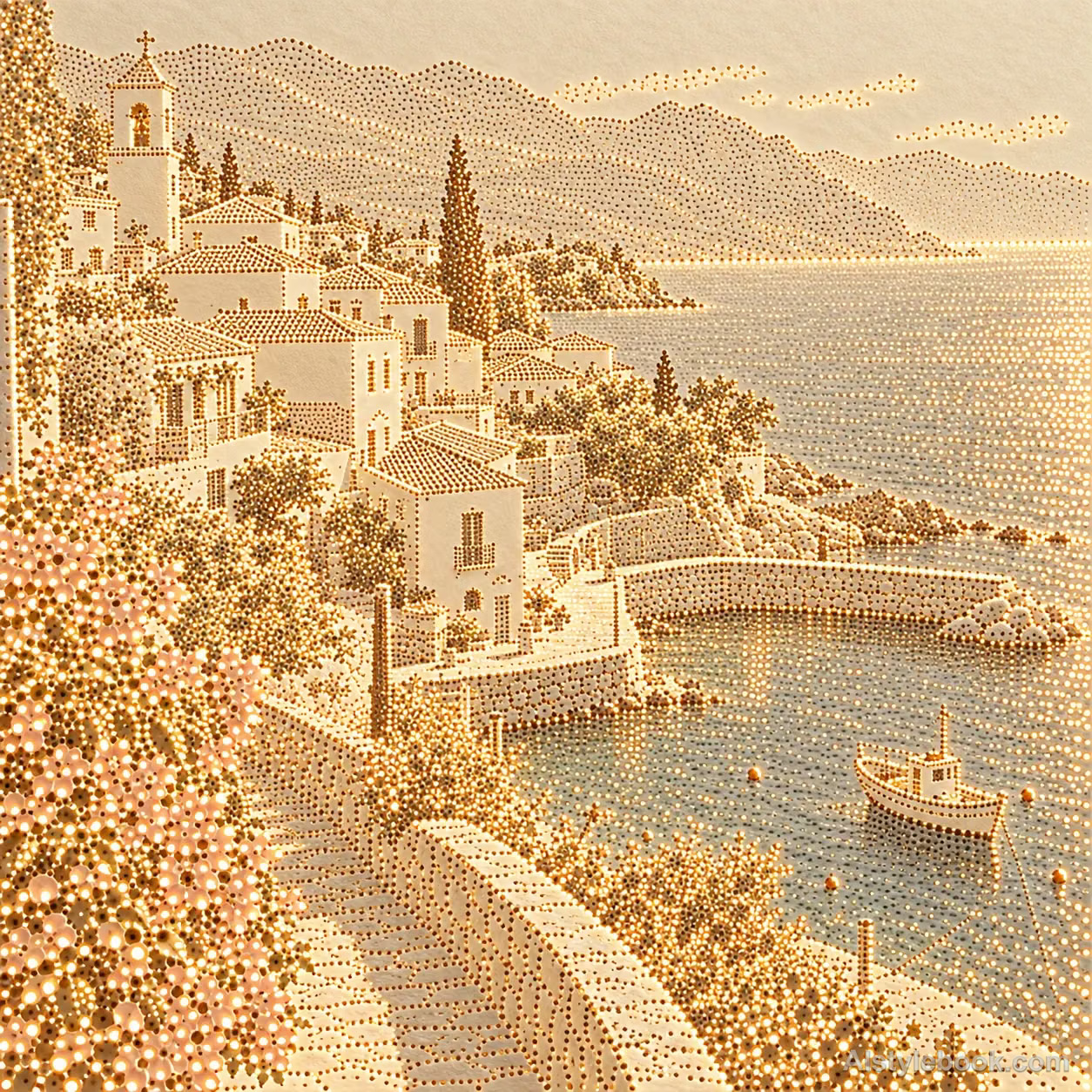
LandscapeStyle effect
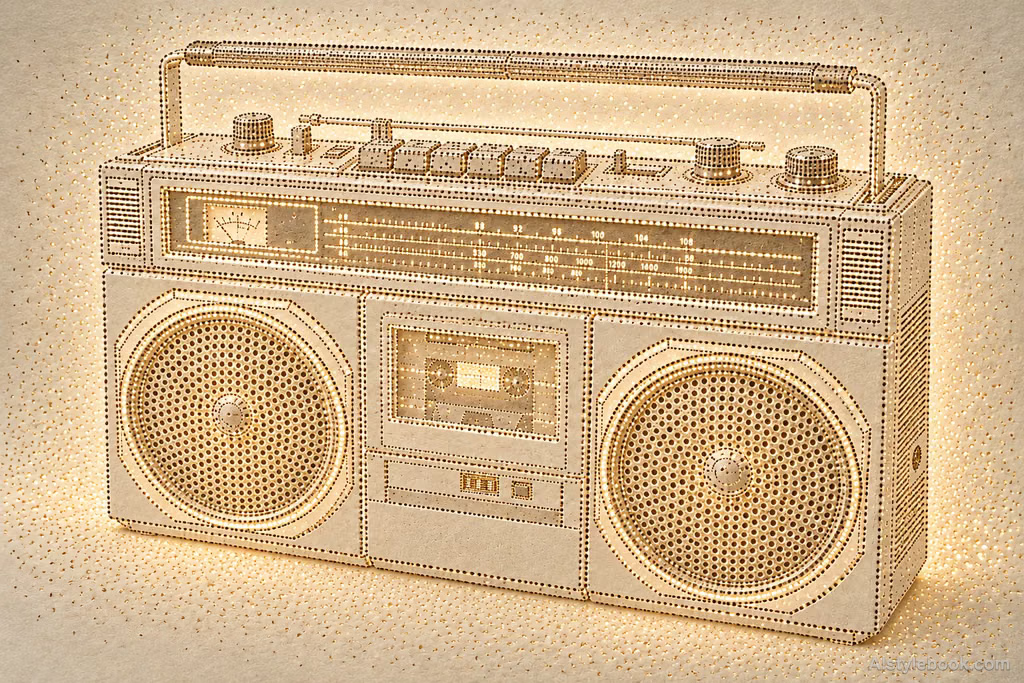
ObjectsStyle effect
The visual language
What is Pricked-Paper Picture?
Tiny needle holes form the image through density and row placement, with raised fibers casting fine shadows at their rims. Faint backlight passes through the holes, making intact paper part of the tonal structure.
Pricked-paper images use openings as their units, combining transmitted light with raised fibers.
Dense holes on a figure's lit side can shift in appearance as backlight changes.
How the style changes different subjects
- Portrait
- Tiny perforations reveal features through changing density of light points.
- Landscape
- Scenery becomes transmitted-light dots with reduced distant detail.
- Objects
- Hole density models objects and replaces reflections with light through paper.
- Subjects
- Choose profiles, plants, stars or simple objects with bold contours and broad tones.
Bring the style to your photos
Reusable style prompt for Pricked-Paper Picture
Make the entire image a pricked-paper picture in thick ivory paper. Describe existing structure solely through physical perforations and intact paper. Turn tiny hole rows with contours, using dense groups for dark or transmitted-light passages and sparse holes across broad paper areas. Show slightly raised fiber lips and minute aperture shadows. Gentle backlighting glimmers through holes against a darker backing, deriving values from hole size, density and paper thickness.Use the same style prompt for portraits, landscapes and objects.
Create with this styleKeep exploring


