
Textiles & Embroidery
Blackwork
Style guide
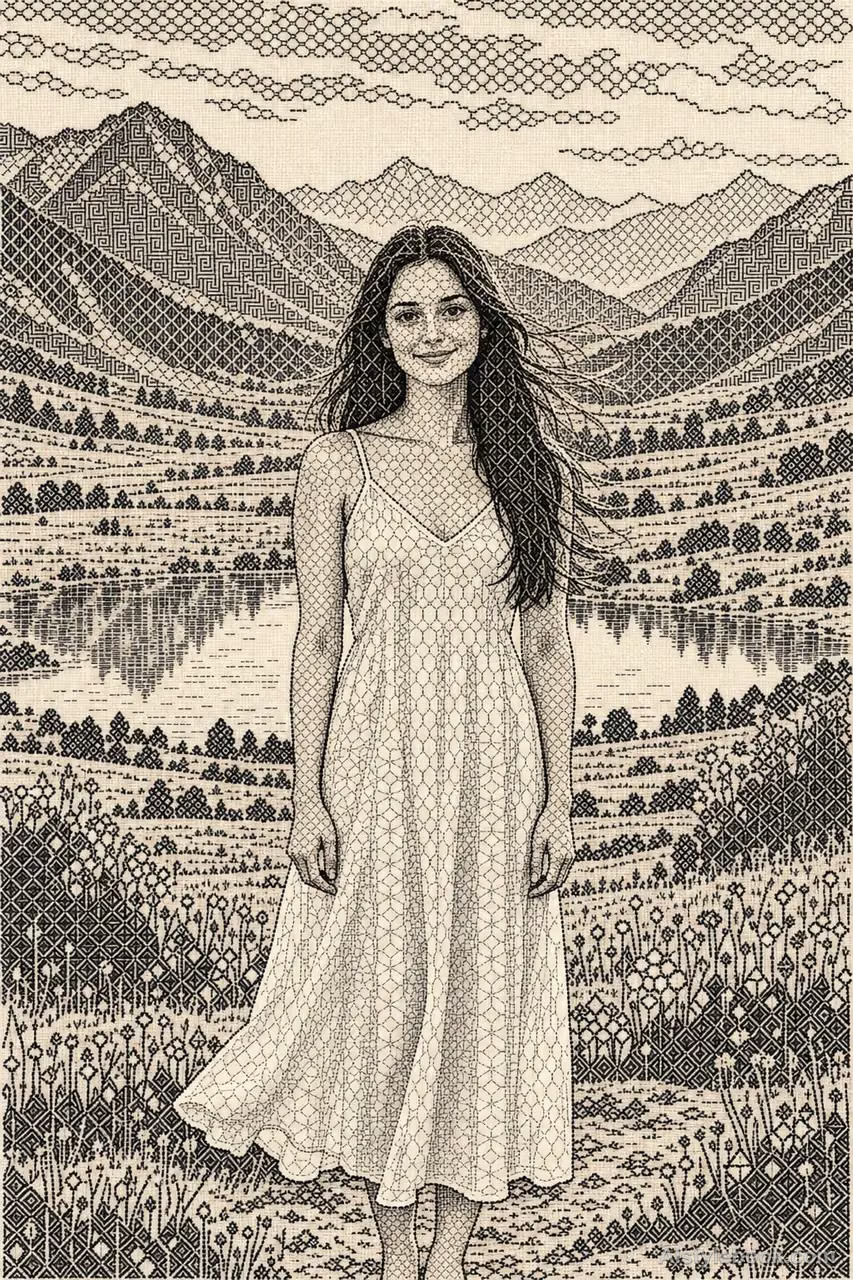
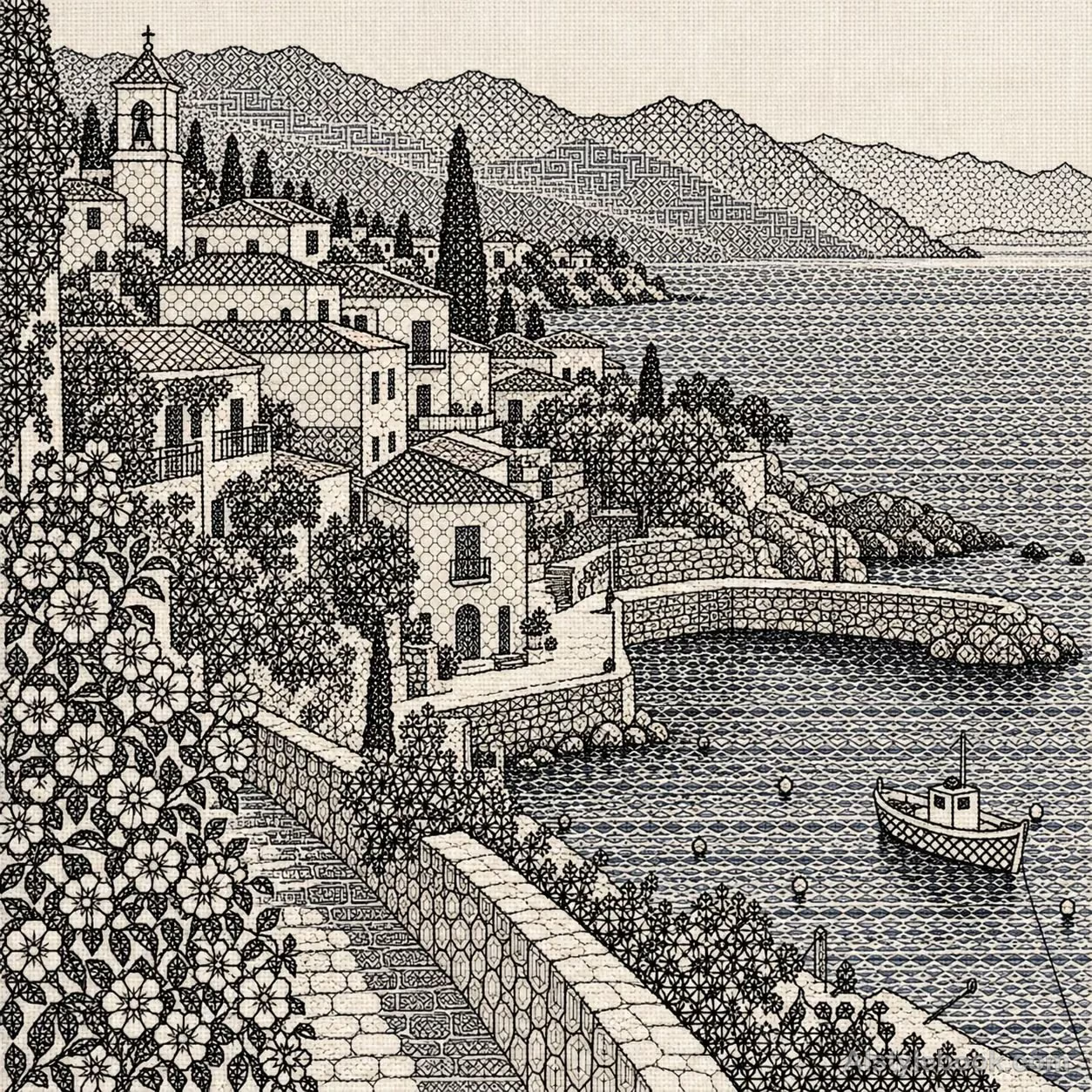
Black geometric stitch patterns range from sparse to dense, modeling form together with fine outlines and exposed ivory cloth.

The visual language
What is Blackwork?
Black stitches follow countable warp-and-weft intersections, replacing gray tones with the density of geometric fills. Ivory cloth showing between sparse and dense patterns supplies the highlights.
Blackwork uses counted geometric patterns to create tonal differences with one thread color.
Dense grids on a sleeve and sparse stars on a chest can suggest shadow and light through exposed fabric.
How the style changes different subjects
- Portrait
- Patterned regions simplify features and create strong black-white rhythms across clothing.
- Landscape
- Repeated patterns of different density separate scenery into flatter areas.
- Objects
- Pattern-filled regions replace literal curved surfaces and materials.
- Subjects
- Choose plants, animals, clear profiles or complete object silhouettes with broad enclosed areas.
Craft and history
Blackwork decorated European clothing in the 16th and 17th centuries, often using counted geometric fills.
Bring the style to your photos
Reusable style prompt for Blackwork
Rebuild the image as black silk counted-thread embroidery on ivory evenweave linen. Use fine continuous double-running stitches for contours, deriving all light and shade from the density of geometric fill patterns. Alternate open honeycombs, interlocking diamonds and stepped labyrinth lines by structural region, leaving exposed cloth between motifs. Place stitches on countable warp-and-weft intersections, increasing density in shadows and using sparse marks in highlights.Use the same style prompt for portraits, landscapes and objects.
Create with this styleKeep exploring


