
Photography & Film
Prismatic Reflections
Style guide
A narrow oblique prism facet at the image edge creates a locally displaced fragment, with a clear seam and slight spectral separation.

PortraitStyle effect
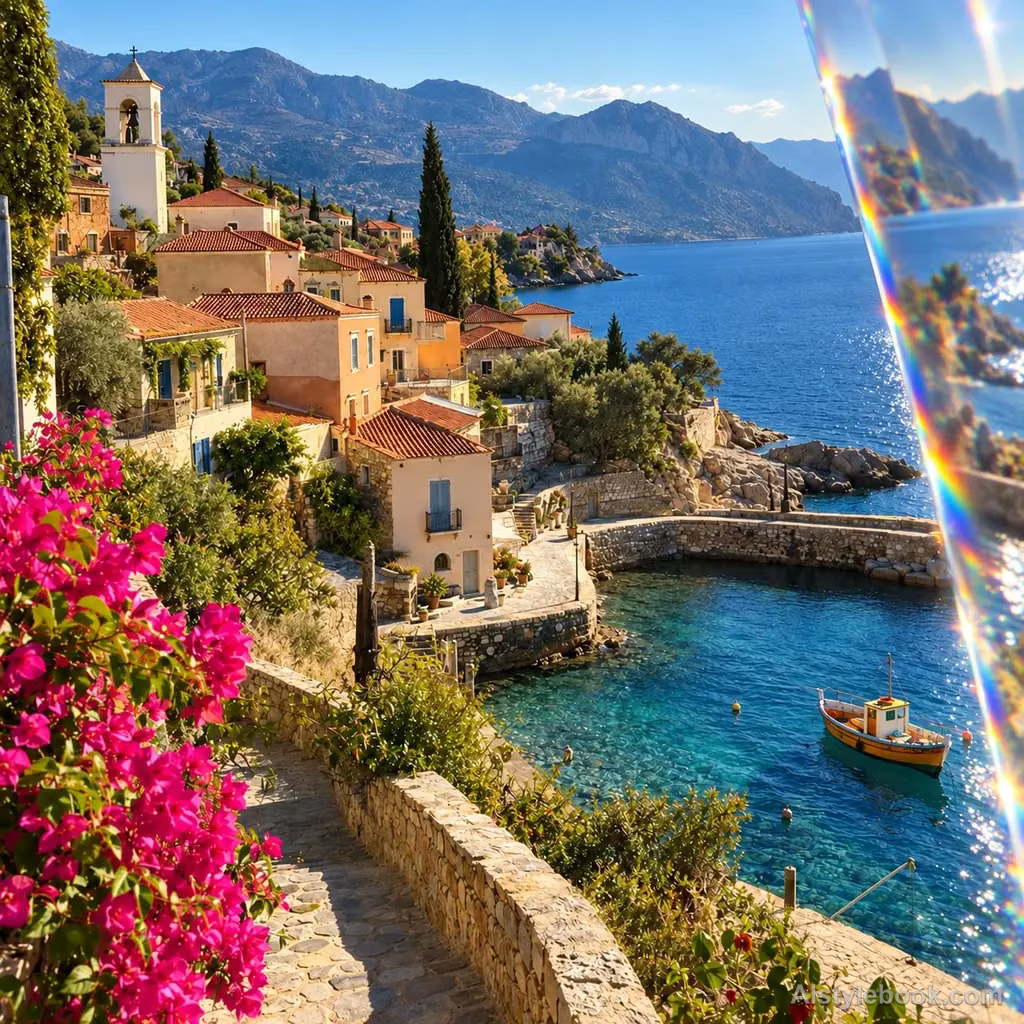
LandscapeStyle effect
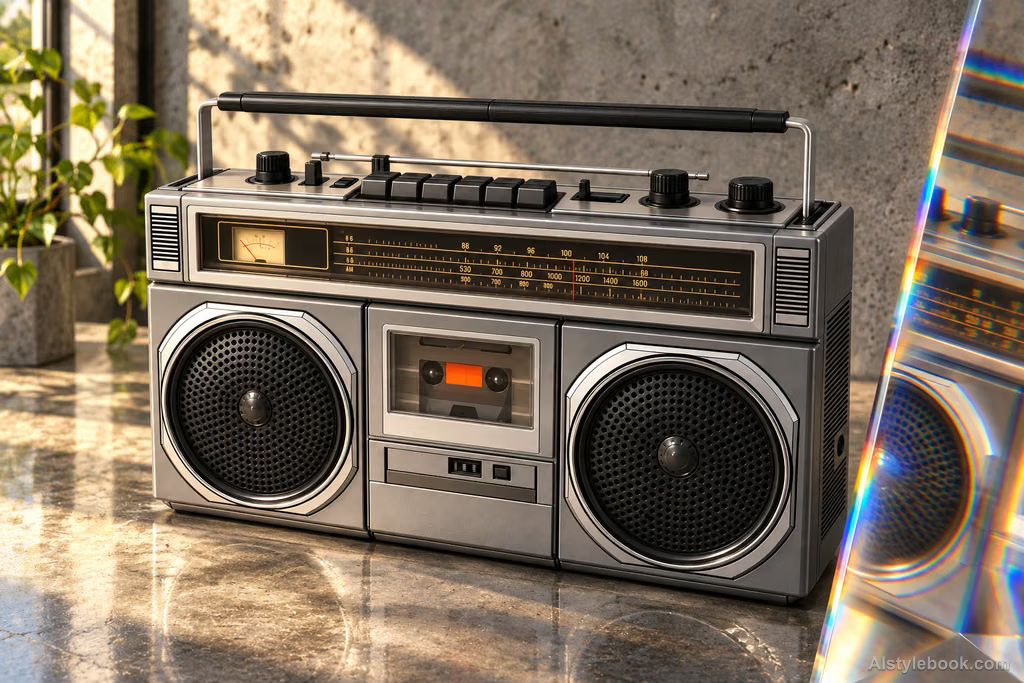
ObjectsStyle effect
The visual language
What is Prismatic Reflections?
A small near-lens oblique prism creates a displaced fragment at one edge while most of the view stays intact. A glass seam and subtle spectral separation locate the refraction instead of duplicating the whole image.
A prism redirects light through angled faces, producing localized displacement and possible dispersion.
An offset window fragment with a fine colored edge at one side can suggest glass placed near the lens.
How the style changes different subjects
- Portrait
- Parts of the face shift or overlap, contrasting intact features with refracted fragments.
- Landscape
- Building lines, lights and skylines split into displaced pieces, as if viewed through differently angled glass.
- Objects
- Highlights and edges repeat across fragments, making glossy glass or metal especially prominent.
- Subjects
- Choose portraits with simple backgrounds, night lights or isolated glossy objects, leaving enough intact area for recognition.
Bring the style to your photos
Reusable style prompt for Prismatic Reflections
Present the original image through the photographic language of a small near-lens prism, leaving most subjects and space complete and clear. Introduce a narrow oblique refracting facet only along one outer edge, with a defined glass seam and a displaced fragment of the existing image inside it. Add very subtle spectral separation at the seam. Retain natural light and material detail for a credible asymmetric glass-plane refraction.Use the same style prompt for portraits, landscapes and objects.
Create with this styleKeep exploring


