
Textiles & Embroidery
Stumpwork
Style guide
Padded embroidery and gently lifted edges create dimensional layers, with fine silk stitch direction, French knots and visible linen ground.
The visual language
What is Stumpwork?
Padding, separate embroidered pieces and lifted edges give fine needlework shallow dimension. Directional silk stitches and French knots describe the surface, while short shadows let leaves and petals rise from the linen.
Stumpwork adds padding or raised embroidered elements above the ground fabric.
A leaf tip casting a short shadow while its base remains attached makes its shallow three-dimensional structure clear.
How the style changes different subjects
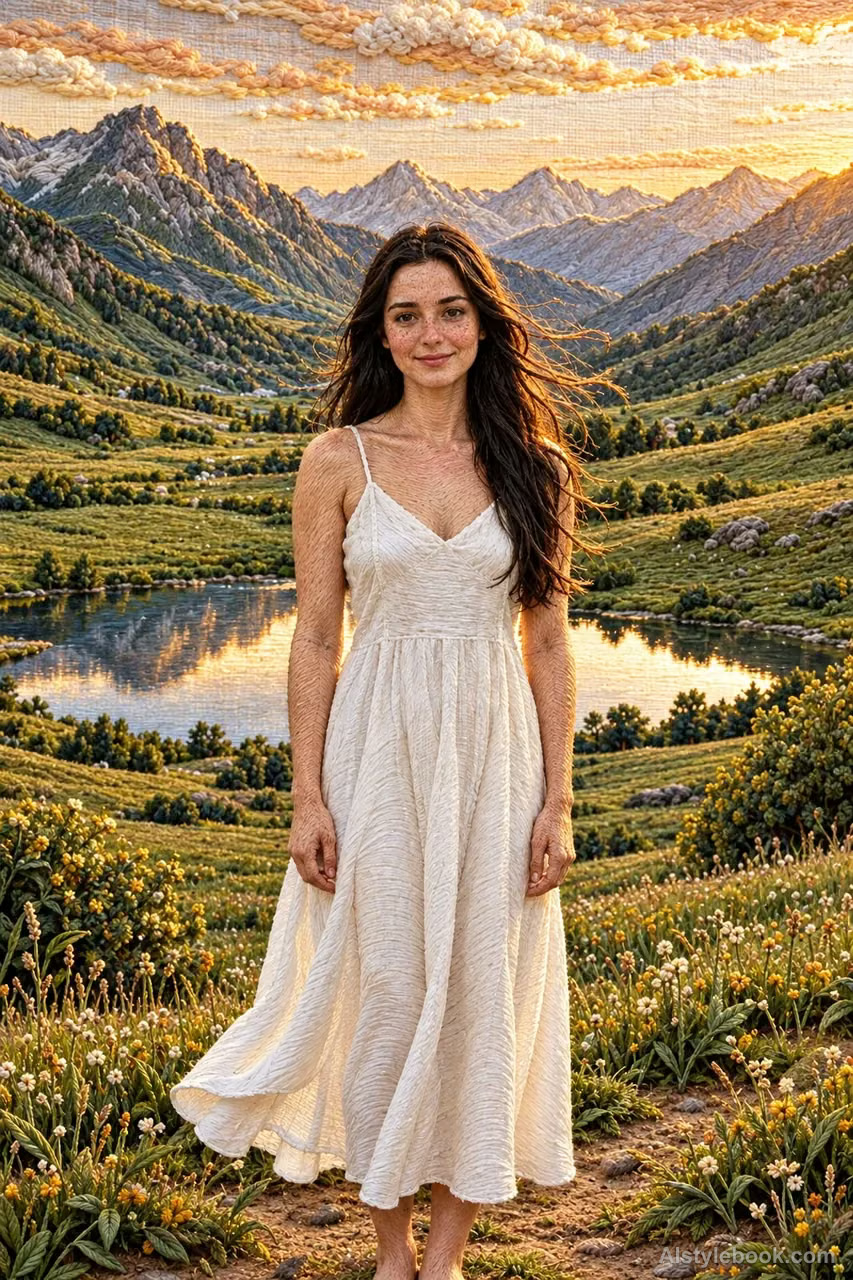
- Portrait
- Directional stitches build skin, hair and clothing, translating facial detail into thread layers.
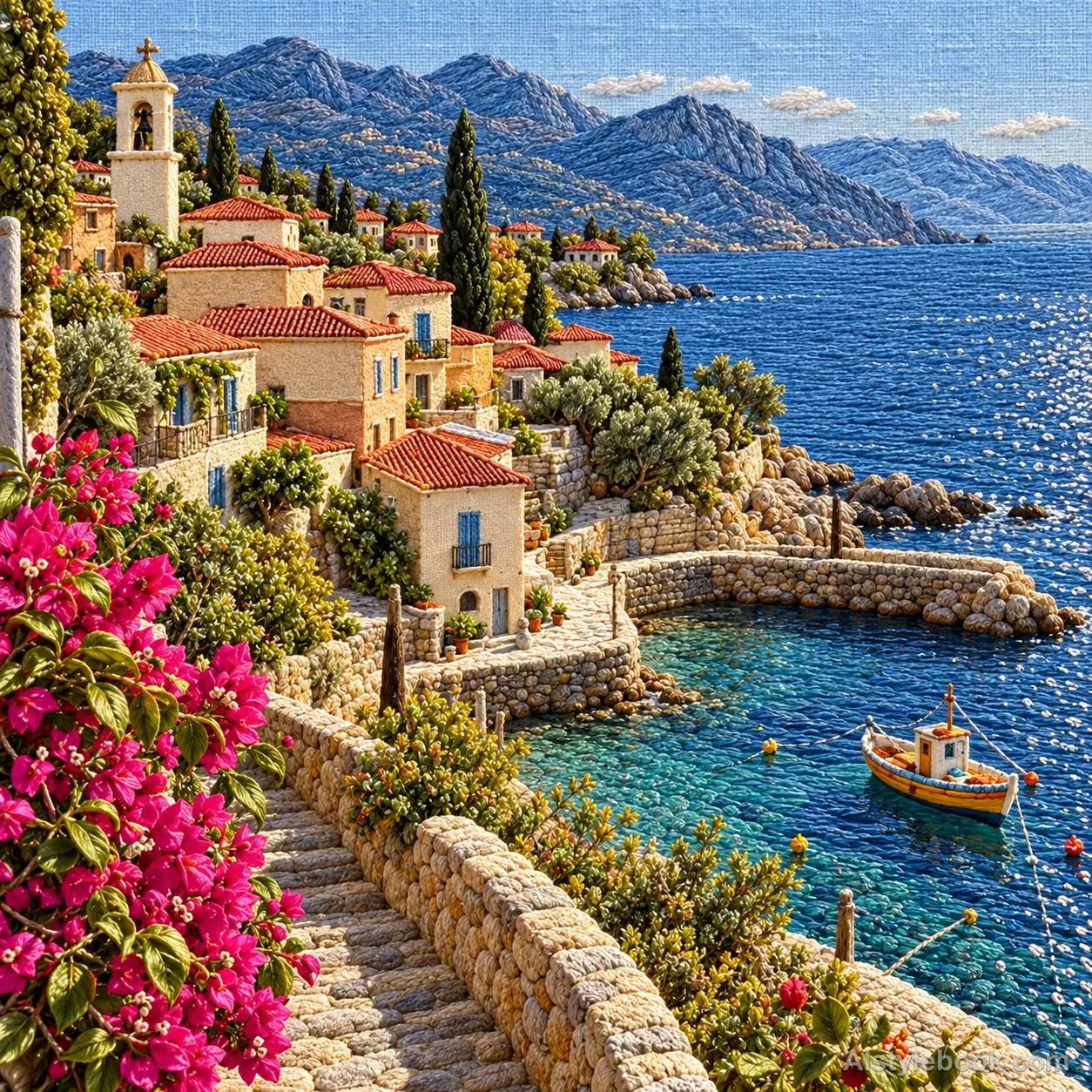
- Landscape
- Stitch direction separates plants, roofs and terrain; thread sheen and fabric contribute volume.
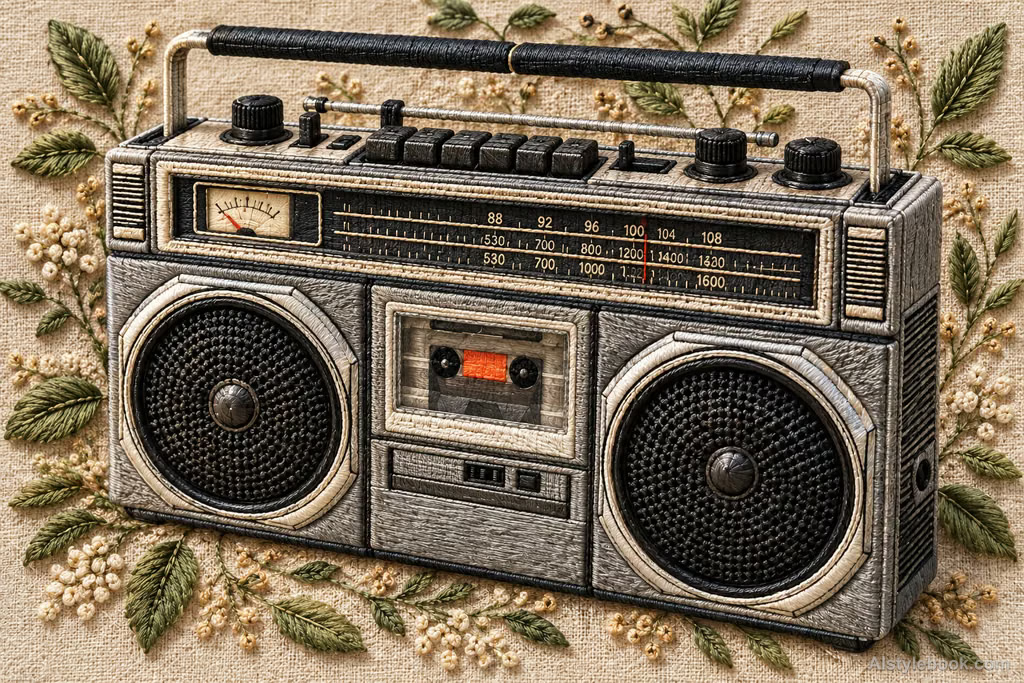
- Objects
- Changes in stitch direction explain curved surfaces and essential construction.
- Subjects
- Choose flowers, birds, pets, clear portraits or small treasures large enough to hold stitch detail.
Craft and history
Raised embroidery adorned 17th-century English caskets, using padding and separate slips for dimensional figures and foliage.
Bring the style to your photos
Reusable style prompt for Stumpwork
Construct the entire image as stumpwork embroidery. Model existing forms with soft padding, wrapped stitches and fine silk, allowing selected edges to lift gently from the fabric on slender wire supports. French knots create small textured grains and long-and-short stitches grade color along curves. Keep raised shapes within the original contours. Side light reveals lifted-edge shadows, stitch direction and the underlying linen weave, creating clearly layered soft relief.Use the same style prompt for portraits, landscapes and objects.
Create with this styleKeep exploring


