
Illustration & Design
Taisho Romantic Decorative Illustration
Style guide
Long flowing ink contours accompany dusty rose, indigo and ivory planes, with sparse geometric pattern inside existing forms.
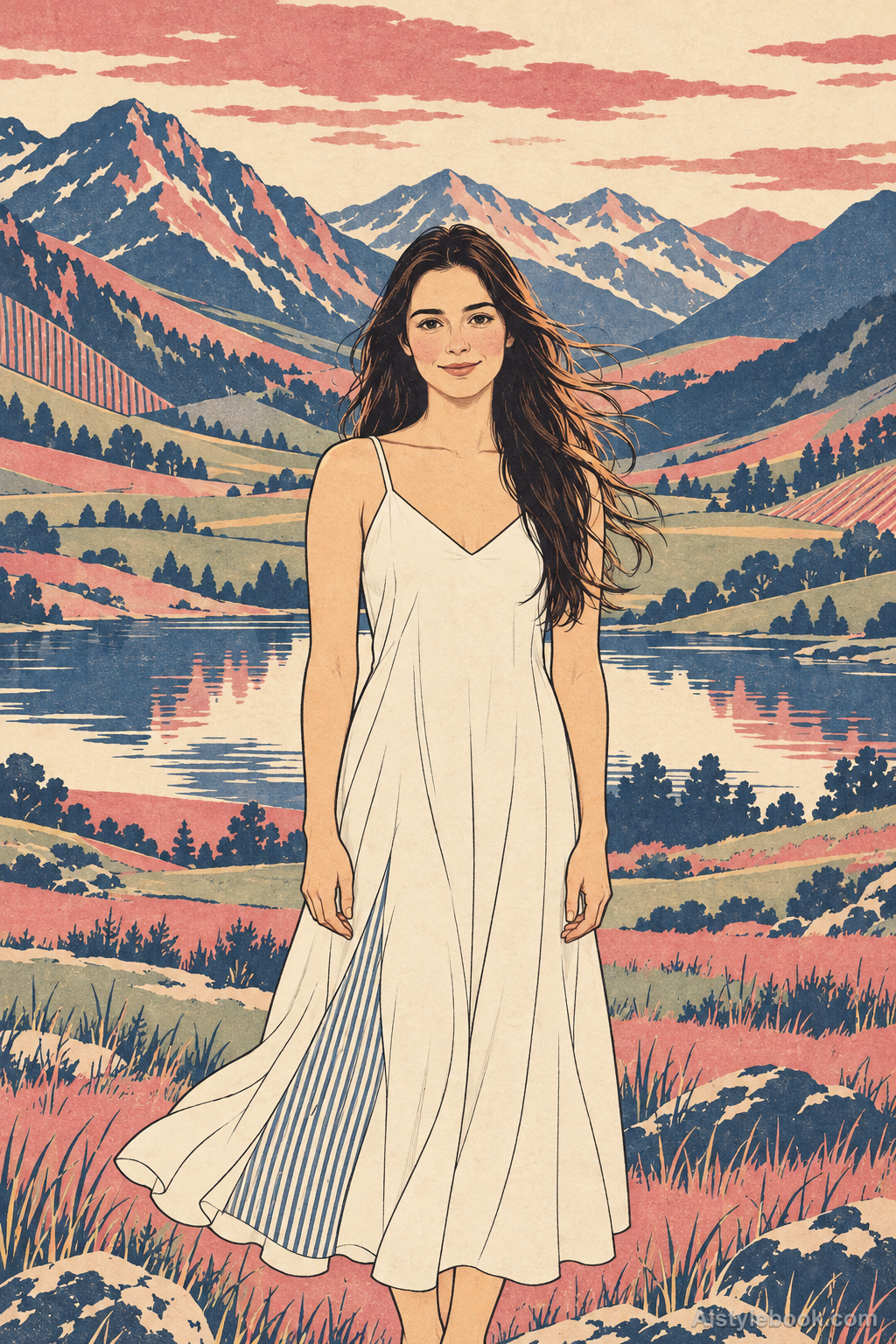
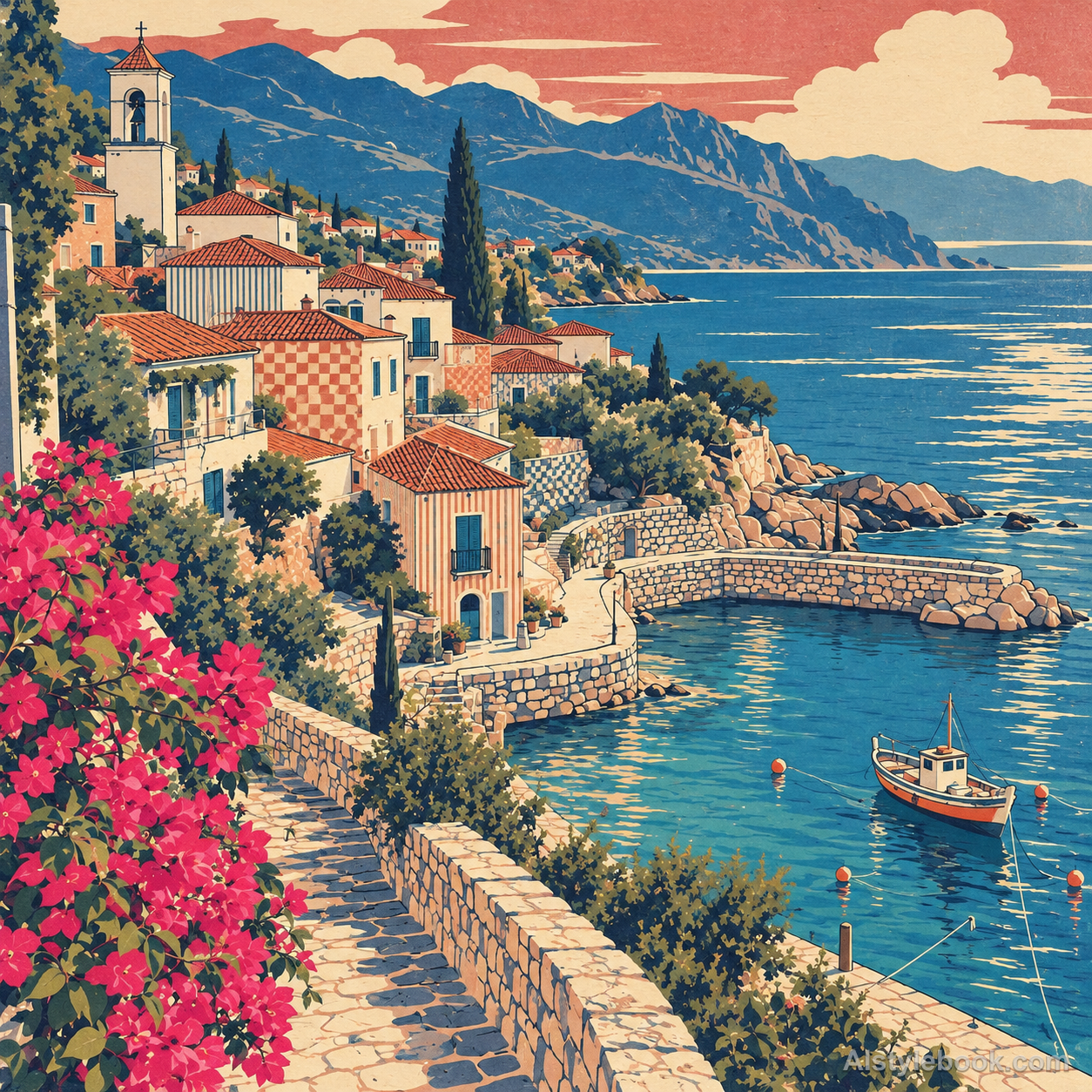

The visual language
What is Taisho Romantic Decorative Illustration?
Long flowing ink contours accompany dusty rose, indigo and ivory planes, with sparse geometric pattern inside existing forms. Delicate outlines, quiet paper color and slight print offsets form a gentle retro decorative illustration.
Taisho-inspired decoration draws on period line-and-color sensibilities without requiring historical props.
Patterns following long clothing curves, with dusty pink and dark blue, can suggest a gently aged illustrated page.
How the style changes different subjects
- Portrait
- Decorative lines and distinct color emphasize hair, clothing and pose as an illustrated design.
- Landscape
- Architecture, terrain and plants become layered decorative color planes.
- Objects
- Contours, patterns and selected accents unify the object's visual character.
- Subjects
- Choose distinctive clothing, flowers and birds, architecture or patterned objects with room for both line and color.
Variant relationship
A Taisho-romantic variant of curvilinear decorative illustration. Compare with Art Nouveau Illustration.
Compared with Art Nouveau Curvilinear Illustration, this Taisho-romantic interpretation uses finer contours, subdued paper color, dusty-rose and indigo separations, and small striped or checked passages. Existing clothing and scenery remain; pattern stays inside source shapes rather than filling the image with floral scrollwork or metallic ornament.
Bring the style to your photos
Reusable style prompt for Taisho Romantic Decorative Illustration
Preserve source identity, original clothing cuts, pose and spatial anchors. Redraw as a decorative Taisho-romantic flat print with slender flowing ink contours and broad dusty-rose, muted-indigo and warm-ivory separations. Keep volumetric shading shallow. Place clearly readable small striped or checked passages inside a few existing fabric or structural planes, leaving other areas calm. Maintain source-related light-dark relationships. Make the pattern graphic rather than photographic texture, with slight registration offsets on quiet pale paper. Retain elegant mature features when a figure is present. Avoid generic realistic vintage painting, dense naturalistic microdetail, elaborate floral scrollwork, costume replacement, added accessories, lettering, seals and external decorative borders.Use the same style prompt for portraits, landscapes and objects.
Create with this styleKeep exploring


