
Printmaking & Printing
Ukiyo-e Art Style
Style guide
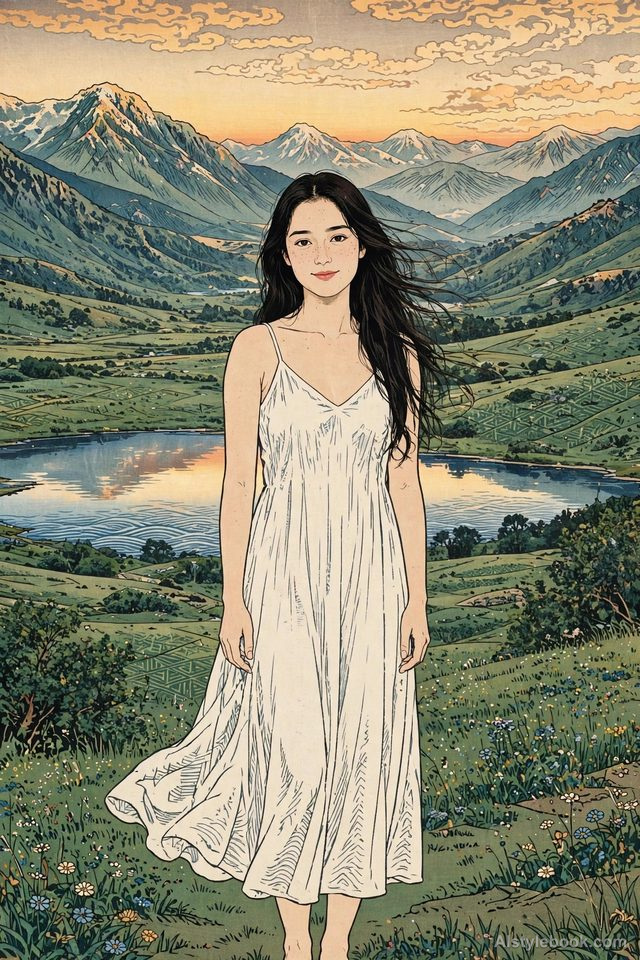
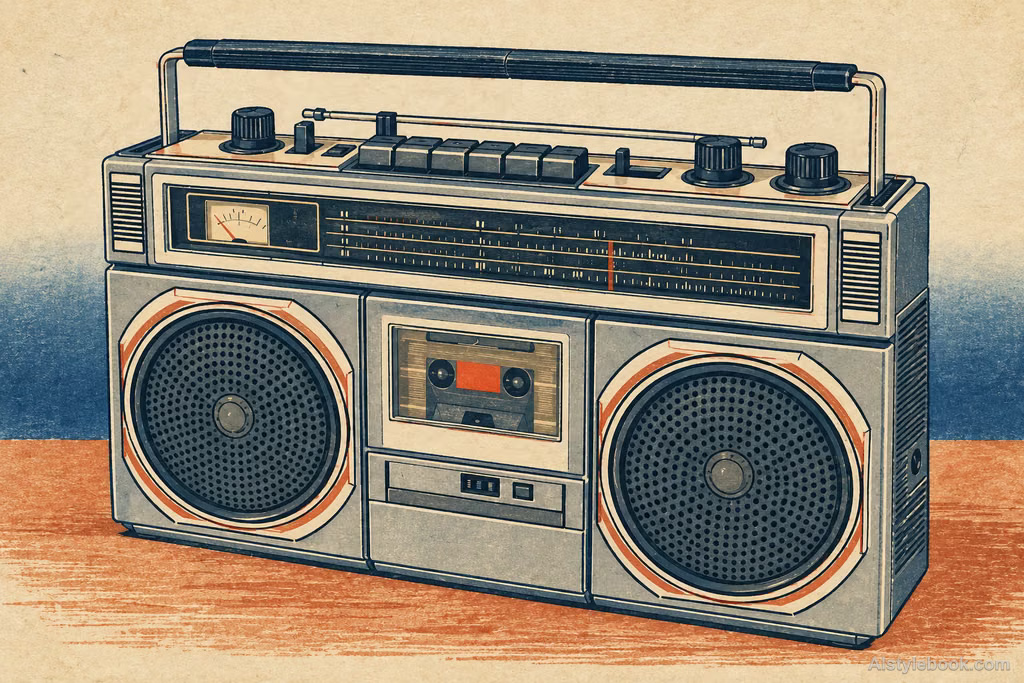
Flowing ink outlines and flat printed colors combine with fine paper texture and delicate gradients to evoke the warmth of ukiyo-e woodblock prints.

The visual language
What is Ukiyo-e Art Style?
Flowing ink lines define contours, while a limited palette, graded printing, and paper texture organize the image. Ukiyo-e includes both paintings and prints; the visual focus here is the multicolor woodblock print. Space becomes flatter and details are distilled, giving landscapes, people, and everyday objects a clear rhythm of lines and color fields.
Multicolor woodblock prints coordinate line and color blocks, with flat tones and selective gradation describing atmosphere.
A wave built from flowing outlines and a few blue layers can establish strong scale against a small distant mountain.
How the style changes different subjects
- Portrait
- Flowing outlines simplify features and folds; flatter skin tones emphasize pose and clothing patterns.
- Landscape
- Ridges, waves and buildings become printed color shapes, with overlap, scale and selective gradation defining distance.
- Objects
- Limited printed colors replace reflections, emphasizing contours and ornament over realistic surface finish.
- Subjects
- Choose waves, mountains, clearly posed figures in distinctive clothing or tea vessels with strong line-and-shape rhythms.
Images from Edo's urban culture
Ukiyo-e emerged in Japan during the Edo period, closely connected to the entertainment, fashion, and everyday lives of city residents. Early woodblock prints often depicted beauties and kabuki actors. Around 1765, advances in multicolor printing led to the development of nishiki-e. In the 19th century, Katsushika Hokusai and Utagawa Hiroshige brought famous places, journeys, and seasonal landscapes into widely popular print series. Works were usually produced through collaboration among an artist, a block carver, a printer, and a publisher.
Artists & practitioners
Artists to explore
Katsushika Hokusai
Thirty-six Views of Mount Fuji depicts the mountain from many viewpoints. Under the Wave off Kanagawa creates a striking spatial contrast between the foreground wave and the distant mountain.
Utagawa Hiroshige
Series such as The Fifty-three Stations of the Tōkaidō and One Hundred Famous Views of Edo depict journeys and famous urban places, often weaving weather, seasons, and everyday activities into the landscape.
Suzuki Harunobu
An 18th-century ukiyo-e artist whose multicolor figure prints, including Lovers under an Umbrella in the Snow, reveal delicate relationships among clothing folds, poses, and everyday settings.
Bring the style to your photos
Reusable style prompt for Ukiyo-e Art Style
Outline the subject with the clear ink lines of multicolor woodblock printing. Keep contours flowing and rhythmic, simplifying interior structures into flat color fields and a few fine linear textures. Use subdued indigo, reddish ochre, cream, and related colors. Preserve delicate graded printing, paper fibers, and slight registration errors. Moderately flatten space, expressing volume through line and shape while retaining the mellow texture and rhythm of a woodblock print.Use the same style prompt for portraits, landscapes and objects.
Create with this styleKeep exploring


