
Fantasy & Architecture
Tensile Sail World
Style guide
Taut membranes stretch between masts and cables, creating wind-like roofs and thin luminous edges.
The visual language
What is Tensile Sail World?
Thin membranes stretch into continuous surfaces between masts and cables. Readable seams, edges and anchors combine with soft transmitted light and open space to suggest a sail caught in wind.
Tensile architecture shapes membranes between anchors and supports through tension.
A translucent roof descending from a high mast to lower anchors can connect its lightness with visible support and seam directions.
How the style changes different subjects
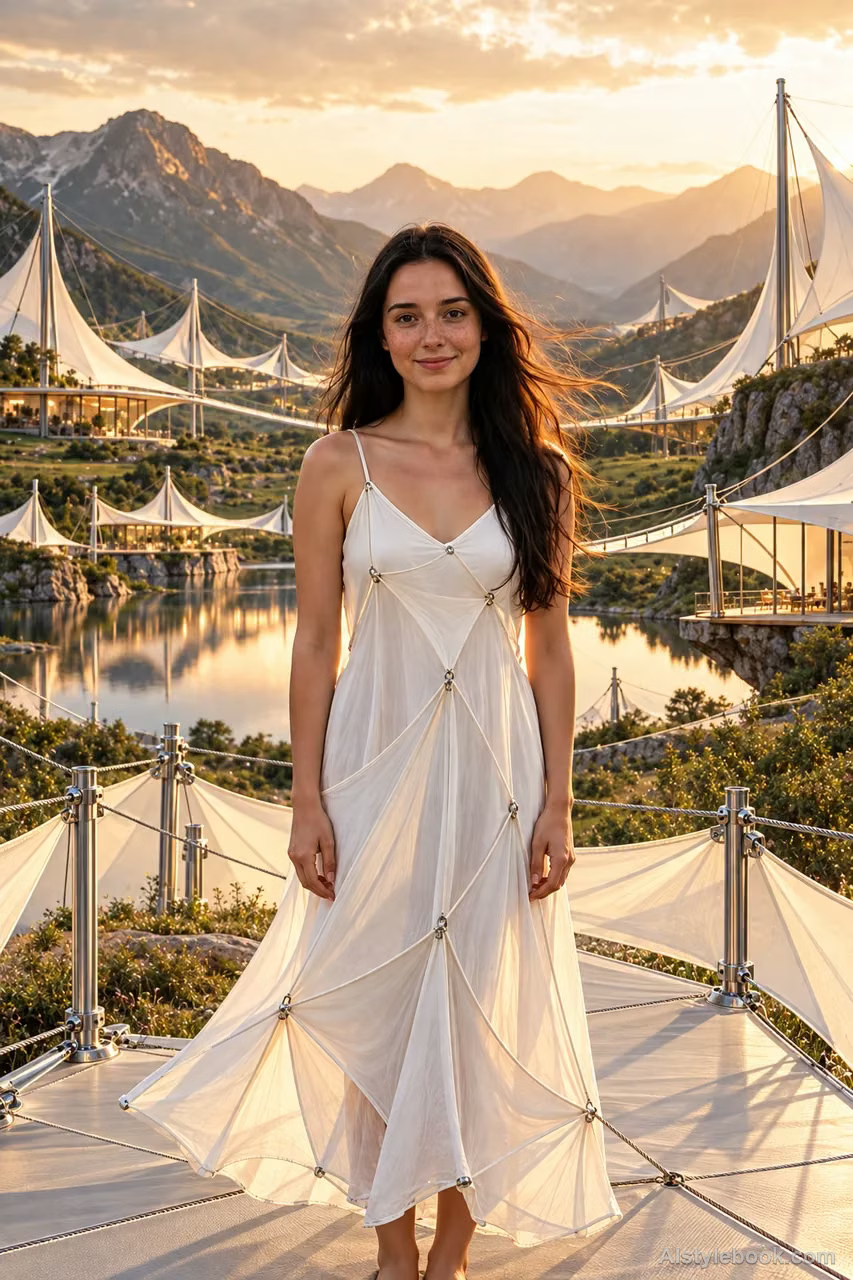
- Portrait
- Tensioned membranes and cables turn clothing and contours into lightweight curves.
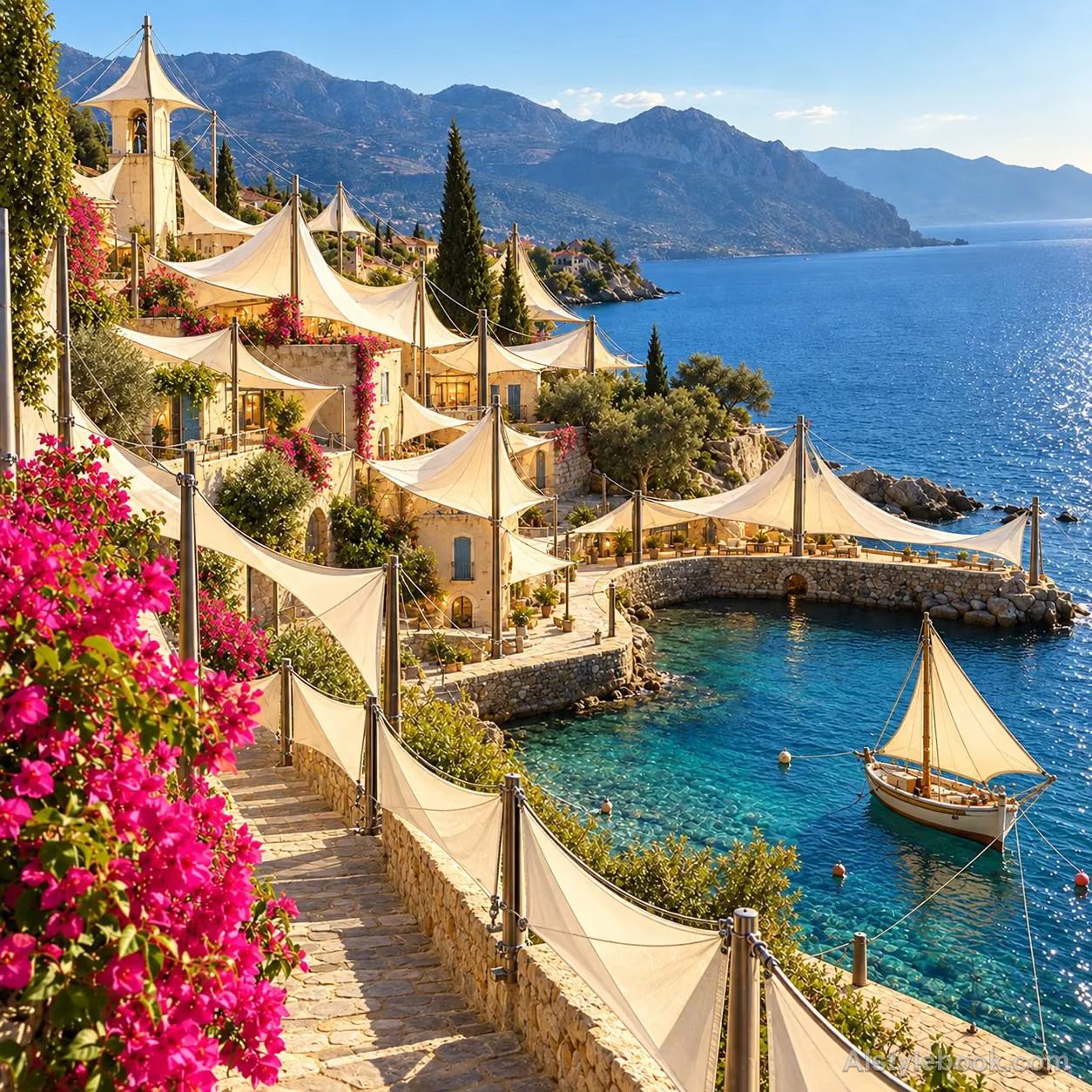
- Landscape
- Sail-like roofs and passages organize space through supports, curvature and transmitted light.
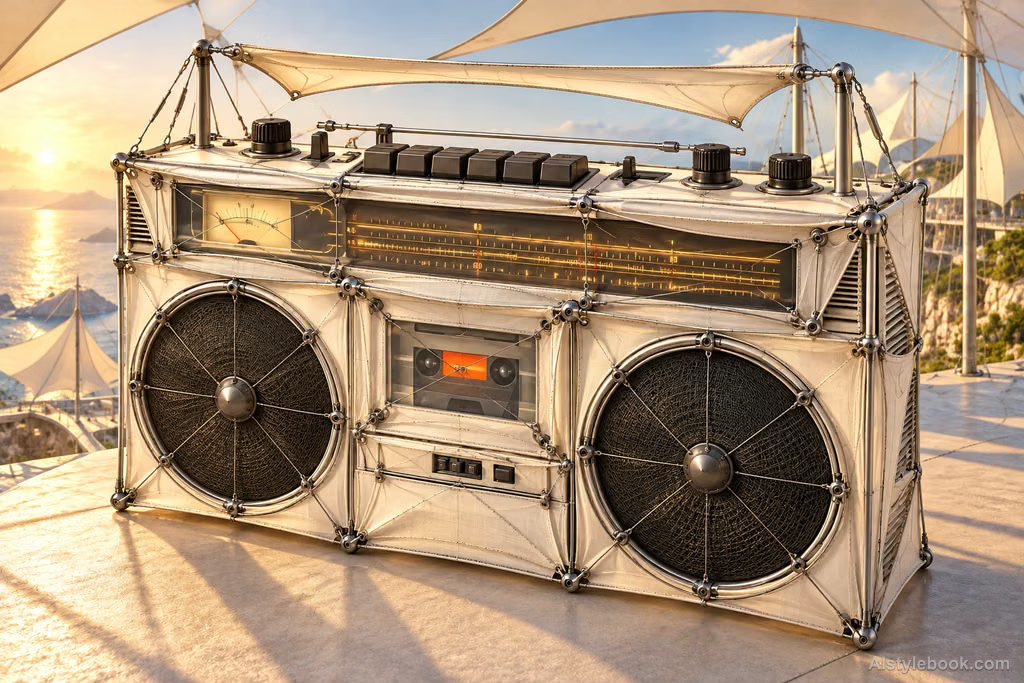
- Objects
- Membranes replace hard shells, emphasizing edges and anchor points.
- Subjects
- Choose tents, covered walkways, sailboats, lamps or open poses with room for light between membranes.
References in modern lightweight tensile structures
Frei Otto explored lightweight tents and tensile forms in the 1950s and collaborated on projects including the German pavilion at Expo 67 in Montreal and the Munich Olympic roofs of 1972. His experiments in enclosing large spaces with little material inform this world’s cable nets, masts and membrane curves.
Artists & practitioners
Creators to know
Frei Otto
He used physical models to explore lightweight tensile forms and advanced architectural practice with membrane roofs and cable nets.
Bring the style to your photos
Reusable style prompt for Tensile Sail World
Translate the forms into thin membranes tensioned between explicit supports. Broad continuous surfaces form saddle curves between high points, with natural catenary edges and restrained anchors indicating the direction of force. Retain gentle translucency and fine textile texture. Use smooth tonal changes to reveal the spanning surfaces, establishing the subject's contours and spatial hierarchy through support, tension and open space.Use the same style prompt for portraits, landscapes and objects.
Create with this styleKeep exploring


