
Painting & Drawing
Transparent Marker
Style guide
Translucent marker bands darken where strokes overlap, leaving clear paper highlights and quick chisel-tip seams.
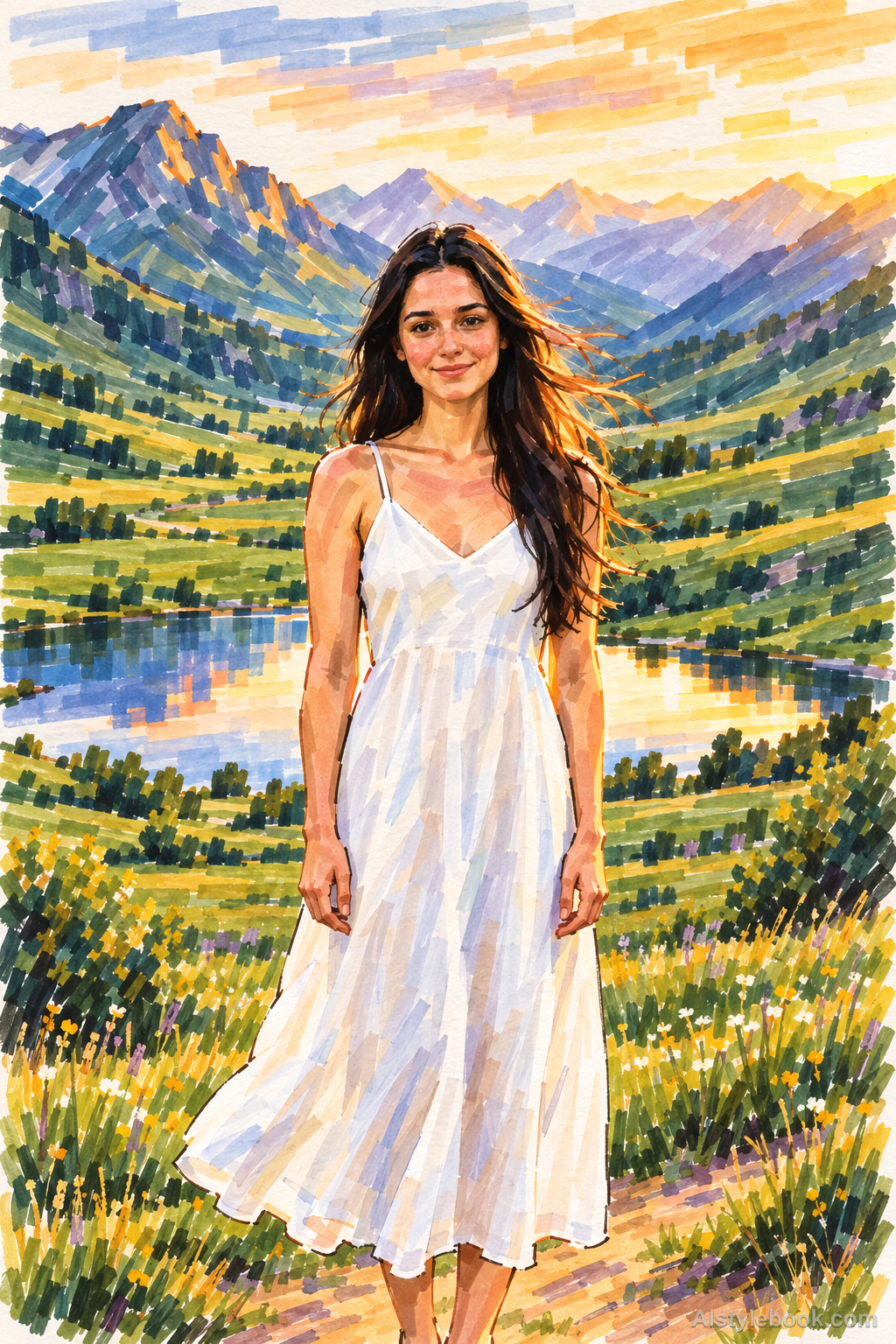
PortraitStyle effect
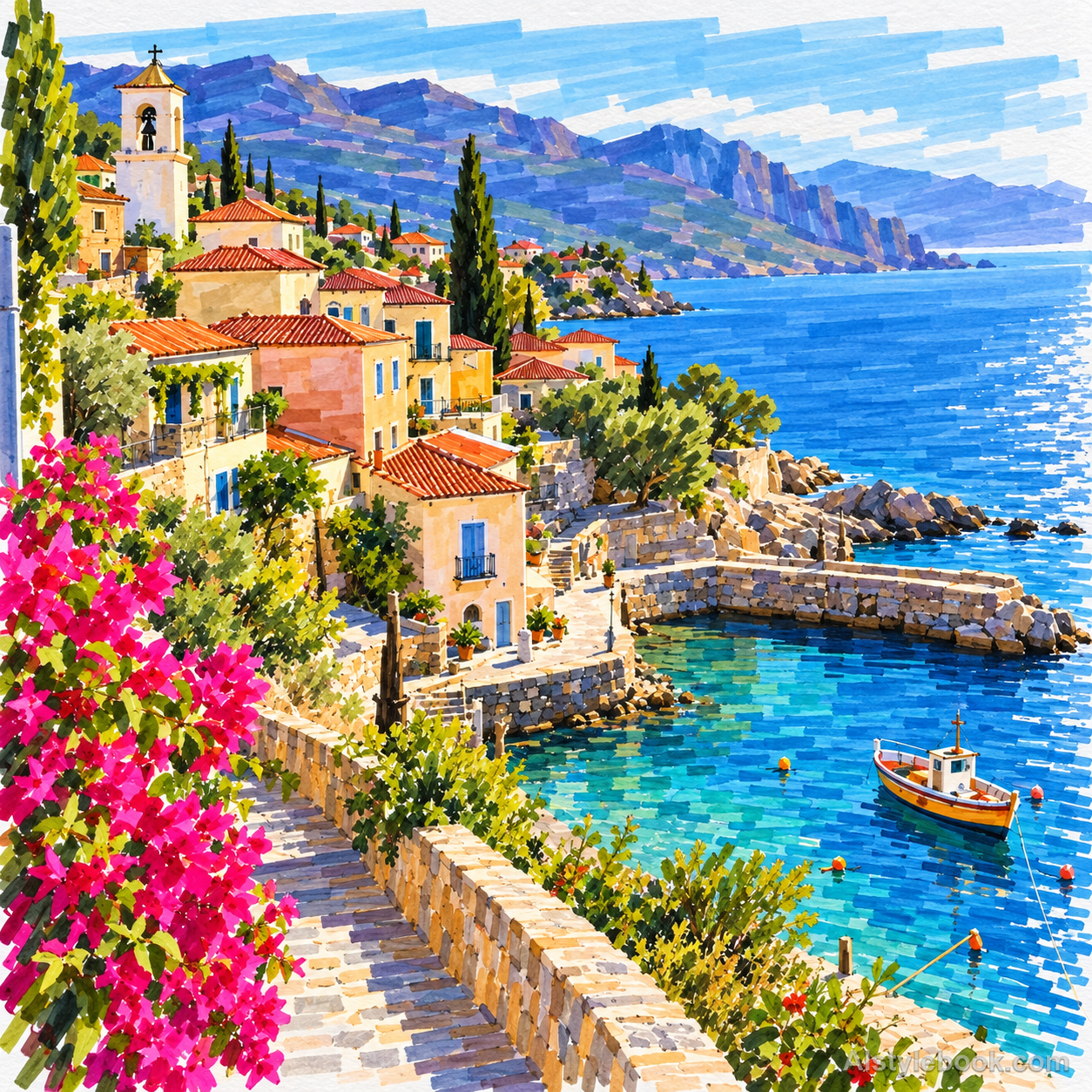
LandscapeStyle effect
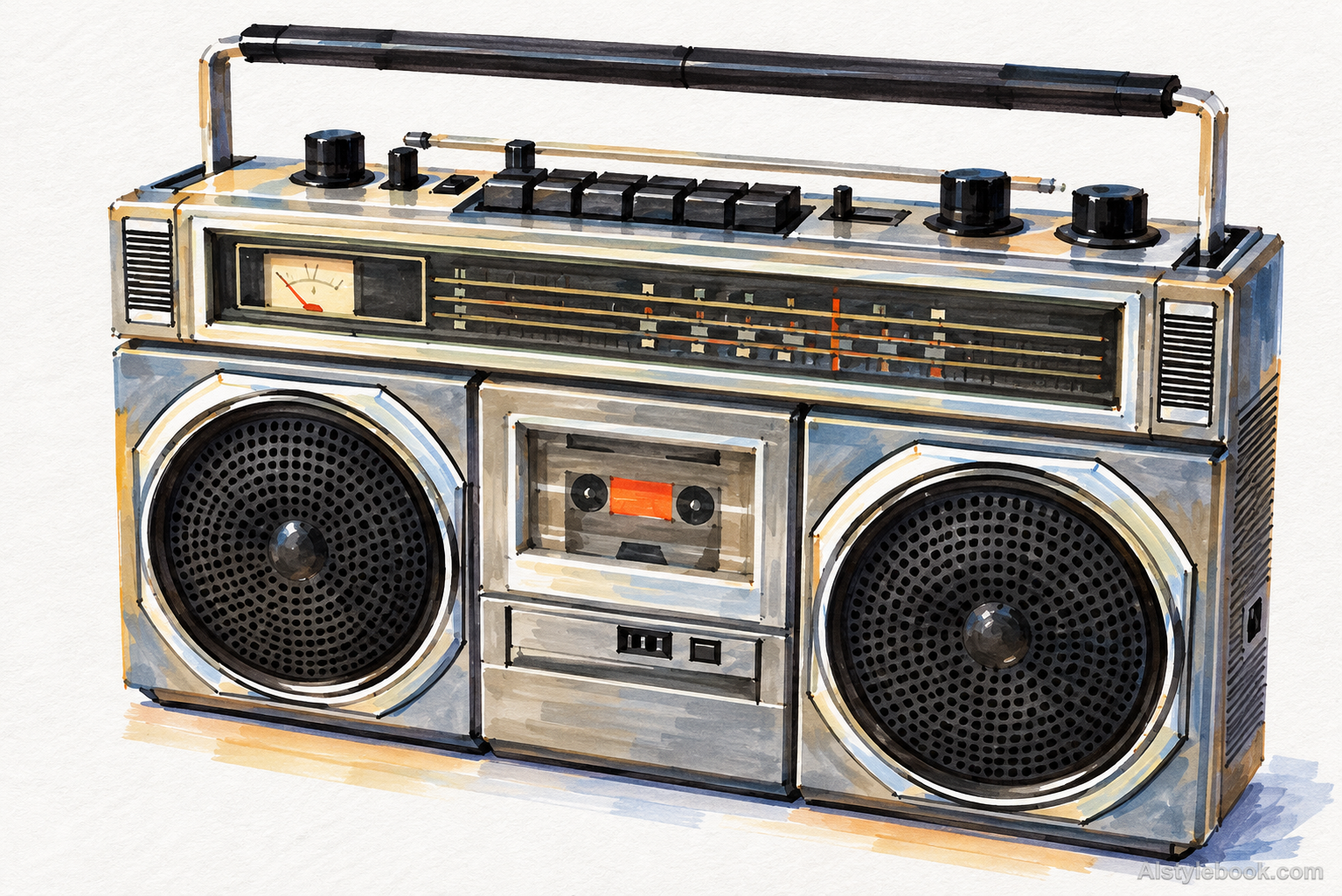
ObjectsStyle effect
The visual language
What is Transparent Marker?
Transparent marker lets paper show through each band of color. Visible stroke direction and overlap seams reveal how the drawing was made. Repeated passes deepen shadows while light areas receive fewer layers, balancing broad chisel-tip turns with a few fine contour marks.
Transparent marker overlaps make stroke count visible as darker joins while paper supplies brightness.
A yellow sleeve shaded by a second pass can connect tonal change directly to drawing gestures.
How the style changes different subjects
- Portrait
- Broad marker strokes simplify face and clothing; overlapping color adds depth and a lively expression.
- Landscape
- Bands of color group buildings, sky and plants, emphasizing composition over small detail.
- Objects
- Reserved highlights and wide directional marks give objects a simple, direct sense of volume.
- Subjects
- Choose clearly lit portraits, streets, footwear, bags or drinks large enough to show overlapping strokes.
Bring the style to your photos
Reusable style prompt for Transparent Marker
Preserve the original composition, proportions and identifying features. Redraw the entire image with translucent alcohol-marker strokes on lightly textured pale paper. Use broad chisel-tip bands and a few fine hand-drawn contour marks. Let paper remain visible through every color layer, with darker seams where strokes overlap, slight ink pooling at pauses and small dry gaps at lifted ends. Build shadows from additional transparent passes rather than opaque paint. Keep stroke direction and width readable, colors clear and details economical. Avoid watercolor blooms, powdery pencil shading, uniform black outlines and thick acrylic coverage.Use the same style prompt for portraits, landscapes and objects.
Create with this styleKeep exploring


