
Pixels & Characters
Truchet Arc Tiles
Style guide
Quarter-circle arcs connect across square cells, reconstructing the image through curving tile paths.
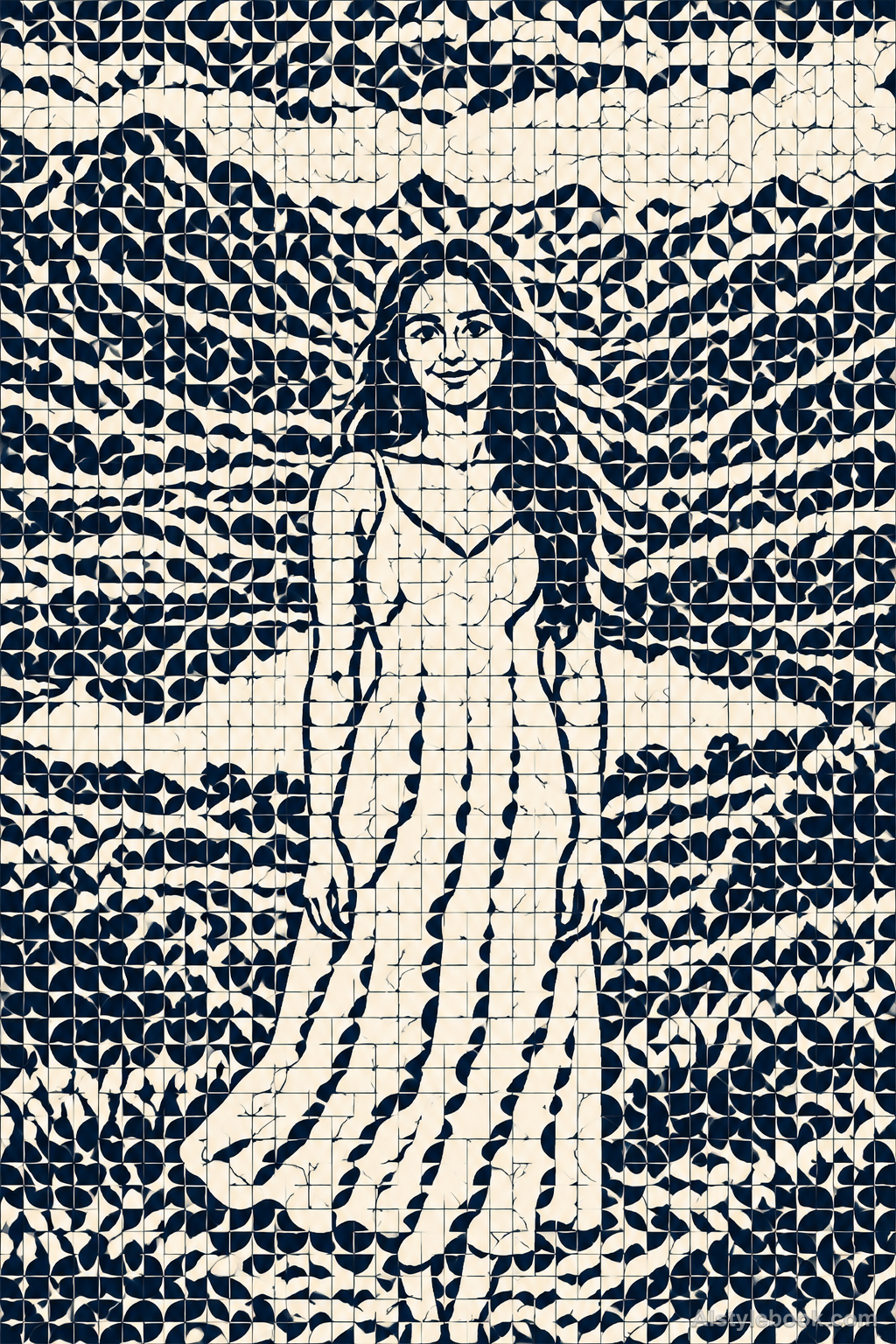
PortraitStyle effect
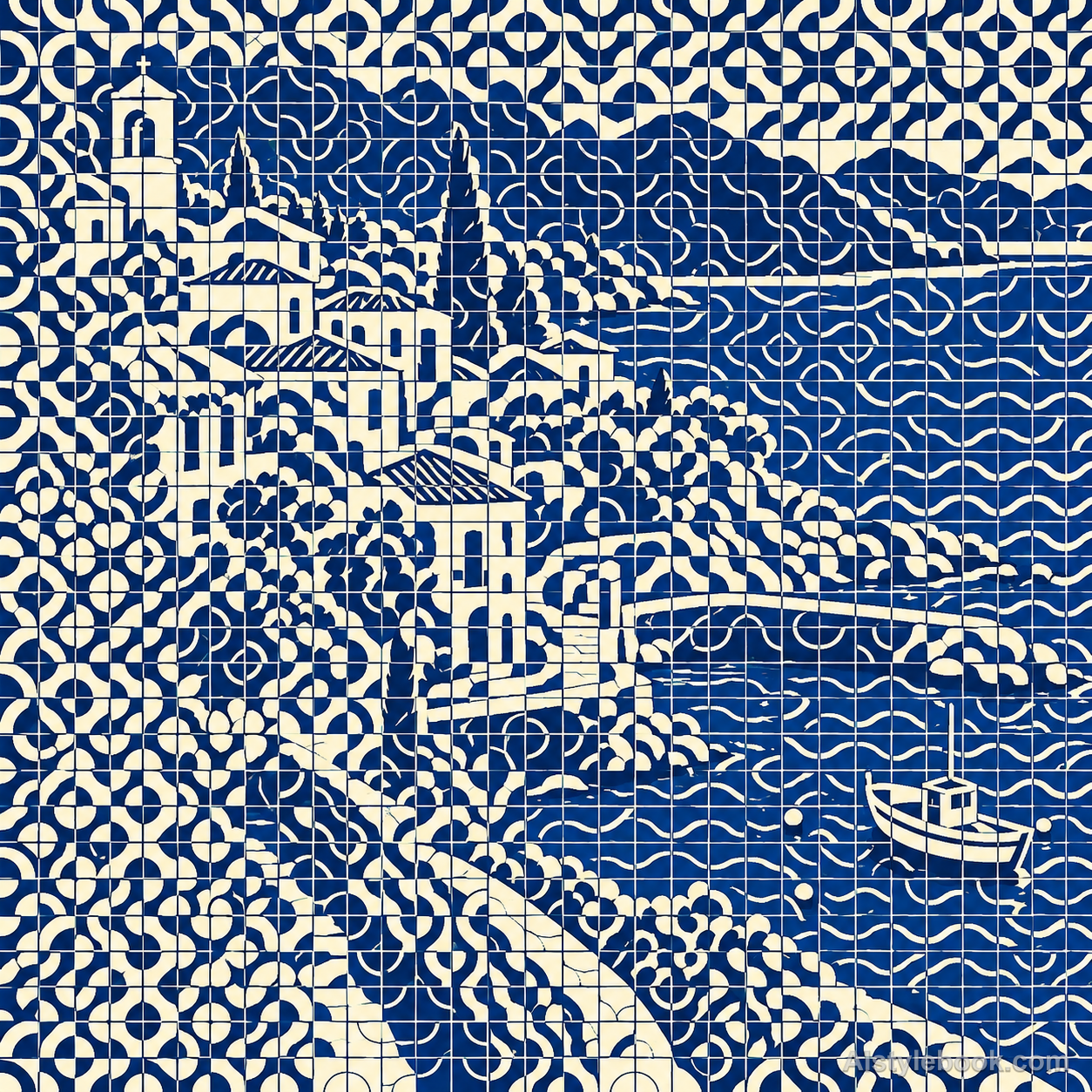
LandscapeStyle effect
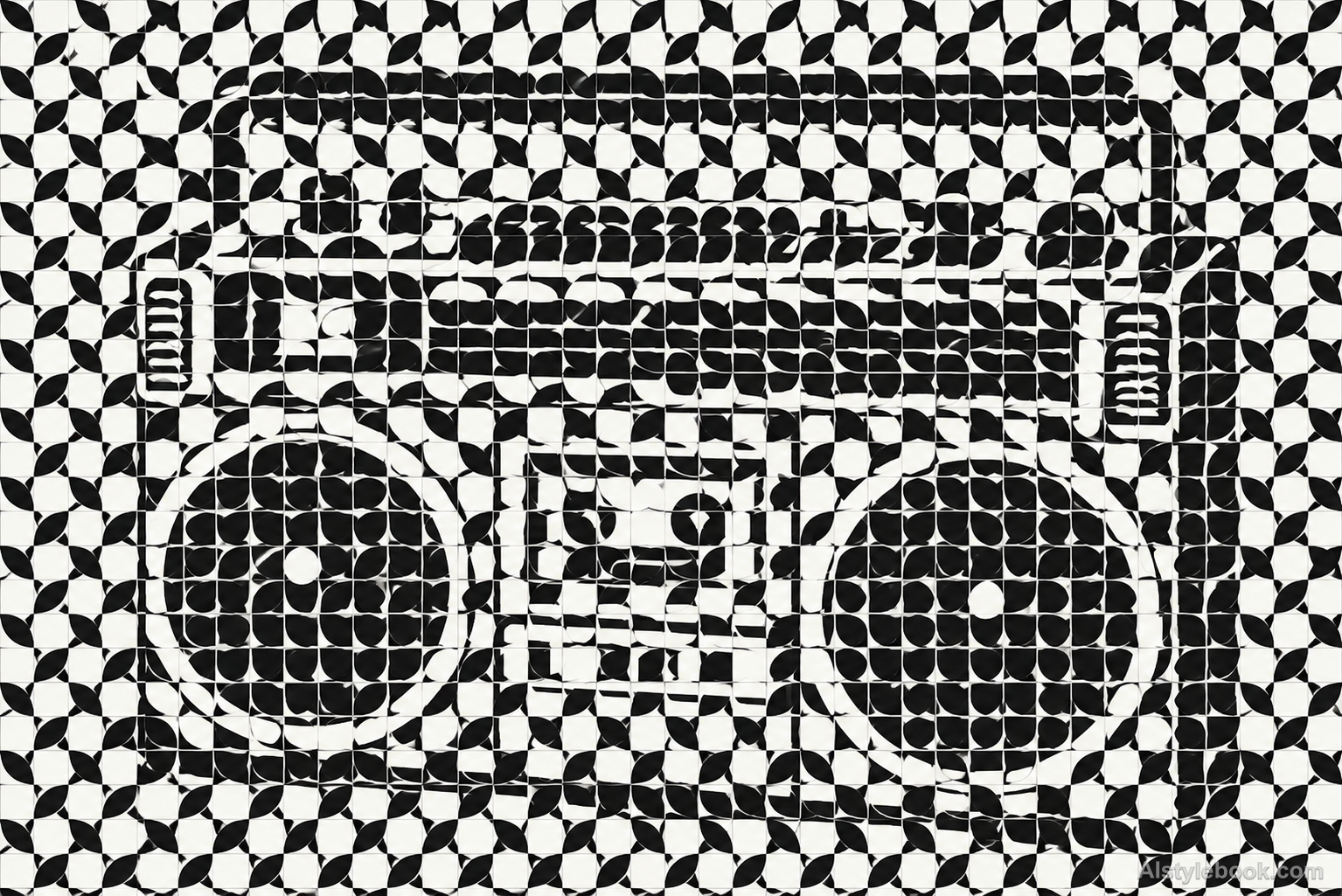
ObjectsStyle effect
The visual language
What is Truchet Arc Tiles?
Truchet imagery confines directional changes to square cells whose quarter-circle arcs connect with adjacent cells. Rotating the units and varying stroke width lets local patterns merge into the source image. Its curves come from a limited tile system rather than freehand drawing.
Truchet tiling builds continuous patterns from a few rotated units.
Quarter-circle arcs joined into larger loops can carry an image through width changes while retaining their local connection rules.
How the style changes different subjects
- Portrait
- Pattern density, width and curvature reveal face and body while local motifs dominate close viewing.
- Landscape
- Scenery merges into geometric or organic bands whose variation conveys distance.
- Objects
- Objects appear as local changes in a pattern field rather than literal reflections and colors.
- Subjects
- Choose large side-lit portraits, spheres, plants or simple objects with strong broad tones.
Bring the style to your photos
Reusable style prompt for Truchet Arc Tiles
Reconstruct the entire image as a Truchet tile field on a strict square grid. Each cell contains a simple pair of quarter-circle arcs joining neighboring edge midpoints; rotate tile orientations to produce connected flowing paths. Vary arc thickness and the balance of dark and light regions according to the source tonal pattern while keeping cell size uniform. Preserve recognizable broad contours through coherent regional density. Use a sharp two-color print finish with no freehand spirals, arbitrary maze walls, three-dimensional tubes or hidden photographic layer.Use the same style prompt for portraits, landscapes and objects.
Create with this styleKeep exploring


